


Your new die cast aluminum prototype arrives. The shape is perfect. The dimensions are correct. Now for the final step: a beautiful, colored, anodized finish. You send it to the anodizer.
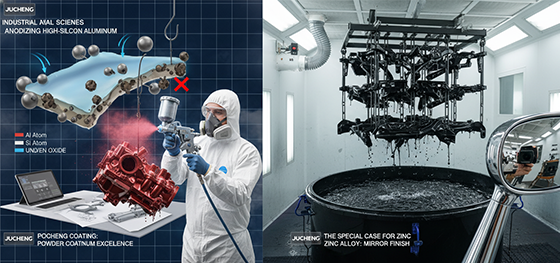
A week later, you get it back. It is a disaster. The color is a splotchy, inconsistent mess of dark grey and light patches. It looks terrible. What went wrong?
You have just fallen into the most common and costly trap in die casting surface finish. This guide is here to help you avoid that trap. It is a manufacturer's guide to choosing the right finish that will make your part look as good as it performs.
content:
The Anodizing Trap: A Recipe for Disaster
The Best Choice for Aluminum: Powder Coating
An Industrial Favorite: E-Coating
The Special Case for Zinc: A Mirror Shine
The Anodizing Trap: A Recipe for Disaster
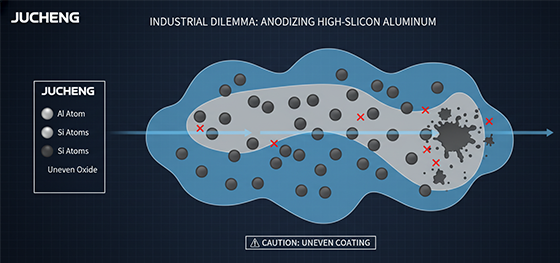
Let's be perfectly clear. For cosmetic purposes, you cannot anodize standard die cast aluminum. It will always look bad.
Why? The reason is metallurgy. The most common Die Casting aluminum alloys, like A380 and ADC12, contain a high percentage of silicon (around 8-11%). Silicon is added to the alloy to make it flow easily into the mold. It is essential for the casting process.
But silicon is a disaster for anodizing. Anodizing is an electrochemical process that grows an oxide layer on the aluminum. It does not affect the silicon. This means the oxide layer grows unevenly around the microscopic silicon particles.
When you then try to dye the part, the color only sticks to the aluminum oxide, not the silicon areas. The result is a splotchy, stained, and inconsistent finish. It is an unavoidable chemical problem. Do not let anyone tell you otherwise.
The Best Choice for Aluminum: Powder Coating
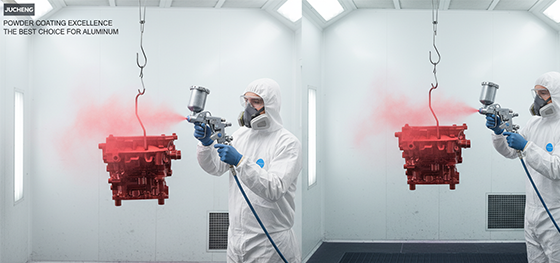
So, if you cannot anodize, what is the best way to get a beautiful, colorful, and durable finish on your aluminum die cast part? The answer is powder coating.
Powder coating is a completely different process. It is a "coating," not a "treatment." It applies a layer of dry, colored polymer powder over the top of the metal. This powder is then baked in an oven, where it melts and cures into a hard, plastic-like shell.
This process is not affected by the silicon in the aluminum. It creates a perfectly uniform, opaque, and durable finish every time. It is highly resistant to scratches, chemicals, and UV light.
Powder coating is available in thousands of colors and a wide range of textures, from high gloss to a fine matte. For any cosmetic aluminum die cast part, this is the superior and recommended choice.
An Industrial Favorite: E-Coating
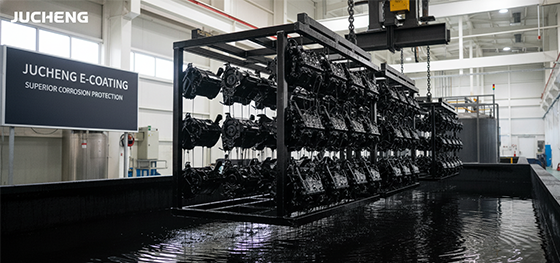
For parts where corrosion protection is the number one priority, and the look is less important, another excellent option is E-coating, or electrocoating.
This is a process where the part is dipped into a bath of water-based paint. An electric current is used to deposit the paint particles onto the metal surface. The part is then baked to cure the paint.
The huge advantage of e-coating is its incredible coverage. Because it is a dipping process, the paint reaches every single internal corner, channel, and hidden surface of a complex part. This is something a spray gun can never do.
This provides total corrosion protection. E-coating is a standard in the automotive industry for chassis and structural components. It typically comes in a standard black color and provides a tough, functional finish.
The Special Case for Zinc: A Mirror Shine
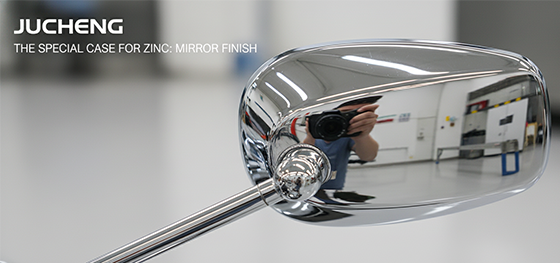
While aluminum has its limitations, the world of die casting surface finish for zinc is full of exciting possibilities.
Zinc alloys provide an incredibly smooth and stable surface. This makes them a perfect base for a wide variety of electroplated finishes.
The most popular of these is chrome plating. A layer of nickel, followed by a layer of chromium, can be plated onto a zinc part to create a brilliant, flawless, mirror-like finish. This is the ultimate in luxury and durability for a metal part.
Other plated finishes like brass, nickel, and even gold are also possible. This is why zinc is the material of choice for high-end decorative hardware, faucets, and automotive emblems.
Choosing the right finish is as important as choosing the right material. A good manufacturing partner will not just make your part. They will guide you to the smartest finishing solution that ensures your product looks great and lasts for years to come.

