


Walking the shop floor, I can diagnose a material selection disaster entirely by sound. When a junior engineer accidentally specifies 304 stainless steel instead of 12L14 carbon steel, the high-pitched, agonizing scream of a carbide end mill dying instantly echoes across the facility. Machinists battle these severe metallurgical misalignments daily. Specifying different types of metals purely based on generic strength charts without understanding cutting dynamics guarantees blown budgets and shattered tooling.
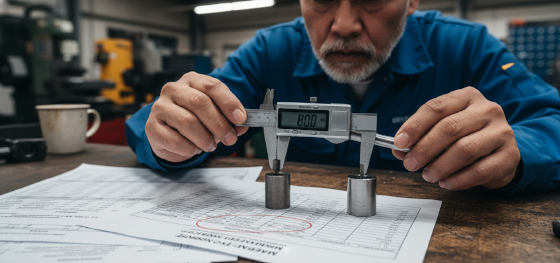
Choosing between ferrous iron-based alloys and lightweight non-ferrous metals represents the absolute baseline decision for any hardware launch. These materials operate under aggressively hostile physical paradigms. One alloy shears beautifully like cold butter under a high-speed spindle, while another instantly work-hardens, violently rejecting the cutting tool and generating friction heat hot enough to melt standard coolants.
Mastering this complex material matrix completely eliminates unpredictable non-recurring engineering (NRE) spikes during prototyping. Procurement teams must brutally evaluate localized thermal expansion coefficients, built-up edge (BUE) vulnerabilities, and raw billet volumetric pricing. Hardware survival in precision [2026] manufacturing demands matching the chemical composition precisely to the kinetic machining capability.
content:
Ferrous vs Non-Ferrous: How Do Machining Dynamics Differ?
When Should You Specify Aluminum Alloys for CNC Parts?
When MUST You Avoid Austenitic Stainless Steels?
How Does Thermal Expansion Destroy Micron Tolerances?
What Are the True CNC Cost Breakdowns by Material?
How Does Jucheng Verify Metal Billets in Shenzhen?
What Are the Most Critical Metal Selection FAQs?
Ferrous vs Non-Ferrous: How Do Machining Dynamics Differ?
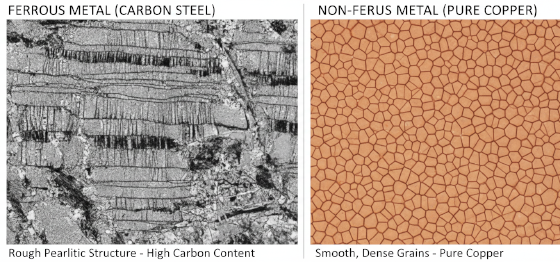
Do iron-based alloys inherently destroy cutting tools faster than non-ferrous metals? Yes. Ferrous metals contain rigid carbon-iron crystalline structures that demand massive kinetic force to shear, violently transferring frictional heat directly into the carbide inserts.
Ferrous metals, encompassing everything from mild 1018 structural steel to ultra-hard D2 tool steel, represent the backbone of heavy industry. They provide unparalleled tensile rigidity but punish machine spindles. When a cutter engages high-carbon steel, the chips fracture violently. Operators must deploy highly specialized, expensive PVD-coated inserts and run at lower RPMs to survive the abrasive environment.
Non-ferrous metals entirely lack iron, rewriting the rules of machinability. Aluminum, brass, and copper conduct heat incredibly well, pulling thermal energy away from the cutting tool and dissipating it straight into the flying chips. Machinists can push spindle velocities beyond 12,000 RPM on 6061 aluminum without risking thermal tool death, achieving blazing-fast cycle times completely impossible with heavy ferrous alloys.
When Should You Specify Aluminum Alloys for CNC Parts?
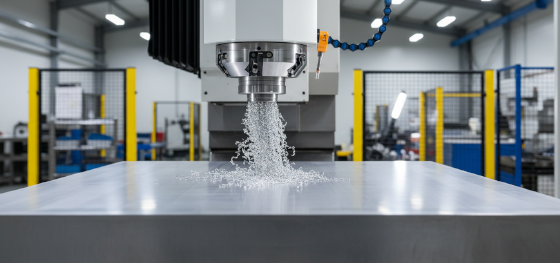
Is aluminum truly the ultimate material for rapid hardware iterations? Absolutely. Specify 6061 or 7075 aluminum whenever the blueprint demands a highly optimal strength-to-weight ratio combined with aggressive, low-cost volumetric material removal.
Aerospace and robotic drone developers live and die by weight budgets. Aluminum alloy 7075-T6 rivals the tensile strength of many mild steels while weighing essentially one-third as much. More importantly, it cuts like an absolute dream. We can carve complex, deep-pocketed drone chassis housings in hours rather than the days required to mill equivalent titanium blocks.
Furthermore, aluminum instantly develops a microscopic, naturally occurring oxide layer that prevents catastrophic environmental rusting. For high-end aesthetic consumer electronics, engineers aggressively exploit aluminum's ability to accept Type II sulfuric anodizing. This electrolytic process allows parts to be dyed in vibrant colors while simultaneously achieving an incredibly hard, scratch-resistant surface finish.
When MUST You Avoid Austenitic Stainless Steels?

Does 304 stainless steel cause unexpected CNC production bottlenecks? Catastrophically so. Deploying austenitic grades like 304 or 316 for parts requiring massive deep-hole drilling guarantees severe work-hardening and completely snapped drill bits.
Austenitic stainless steels possess a highly malicious physical trait: work hardening. The moment a cutting tool rubs against the material rather than shearing cleanly through it, the immediate surface layer undergoes severe strain hardening. The metal microscopically transforms, becoming significantly harder than the surrounding billet. The next pass of the cutter hits a localized wall of armor, shattering the carbide edge instantly.
You must ruthlessly avoid these alloys if your design incorporates thousands of tiny, deep tapped threads. If an M3 tap snaps inside a work-hardened 304 stainless block, extracting it is nearly impossible without destroying the entire component via EDM hole-popping. Engineers must pivot to free-machining grades like 303 stainless or heavily utilize brass if extreme marine-grade corrosion resistance is not strictly mandatory.
How Does Thermal Expansion Destroy Micron Tolerances?
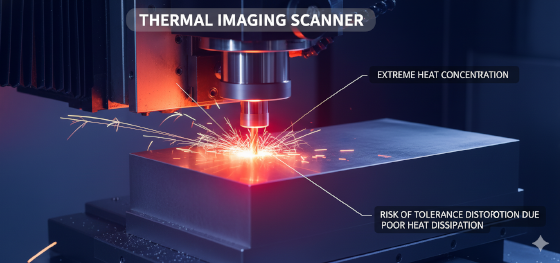
Will aggressive roughing passes warp raw titanium billets? Yes. Exotic metals trap kinetic heat directly within the local cutting zone, causing localized physical swelling that mathematically invalidates precision bearing press-fits.
Thermal dynamics brutally punish ignorance on the shop floor. When a machinist pushes a heavy face mill across a titanium grade 5 block, the metal refuses to conduct the heat away. The localized area swells outward toward the cutting tool. The CNC machine cuts a mathematically perfect diameter based on its digital coordinates, but it is cutting thermally expanded metal.
Once the titanium cools to ambient 20°C room temperature, the metal shrinks violently back to its stable state. The previously "perfect" bearing bore now measures significantly undersized, utterly ruining the part. Combating this requires extreme high-pressure coolant flooding and enforcing strict thermal-soak waiting periods before ever executing a final micron-level finishing pass.
| Metal Category | Primary Alloy Example | Machinability Rating | Engineering Vulnerability |
|---|---|---|---|
| Non-Ferrous (Lightweight) | Aluminum 6061-T6 | Excellent (High RPM) | Galls easily on dry cutting tools |
| Ferrous (Mild) | 1018 Carbon Steel | Good (Predictable chips) | Zero rust resistance, low yield |
| Ferrous (Austenitic) | 304 Stainless Steel | Poor (Work-hardens) | Destroys drills via severe heat |
| Exotic / Superalloy | Titanium Grade 5 | Terrible (Traps heat) | Astronomical raw billet pricing |
What Are the True CNC Cost Breakdowns by Material?
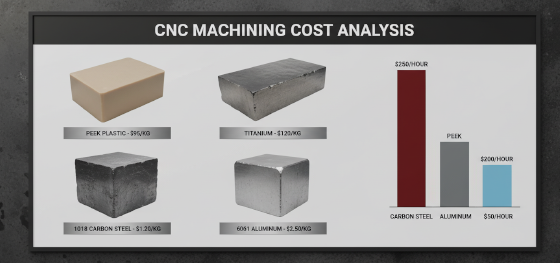
Do raw billet prices accurately reflect the final cost of a CNC part? Never. The true financial burden lies entirely within the machine hourly rate, consumable carbide insert wear, and catastrophic scrap risks.
Purchasing a block of C36000 free-machining brass costs significantly more upfront than an identically sized block of 1045 medium-carbon steel. Junior buyers inevitably choose the cheaper steel to save budget. This is a fatal mathematical trap. Brass contains microscopic lead particles that act as an internal lubricant, allowing CNC spindles to run at maximum velocity with virtually zero tool wear.
The steel part takes three times longer to machine and burns through fifty dollars' worth of cutting inserts. When you multiply the expensive machine time across a batch of five thousand units, the "expensive" brass raw material actually yields a massively cheaper final invoice. Procurement must calculate exact volumetric removal rates, not just raw material weight.
How Does Jucheng Verify Metal Billets in Shenzhen?
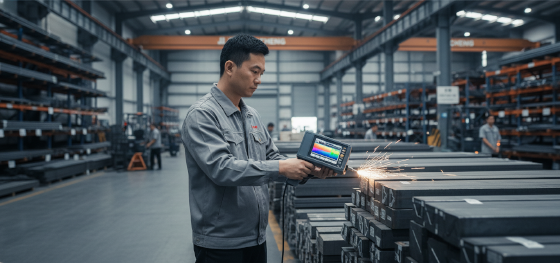
Can you trust the material certification provided by random metal suppliers? We don't. Operating within the Shenzhen precision manufacturing hub, Jucheng deploys handheld XRF spectrometers to brutally interrogate every single incoming billet before it hits our machines.
Navigating [2026] global hardware procurement demands absolute metallurgical paranoia. If a supplier accidentally mixes up 6061 aluminum with 7075 aluminum, they look identical to the naked eye. However, substituting these alloys on a critical aerospace load-bearing bracket guarantees a catastrophic, life-threatening structural failure in the field. We eliminate this supply chain blindness entirely.
Our 8000-square-meter facility executes rigorous Free DFM reviews on your CAD blueprints. If your design over-specifies heavy 316 stainless for a simple indoor sensor housing, our engineers aggressively recommend downgrading to 6061 aluminum to slash your machining costs. Backed by strict ISO9001:2015 protocols, our No MOQ policy empowers highly agile, verified hardware iterations.
What Are the Most Critical Metal Selection FAQs?
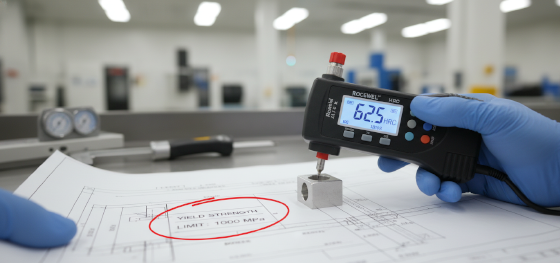
Resolving hardcore chemical and physical boundaries prevents devastating manufacturing failures during the transition from digital prototyping to aggressive mass production.
Does pure copper machine as easily as aluminum?
Absolutely not. Pure C110 copper is notoriously gummy. The soft metal refuses to shear cleanly, instead melting and heavily sticking to the cutting flutes (galling). Machining pure copper demands specialized highly polished, uncoated carbide tools and extreme flood coolant to prevent the end mill from seizing and snapping instantly.
What causes galvanic corrosion between two different metals?
Galvanic corrosion triggers when two dissimilar metals (like a stainless steel bolt and an aluminum chassis) physically touch within a conductive electrolyte environment, such as saltwater humidity. The less noble metal (aluminum) acts as an anode and sacrifices itself, rapidly dissolving into a white powder. Engineers must isolate these metals using dielectric washers or zinc plating.
Can heat treatment harden any type of metal?
No. Only metals with specific chemical structures, like medium-to-high carbon steels (e.g., 1045 or D2) or certain precipitation-hardening aluminum alloys (like 7075-T6), respond to thermal hardening. Low-carbon mild steel (1018) completely lacks the carbon volume necessary to form hard martensite, meaning quenching it in oil will not increase its core hardness whatsoever.

