


Procurement engineers hemorrhage non-recurring engineering budgets when misaligning carbon steel grades during the CAD specification phase. Treating all raw metallic billets identically guarantees catastrophic weld cracking or premature drivetrain drivetrain failure during final mechanical assembly. Material science dictates the absolute survival rate of your custom hardware under kinetic stress.
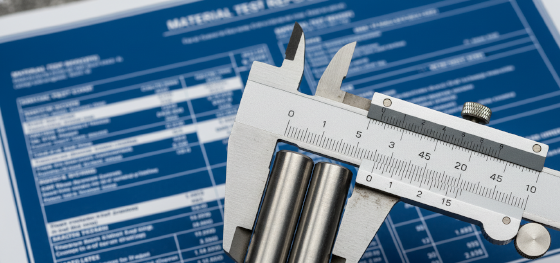
Selecting between 1018 and 1045 steel represents the ultimate financial and structural crossroads for industrial manufacturing. These two alloys appear indistinguishable on a factory pallet but behave violently differently beneath aggressively spinning carbide end mills. One offers extreme ductility for complex fabrication, while the other provides the rigid skeletal backbone required for rotary torque.
Mastering this specific metallurgical decision matrix directly eliminates hidden secondary processing expenses. Fabricators must brutally evaluate induction hardening limits, heat-affected zone (HAZ) risks, and machine spindle hour rates. Precision engineering demands matching the raw carbon density precisely to the designated operational boundary.
1018 vs 1045 Steel: How Do Mechanical Properties Compare?
When Should You Use 1018 Steel for Welded Assemblies?
When NOT to Use 1018 Steel in High-Torque Environments?
When Is 1045 Steel Mandatory for Induction Hardening?
What Are the True Cost Breakdowns for Both Alloys?
How Does Jucheng Optimize Steel CNC Milling Workflows?
What Are the Most Critical Carbon Steel Machining FAQs?
1018 vs 1045 Steel: How Do Mechanical Properties Compare?
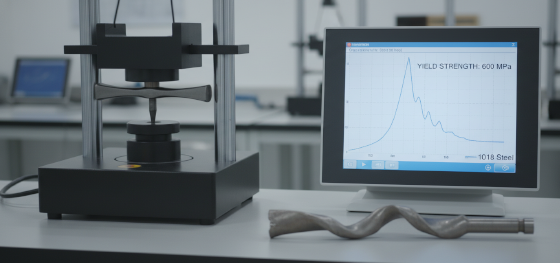
Carbon concentration directly dictates the mechanical yield limits and hardening capabilities of industrial iron alloys.
Standard 1018 contains merely 0.18% carbon, establishing a ferrite-dominated microstructure that prioritizes massive ductility over raw tensile strength. This mild chemistry prevents sudden shattering but severely restricts the metal's ability to resist deep surface scratches or heavy localized impacts.
Upgrading to 1045 injects 0.45% carbon into the crystalline lattice, bridging the gap into medium-carbon performance. This specific formulation naturally elevates the yield strength by over thirty percent right off the material rack. Engineers leverage this denser pearlite structure to combat severe kinetic friction.
| Mechanical Metric | 1018 Mild Steel | 1045 Medium Carbon | Engineering Advantage |
|---|---|---|---|
| Yield Strength | 370 MPa | 530 MPa | 1045 prevents bending under heavy dynamic loads |
| Hardness (Brinell) | 126 HB | 179 HB | 1045 naturally resists abrasive galling |
| Weldability | Excellent | Poor (Requires Pre-heat) | 1018 slashes fabrication assembly time |
| Machinability | 78% | 57% | 1018 cuts faster but induces tool smearing |
When Should You Use 1018 Steel for Welded Assemblies?
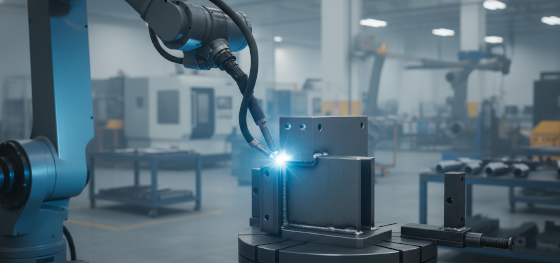
Specify 1018 steel exclusively for complex weldments and structural plates requiring massive ductility without suffering from thermal cracking.
Fusing heavy metallic frames together generates immense localized thermal gradients. Because 1018 entirely lacks the carbon volume necessary to form brittle martensite during rapid cooling, it accepts TIG and MIG welds flawlessly. Operators bypass expensive pre-heating ovens entirely.
Machinists frequently deploy 1018 for custom CNC fixtures, base plates, and non-critical engine mounts. The soft material cuts aggressively, though it requires specific chip loads to prevent the gummy iron from welding directly onto the carbide cutting edge (built-up edge). Controlling fluid dynamics ensures an excellent surface finish.
When NOT to Use 1018 Steel in High-Torque Environments?
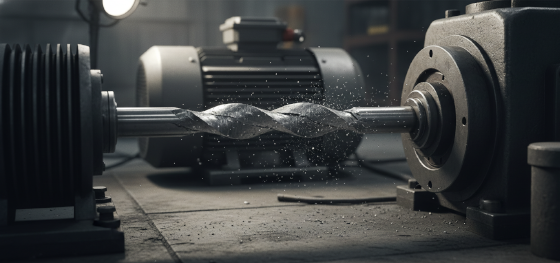
Deploying 1018 for power transmission shafts or drive gears guarantees catastrophic shear failure under dynamic kinetic loads.
Rotary applications demand absolute rigidity to maintain micron-level bearing press-fits. If a mild steel shaft twists even fractionally under a heavy mechanical load, the attached high-speed bearings will bind and shatter violently. 1018 simply surrenders to severe torsional twisting forces.
Furthermore, you must entirely avoid 1018 when designing sliding wear plates or mating surfaces subjected to continuous friction. Without secondary chemical carburizing, the native 126 HB hardness degrades rapidly, galling against harder alloys and destroying the operational lifespan of the entire gearbox assembly.
When Is 1045 Steel Mandatory for Induction Hardening?
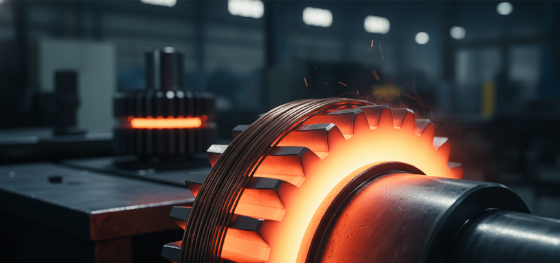
Upgrade to 1045 steel when mechanical blueprints demand localized induction hardening exceeding 50 HRC to combat extreme surface abrasion.
Heavy industrial components require a dual-state physical structure. Gear teeth must survive violent metal-on-metal impacts, while the inner hub must remain slightly flexible to absorb shock. The 0.45% carbon content allows heat treaters to utilize high-frequency induction coils to rapidly flash-harden only the extreme outer skin.
Attempting this exact induction process on 1018 yields absolutely zero results due to carbon starvation. By specifying 1045, engineers secure an impenetrable wear barrier while retaining a tough, fracture-resistant core. This metallurgical synergy dominates axle, crankshaft, and heavy hydraulic rod manufacturing.
What Are the True Cost Breakdowns for Both Alloys?
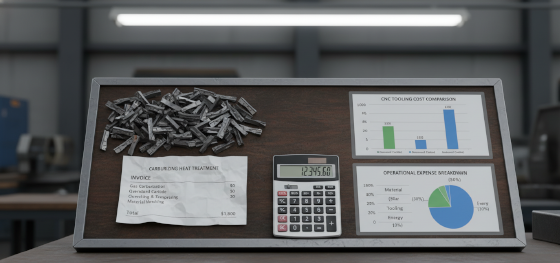
Raw material parity hides the massive secondary thermal processing and carbide tool wear expenses that financially separate these two alloys.
Procuring 1018 minimizes your upfront billet invoice. However, if your design mandates high hardness, technicians must execute a lengthy pack-carburizing process to physically bake carbon into the 1018 surface. This slow chemical intervention completely destroys the initial cost savings, rendering the mild steel economically unviable.
Conversely, milling 1045 immediately drives up machine hourly rates. The elevated natural hardness burns through expensive carbide inserts twenty percent faster than mild steel. Spindles must slow down, extending the total cycle time. Calculating these exact consumable burn rates dictates the true break-even point for batch production.
How Does Jucheng Optimize Steel CNC Milling Workflows?
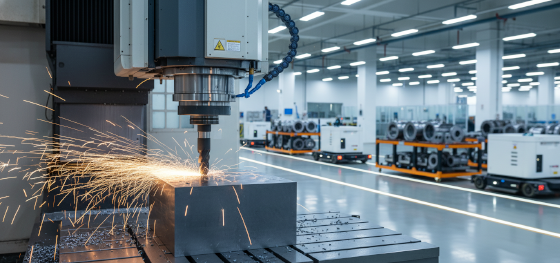
Operating within the Shenzhen precision manufacturing hub, Jucheng centralizes multi-axis heavy milling and advanced thermal treatments to eradicate logistical tolerance failures.
Navigating [2026] global hardware procurement requires true single-source fabrication. Shipping machined 1045 shafts across the city to a third-party induction hardener invites catastrophic flash rust and dimensional warping. We execute massive material removal and precision heat treating entirely under one 8000-square-meter roof.
Our engineering teams intervene heavily during the CAD review phase. If your blueprint over-specifies 1045 for a simple static cover plate, our Free DFM review instantly pivots the material back to 1018 to slash your machining costs. Backed by strict ISO9001:2015 protocols, we manufacture intelligent hardware without MOQ restrictions.
What Are the Most Critical Carbon Steel Machining FAQs?
Resolving hardcore metallurgical boundaries prevents catastrophic assembly failures during the deployment of custom fabricated machinery.
Can you weld 1045 steel without cracking it?
Yes, but only under rigorous thermal supervision. The high carbon volume forms brittle martensite instantly upon rapid cooling. Fabricators must pre-heat the massive steel blocks to 250°C before striking the arc, followed by a controlled, highly insulated slow-cooling protocol to relieve internal stress.
Does 1018 steel machine significantly faster than 1045?
Operators can program faster spindle feeds for 1018, but the soft material behaves terribly during chip formation. It tends to tear rather than shear cleanly, requiring high-pressure coolant to flush away the gummy residue. 1045 cuts slower but naturally produces a far superior, shinier surface finish.
Do either of these carbon steels resist environmental rust?
Absolutely not. Both alloys completely lack the chromium content required to form a passive oxide layer. Exposing raw 1018 or 1045 to atmospheric humidity triggers aggressive flash oxidation within hours. Engineers must specify black oxide, zinc plating, or industrial paint to seal the substrate.

