


Smashing molten metal into a steel block at hundred-mile-per-hour speeds sounds incredibly violent, and on the factory floor, it absolutely is. Procurement teams usually love this extreme manufacturing speed because it drops the per-unit cost of massive production runs to mere pennies. However, hardware engineers quickly discover the dark side of cheap, high-speed injection. If a supplier simply rams liquid aluminum into a mold without calculating the exhaust venting, the metal folds over the air inside the cavity. Executing the die casting process without sophisticated flow control leaves your expensive parts riddled with microscopic air bubbles.

Discovering these hidden defects usually happens at the worst possible time. Your assembly team takes the raw metal housing to the CNC machine to tap a mounting thread, only for the drill bit to hit an internal air pocket, shattering the tool and scrapping the part instantly. This hidden porosity destroys the profit margins of hardware startups. Operating our massive hydraulic presses in the Shenzhen precision manufacturing hub, Jucheng Precision takes a radically different approach to high-velocity metallurgy.
Current [2026] commercial designs push the limits of material physics, demanding incredibly thin walls and complex cooling fins that cannot be machined by hand. Utilizing the high pressure die casting process is the only way to achieve these near-net-shape geometries at scale. Let's dissect exactly why extreme hydraulic force is mandatory for modern enclosures, how we fight the dreaded gas porosity, and when you should actually step the pressure down for heavier structural components.
content:
The Physics of Speed: Why is HPDC the Industry Standard?
Chamber Systems: Navigating Cold and Hot Setup Options
The Porosity Danger: How Fast Injection Ruins Parts?
Technical Data: High Pressure vs. Low Pressure Alternatives
JUCHENG Hub: Shenzhen's High-Tonnage Manufacturing Core
FAQ: Honest Answers About Wall Thickness and Scrap Rates
The Physics of Speed: Why is HPDC the Industry Standard?

How do you force liquid metal into a mold before it accidentally freezes?
By utilizing massive hydraulic accumulators that fire a steel plunger forward with hundreds of tons of force, packing the cavity full of molten alloy in a fraction of a second.
Designing sleek, lightweight consumer electronics requires enclosures with paper-thin walls. Liquid aluminum naturally loses heat the millisecond it touches the relatively cold steel of the mold tool. If you pour the metal in slowly, it freezes halfway down the wall, creating a defective, incomplete part.
Applying extreme hydraulic pressure completely overrides this thermal limit. The machine shoots the metal so violently that it fills incredibly complex heatsinks, thin ribs, and intricate sensor mounts instantly. This brute-force speed allows factories to cycle their machines every thirty seconds, making it the most cost-effective solution for massive automotive and telecommunications contracts.
Chamber Systems: Navigating Cold and Hot Setup Options
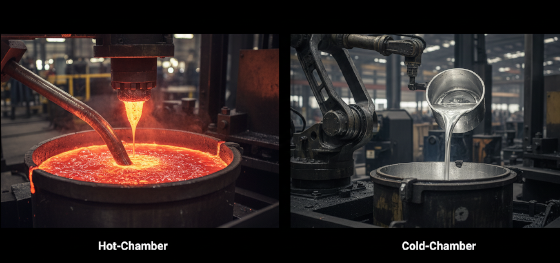
Does high-pressure injection work the exact same way for every metal?
No. The melting temperature of the specific alloy dictates whether the machine feeds the metal automatically from a submerged pump or requires an external robotic pouring ladle.
Processing aggressive, high-heat alloys like aluminum requires the cold chamber die casting process setup. Operators cannot submerge the injection pump directly into boiling aluminum because the heat will literally dissolve the machine's steel components. A robotic arm must quickly transfer a specific dose of metal into a cold sleeve before the hydraulic ram fires.
Working with softer metals like zinc completely changes the equipment layout. Utilizing the hot chamber die casting process allows the entire high-pressure pump to sit permanently inside the boiling crucible. This closed-loop system sucks the liquid metal directly into the injection nozzle, resulting in significantly faster cycle times and much lower operational overhead.
The Porosity Danger: How Fast Injection Ruins Parts?
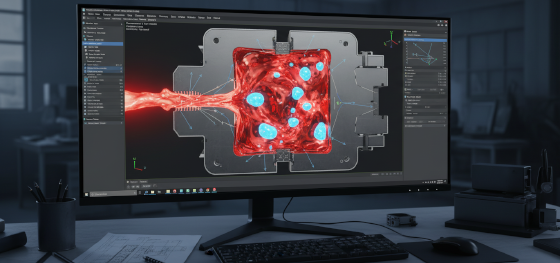
Why do high-speed metal parts frequently suffer from internal voids?
Because the empty steel mold is full of air, and pushing liquid metal inside at 100 miles per hour causes violent turbulence, trapping that air directly inside the freezing alloy before it can escape.
Cheap factories ignore this turbulence. They crank up the hydraulic pressure to maximum, blasting the metal into the die. The outside skin looks beautifully smooth because it hits the steel wall first, but the inside core becomes a structural nightmare filled with gas bubbles.
Jucheng Precision solves this by programming advanced dynamic injection profiles. Our machines push the plunger slowly at first, gently rolling the metal forward to push the air out of the exhaust vents. Once the air is cleared, the sensors instantly trigger the high-speed accumulator to pack the part tight, giving you a flawless, dense component.
Technical Data: High Pressure vs. Low Pressure Alternatives
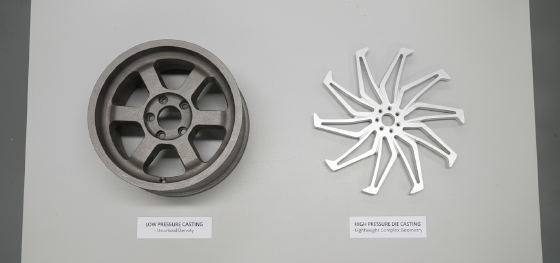
Matching your structural requirements to the correct injection physics prevents massive budget overruns. The comparison matrix below clearly defines when hardware teams should leverage speed versus when they should prioritize structural density.
| Process Characteristic | JUCHENG High Pressure (HPDC) | Standard Low Pressure (LPDC) |
|---|---|---|
| Injection Velocity | Extremely Fast (Violent fill) | Very Slow (Anti-gravity push) |
| Wall Thickness Limits | Excellent for paper-thin walls (1.5mm) | Requires thicker walls to prevent freezing |
| Internal Density / Porosity | Prone to trapped air without flow control | Extremely dense, virtually zero porosity |
| Ideal Application | Complex telecom housings, intricate heatsinks | Heavy structural automotive wheels |
Opting for the low pressure die casting process makes sense when you are building massive, load-bearing suspension components that cannot tolerate a single air void. However, if your design requires aggressive cooling fins and lightweight chassis ribs, HPDC remains the only commercially viable option.
JUCHENG Hub: Shenzhen's High-Tonnage Manufacturing Core
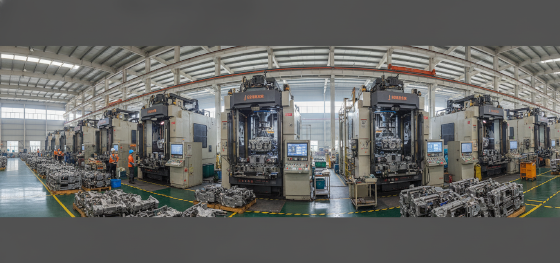
Why do aggressive B2B hardware startups trust Jucheng Precision with their tooling budgets?
Because we back up our massive 800-ton injection machines with a dedicated fleet of 150+ CNC units, ensuring that any complex secondary threading is completed flawlessly in-house.
Sending your parts to a raw casting house that does not understand post-machining is a huge liability. If their injection parameters leave tiny voids near your critical mounting holes, they will not care because the part looks fine to them. Our internal CNC operators hold our casting operators accountable for every single millimeter of internal density.
Stop gambling your supply chain on suppliers who just hit the big green button and hope for the best. Send your 3D CAD models to our engineering team today for a free DFM review. We will map the thermodynamic flow of your high-pressure components and guarantee a flawless bridge to production.
FAQ: Honest Answers About Wall Thickness and Scrap Rates
What is the absolute thinnest wall you can cast under high pressure?
Depending on the specific alloy and the distance from the injection gate, we routinely achieve ultra-thin structural walls down to 1.2mm for lightweight drone components.
Can high-pressure parts be heat-treated to improve their strength?
Usually no. Heating standard HPDC parts causes the trapped internal air bubbles to expand, creating ugly surface blisters. You must use vacuum-assisted methods if heat-treating is required.
Why do large high-pressure machines cost so much to operate?
Massive tonnage machines consume incredible amounts of electricity to run the heavy hydraulic pumps, and the hardened H13 steel molds require constant thermal maintenance.
Does higher injection pressure always mean better surface quality?
Not necessarily. Pushing the pressure too high can cause the molten metal to physically solder and weld itself onto the steel mold, ruining the surface finish completely.

