


Designing complex commercial metal components without evaluating manufacturing physics is a massive financial gamble. Procurement managers frequently approve beautiful CAD designs, completely unaware that minor features will soon double their final production invoices. Discovering how minor geometric tweaks can save your cash flow requires mastering how to reduce die casting cost before authorizing expensive steel tooling.
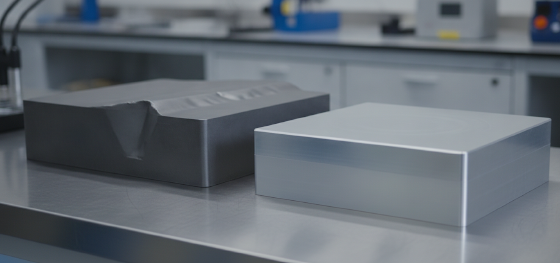
Unlocking ultimate manufacturing scalability requires a ruthless dedication to design optimization. Every single unnecessary millimeter of thickness directly drives up your ongoing die casting cost. Managing these expenses determines whether your product succeeds commercially or collapses under heavy tooling debt.
Partnering with a highly collaborative turnkey manufacturer ensures your engineers design for commercial survival. Let's explore why uniform geometry prevents cooling defects, how removing lateral features slashes mold costs, and why relaxing tolerances keeps your budget secure.
content:
Optimizing Wall Thickness: Cutting Material Weight and Cycle Times
Eliminating Undercuts: Bypassing Costly Sliding Core Fees
Relaxing Tolerances: Reducing Expensive CNC Spindle Hours
Complimentary DFM Analysis: Unlocking Hidden Manufacturing Savings
FAQ: Honest Answers About CAD Tweaks and Production Savings
Optimizing Wall Thickness: Cutting Material Weight and Cycle Times
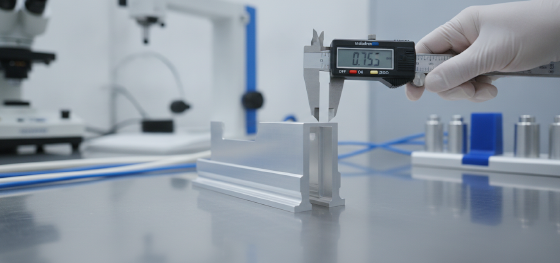
Why does maintaining a highly uniform wall thickness dramatically lower your production invoices?
Because thick sections cool slower than thin areas, creating thermal traps that force the machine to cycle slower and waste expensive raw material.
Designing flat, bulky blocks of metal is the easiest way to cause severe surface sink marks. Utilizing advanced die casting wall thickness guidelines allows engineers to replace solid mass with thin, intersecting support ribs.
Reducing overall wall thickness slashes both your cycle time and your raw material bills. You get lightweight, structurally rigid components that freeze rapidly, maximizing daily factory throughput and lowering your final bill.
Eliminating Undercuts: Bypassing Costly Sliding Core Fees
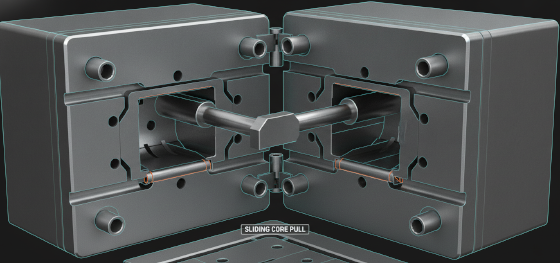
Why do lateral holes and side-facing grooves violently explode your tooling budget?
Standard steel molds open strictly in one vertical direction; any side-facing feature acts as a mechanical trap, requiring expensive hydraulic sliders to pull the steel pins away.
Machining these moving sliding cores adds thousands of dollars to your initial NRE tooling invoice. They also wear out rapidly under the intense thermal shock of liquid metal, requiring constant, expensive maintenance downtime.
Redesigning your parts to eliminate these obstacles remains a massive victory when analyzing how to reduce die casting cost. Relocating a side hole to the primary parting line allows the mold to open cleanly without requiring any complex sliding mechanisms.
Relaxing Tolerances: Reducing Expensive CNC Spindle Hours
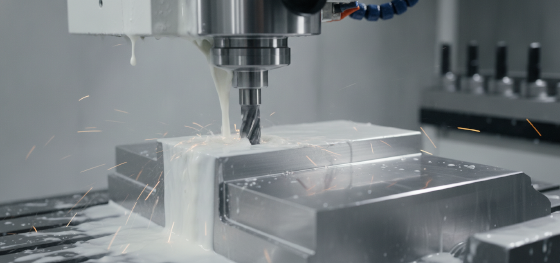
Why does demanding high-precision tolerances across your entire drawing destroy margins?
Forcing raw molded metal to hit sub-millimeter tolerances requires highly expensive secondary machining, slow injection speeds, and frequent mold rebuilding.
Standard injection molding delivers excellent baseline dimensional accuracy for most commercial hardware covers. Pushing non-visible walls or basic bracket chassis into precision tolerance categories is a complete waste of capital.
Reserving precise subtractive milling exclusively for critical O-ring sealing grooves and bearing mounts keeps your budget completely secure. You easily control your overall manufacturing bills by allowing non-critical dimensions to fluctuate within standard limits.
Complimentary DFM Analysis: Unlocking Hidden Manufacturing Savings
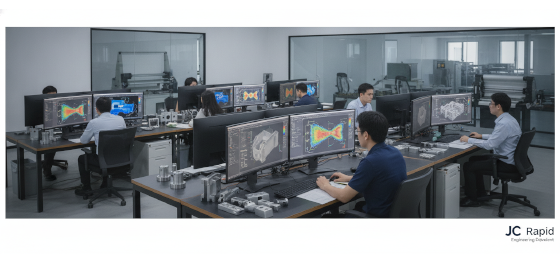
Comparing raw numbers from different suppliers requires a highly standardized diagnostic baseline. The comparison table below outlines how implementing specific DFM rules can slash your manufacturing expenses.
| Design Parameter | Raw Flawed CAD Geometry | Optimized DFM Geometry |
|---|---|---|
| Wall Uniformity | Uneven, thick solid blocks (Sink marks) | Thin walls reinforced with cross-ribs |
| Side-Facing Features | Deep undercuts requiring hydraulic sliders | Features shifted to the parting line |
| Dimensional Tolerances | Precision class applied to every face | Standard class with selective CNC milling |
Relying on brokers who simply accept your drawings without question is highly dangerous. Jucheng Precision offers a highly detailed, complimentary DFM review to show you exactly how to reduce die casting cost before you buy steel.
Stop paying for over-engineered designs and unnecessary shipping fees. Send your complex CAD files to our engineering team today for a comprehensive, manual DFM flow analysis and secure a guaranteed, optimized commercial quote.
FAQ: Honest Answers About CAD Tweaks and Production Savings
Can I use a low-cost aluminum mold to test these cost-saving design changes?
Yes, utilizing rapid tooling and modular aluminum mold bases allows you to test functional design changes cheaply before committing to high-volume hardened steel.
Does adding reinforcing ribs to thin walls increase the initial tooling cost?
Carving rib channels into the steel cavity requires very minimal extra CNC spindle time, making it a highly economical structural upgrade.
Will reducing the draft angle help lower my final manufacturing bills?
No, reducing the draft angle actually increases friction during ejection, causing the parts to stick and warp, which severely inflates your scrap rates.
How fast can your engineers analyze our CAD file for cost optimization?
We bypass the inaccurate automated quote tools completely. Our technical team reviews your CAD files manually and delivers a highly detailed DFM report within twenty-four hours.

