


Tactile longevity remains the ultimate judge of consumer perceived value. When an engineer designs a high-touch interface for a medical monitor or a luxury kitchen appliance, the primary adversary is not just structural mechanical load, but the gradual erosion of brand identity. Traditional silk-screening and pad printing suffer from a fatal flaw: "Planned Obsolescence" through surface wear. After six months of aggressive chemical cleaning or thousands of human finger-strikes, topical inks invariably peel, fade, or scratch, turning a premium device into a cheap-looking liability. Navigating this durability gap requires the strategic deployment of in mold decoration (IMD). This advanced branch of Injection molding surface finishes involves encapsulating high-definition graphics, textures, and functional layers behind a transparent polymer matrix during the injection cycle. Jucheng Precision operates as a high-fidelity cosmetic sanctuary, utilizing automated robotics and cleanroom environments to ensure your UI panels and enclosures possess an immutable soul that survives the entire product lifecycle without a single molecular tear.
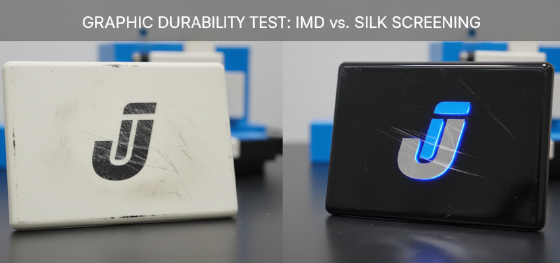
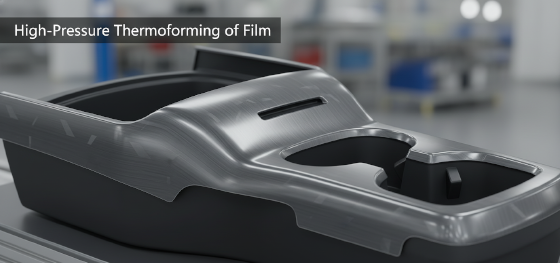
Establishing permanent surface realism requires moving beyond topical coatings. IMD is not a post-process; it is a thermal fusion event. By placing a pre-printed, multi-layer film into the mold cavity before the resin enters, we create a part where the graphics are an internal structural component, not an external afterthought. Jucheng Precision eliminates the "Graphic Delamination" crisis by utilizing chemically compatible film-and-resin systems that bond at a molecular level. Whether you are validating a capacitive touch dashboard or a ruggedized handheld scanner, our technical advisory ensures your hardware retains its "Day One" aesthetic through years of industrial abuse. This guide deconstructs the physics of film stack-up, the precision of robotic registration, and why IMD is the mandatory choice for hardware teams that refuse to compromise on visual authority.
Encapsulation Physics: How IMD Eradicates Surface Wear
IML vs. IMR: Decoding the Two Paths of In-Mold Graphics
Robotic Sovereignty: Achieving Sub-Millimeter Film Alignment
Optical Integration: Backlighting and Capacitive Touch
Surface Defense: Scratch Resistance and Chemical Armor
JUCHENG Protocol: Zero-Inclusion Cleanroom Execution
Encapsulation Physics: How IMD Eradicates Surface Wear
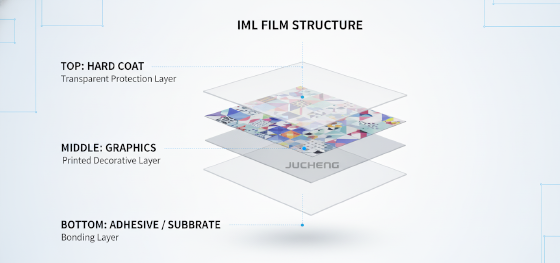
Molecular protection dictates the lifespan of a decorative surface. In traditional printing, the ink is exposed to the atmosphere, making it vulnerable to UV oxidation, abrasion, and solvent attack. in mold decoration solves this through "Back-Side Printing." We print the graphics on the internal surface of a high-clarity Polycarbonate or PET film. During the molding process, the molten resin—usually ABS or PC—is injected against this printed side, effectively sandwiching the ink between the film carrier and the part body. The exterior of the part is the film’s "Hard-Coat" top layer, which is engineered for extreme scratch resistance (often reaching 2H to 3H pencil hardness). This means the graphics are physically unreachable; even if a user gouges the surface with a tool, the color and details remain protected behind a protective resin wall. At Jucheng Precision, we treat every IMD part as a structural laminate, ensuring the bond strength is high enough to pass a 100-cycle thermal shock test without a single bubble or edge lift.
IML vs. IMR: Decoding the Two Paths of In-Mold Graphics
Selecting the correct decorative architecture requires a dispassionate look at your production volume and geometric complexity. in mold decoration is typically executed through two distinct methodologies. In-Mold Labeling (IML) utilizes a discrete, pre-cut film that stays on the part after ejection, providing a thick, durable decorative skin. This is the material of choice for high-requirement medical devices and automotive dashboards. In-Mold Roller (IMR), conversely, uses a continuous foil carrier that transfers the ink to the part and then pulls away, leaving a thin, paint-like finish with zero film edge. To assist engineers in routing their project, Jucheng Precision provides the following comparative matrix:
| Feature | In-Mold Labeling (IML) | In-Mold Roller (IMR) |
|---|---|---|
| Graphic Depth | High (Sub-surface) | Medium (Surface Transfer) |
| Scratch Resistance | Extreme (Encapsulated) | Moderate |
| Geometric Freedom | High 3D Curvatures | Low (Mostly Flat/Single Curve) |
| Typical Volume | Low to Mid (1k - 50k) | High (100k+) |
Robotic Sovereignty: Achieving Sub-Millimeter Film Alignment
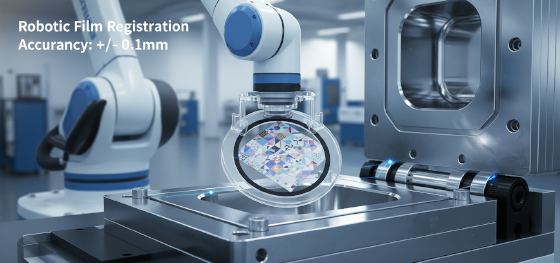
Alignment precision dictates the success of multi-part interfaces. If a decorative film shifts by even 0.2mm during the injection cycle, your control buttons will look misaligned, and your backlit icons will display "Light Leaks." Amateurs often attempt manual film placement, which leads to 50% scrap rates and inconsistent graphics. Jucheng Precision eliminates this "Registration Drift" by utilizing high-velocity 6-axis robotics equipped with electrostatic pinning units. These robots position the pre-formed film into the mold cavity with a repeatability of +/- 0.05mm. The electrostatic charge creates a physical bond between the film and the tool steel, preventing the molten plastic from "washing away" or wrinkling the graphics as it enters at 15,000 psi. We treat film registration as a metrological exercise, ensuring that every part in your batch is a digital clone of the first, maintaining the structural and visual soul of your CAD design.
Optical Integration: Backlighting and Capacitive Touch
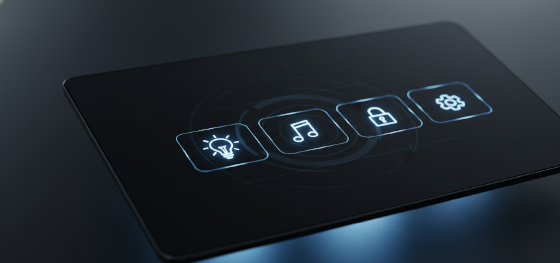
Functional sophistication defines the value proposition of modern IMD. For smart devices requiring capacitive touch sensing or "Hidden-until-Lit" features, in mold decoration is the only viable path. We utilize specialized transparent inks and IR-transmissive pigments that allow light and electrical fields to pass through while remaining opaque to the human eye under ambient light. This capability enables the creation of "Ghost Buttons"—controls that only appear when the device is powered on. At Jucheng Precision, we also integrate capacitive touch foils directly into the IMD film stack. Instead of assembling a touch sensor *to* a part, we mold the sensor *into* the part. This consolidation reduces your Bill of Materials (BOM) count, eliminates assembly labor, and creates a water-tight, hermetically sealed interface that is impossible to achieve through traditional secondary operations.
Surface Defense: Scratch Resistance and Chemical Armor
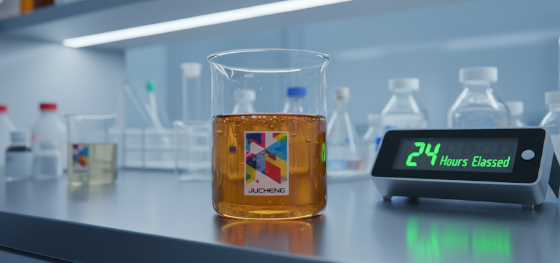
Environmental resilience determines the field survival of your hardware. Medical devices must survive frequent "Wipe-Down" protocols with Isopropyl Alcohol (IPA) and bleach, while automotive interiors must resist the aggressive UV radiation of a sun-soaked cabin. Standard prints fail these tests within days. in mold decoration utilizes specialized films pre-treated with UV-cured hard coats. These top layers act as a molecular shield, rejecting the oils from human hands and the corrosive chemistry of cleaning agents. Jucheng Precision subjects all IMD batches to rigorous "Taber Abrasion" and "Cross-Hatch Adhesion" audits in our QC lab. We verify that the film maintains its optical clarity and that the graphics show zero color-shift after accelerated aging tests. We don't just provide a "pretty face" for your product; we provide an industrial-grade armor that ensures your brand's reputation remains untarnished in the most hostile user environments.
JUCHENG Protocol: Zero-Inclusion Cleanroom Execution
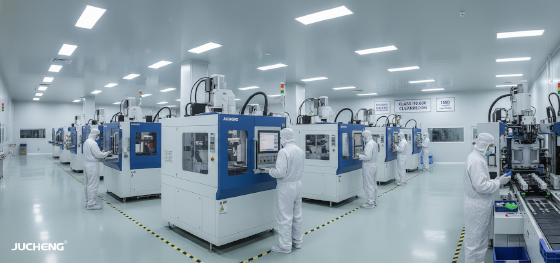
Manufacturing excellence at Jucheng Precision is built on the foundation of the cleanroom environment. Because IMD utilizes clear films, a single dust particle trapped during the molding cycle acts as a macroscopic inclusion that will trigger a visual rejection. We operate our IMD injection bays within Class 100,000 cleanrooms, utilizing HEPA filtration and ionizers to eliminate static-attracted dust. Our facility, housing over 150 CNC machines for mold maintenance and elite injection presses, is optimized for high-fidelity cosmetic execution. When you upload a CAD file to our facility, our veteran engineers perform a comprehensive "IMD Feasibility Audit," evaluating your draft angles and corner radii to prevent "Film Thinning" or "Color Stretch." Stop gambling your hardware launch on vendors who treat decoration as an afterthought. Not sure if your panel design is suitable for high-resolution graphics? Upload your 3D CAD file to JUCHENG today for a Free DFM Review. Our experts will identify the optimal Injection molding surface finishes for your brand, ensuring your transition to production is seamless, beautiful, and retail-ready.

