


Translating complex artistic patterns and intricate functional profiles into physical hardware requires advanced optical control. Utilizing laser cut sheet metal designs allows developers to bypass expensive hard tooling while executing highly complex geometric cuts with extreme repeatability. This digital manufacturing path relies on a concentrated thermal beam to vaporize material along precise toolpaths, translating 2D vector graphics directly into highly repeatable metal panels with minimal material waste.
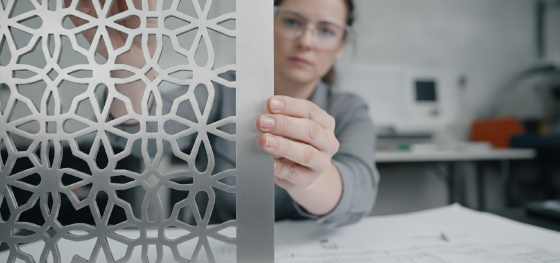
However, designing detailed laser patterns without assessing metallurgical heat reactions is a major risk on the development line. When slot clusters are placed too close together, the intense thermal energy can warp the flat sheet, causing severe buckling and localized stress fractures. Proactively balancing your open-area ratios against raw material properties is the best way to secure your part flatness.
Let's examine how thermal cutting excels in both architectural and mechanical applications, review the essential CAD rules to prepare clean vector files, and explore how choice of assist gas dictates cut edge quality.
content:
The Artistic and Industrial Potential of CNC Laser Cutting
Vector Graphics to Metal: Preparing Your CAD Files
Edge Quality and Tolerance in Complex Designs
High-Speed Fiber Laser Slicing at JUCHENG
FAQ: Critical Questions About Laser Cut Sheet Metal Designs
The Artistic and Industrial Potential of CNC Laser Cutting

What makes CNC laser profiling highly versatile for modern hardware and architectural parts?
It offers unlimited geometric freedom to cut anything from high-precision mechanical brackets to highly decorative perforated architectural screens without requiring custom punch dies.
Laser cutting bridges the gap between high-strength structural engineering and cosmetic industrial styling. For structural components, it slices clean bolt circles and card guide tracks with high precision. In architectural applications, it is utilized to fabricate large-format privacy panels, custom gates, and decorative wall claddings.
Because the fiber optic beam is entirely software-driven, moving from a prototype design to full-scale production requires zero physical tooling changes. This allows engineers to refine their geometries on the fly, optimizing layouts to minimize material waste while delivering sharp contours that are free from mechanical shearing stresses.
Vector Graphics to Metal: Preparing Your CAD Files

What CAD modeling steps are required to prepare a design for clean laser profiling?
Designers must export clean, continuous vector paths in DXF or DWG formats, ensuring all overlapping geometry lines and micro-gaps are fully closed.
Translating vector graphics directly into physical components is a massive milestone in modern sheet metal design, bridging the gap between digital modeling and the laser controller. Exporting clean vector graphics from your 3D CAD modeling software ensures the laser cutter reads the path correctly. Double-cutting overlapping lines or running a laser head over fragmented curves can cause severe edge burning and dimensional errors.
When preparing laser cut sheet metal designs for custom grilles or brackets, scaling your CAD features relative to the laser spot size is also vital. The laser beam possesses a physical thickness known as the kerf width. Designers must adjust their hole clearances and flange offsets to compensate for this minor material removal, ensuring that nested slots interlock tightly during final assembly.
Edge Quality and Tolerance in Complex Designs
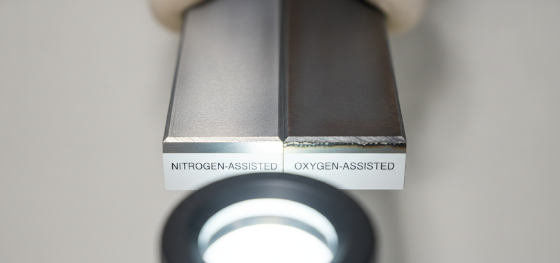
How do different assist gases dictate the cleanliness of laser-cut steel edges?
Nitrogen assist gas prevents oxygen exposure to deliver a bright, weld-ready edge, while oxygen assist gas reacts with carbon steel to cut thick gauges quickly but leaves a dark oxide scale.
The selection of cutting gas significantly impacts the physical properties of the finished cut. Utilizing high-pressure nitrogen assist gas is preferred for stainless steel and aluminum. Nitrogen cools the cut zone and completely blows away the molten metal, preventing oxidation and delivering a bright, clean edge that is ready for immediate welding without secondary grinding.
For thick carbon steel plates, oxygen assist gas is deployed to initiate an active chemical reaction that generates extra heat, allowing the laser to slice through thick gauges quickly. However, this reaction leaves a dark, brittle layer of iron oxide along the edge. If not removed, this oxide layer can cause subsequent powder coatings to peel off, exposing the bare metal to rapid atmospheric rust.
High-Speed Fiber Laser Slicing at JUCHENG

What sets JUCHENG's CNC laser cutting apart from traditional sheet metal shops?
We operate high-power, multi-kilowatt fiber lasers integrated with active optical stabilization, allowing us to maintain tight dimensional tolerances on highly intricate geometries.
Our workshop floor is engineered to eliminate production bottlenecks during rapid prototyping and low-to-medium volume manufacturing. By connecting our advanced cutting systems directly to our digital engineering network, we interpret complex CAD data instantly, translating your vector paths into clean physical profiles. Every design undergoes an initial, automated manufacturability check where our engineers evaluate kerf widths and heat-affected zone (HAZ) expansion, helping you optimize material nesting before we cycle the laser heads.
We back our operations with strict quality certifications, including ISO 9001 and IATF 16949, ensuring that industrial and automotive brackets meet rigorous regulatory standards. With our flexible no MOQ policy and rapid delivery turnaround, JUCHENG provides a reliable, high-yield manufacturing partner to help you transition custom flat patterns into continuous production-grade hardware.
FAQ: Critical Questions About Laser Cut Sheet Metal Designs
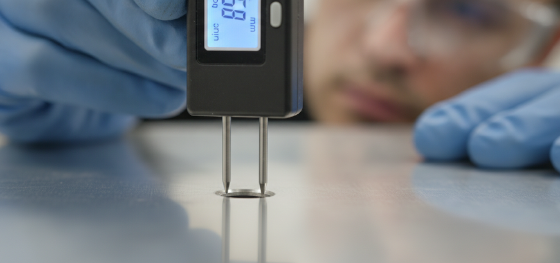
What is the minimum hole size achievable in laser cut sheet metal designs?
As a general manufacturing rule, the minimum hole diameter should not be less than the material thickness. Forcing a high-temperature laser beam to cut a hole smaller than the sheet thickness concentrates intense thermal energy in a tiny area, causing the metal to melt and warp, resulting in irregular, non-circular holes.
Can highly reflective metals like brass and copper be laser cut safely?
Yes, but they require advanced fiber lasers. High-purity copper and brass reflect standard CO2 laser wavelengths like a mirror, bouncing the energy back into the cutting head and burning out the focus optics. Fiber lasers operate at a much shorter wavelength that reflective metals absorb easily, delivering clean, dross-free cuts without optical feedback risks.
How do you prevent outer edge micro-cracking when bending laser-cut parts?
The intense heat of laser cutting can create a brittle, hardened layer along the cut edge, especially on hard carbon steels. If a bend is executed directly along this cut edge, the brittle material will undergo localized micro-cracking. We prevent this by adjusting laser cutting parameters to minimize the heat-affected zone, or utilizing secondary tumbling to smooth the cut edges before forming.
What causes dross (slag) on the bottom edge of a laser cut panel?
Dross occurs when the cutting head moves too fast or when the assist gas pressure is too low, preventing the molten metal from being blown completely out of the kerf. This remaining metal solidifies on the underside of the sheet, requiring manual grinding to remove. We eliminate dross by continuously optimizing our gas pressure levels and laser cutting speeds to ensure clean, burr-free cuts.

