

The Three Sheet Metal Design Mistakes That Break Your Budget
Views: 3 Author: Allen Xiao Publish Time: 2025-12-04


What is the most expensive part of your sheet metal project? It is not the aluminum or the steel. It is not the hours the laser cutter runs. It is not the time the press brake operator spends bending your part.
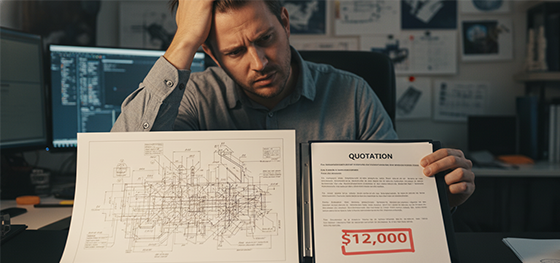
The most expensive part of your project is almost always a design mistake. A mistake that could have been easily avoided.
A smart Sheet metal design is the single most powerful tool you have for controlling costs and ensuring a high-quality final product. This guide is not about how to draw. It is about how to think. It is a guide to designing for reality, not just for the screen.
The Golden Rule: Think in 2D
Mistake #1: The Fantasy of the Sharp Corner
Mistake #2: The Warped Hole
The Smartest Investment: A DFM Review
The Golden Rule: Think in 2D
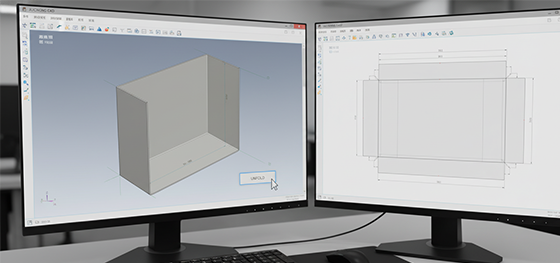
The biggest mental shift required for good Sheet metal design is to stop thinking in three dimensions. You must learn to think in two dimensions.
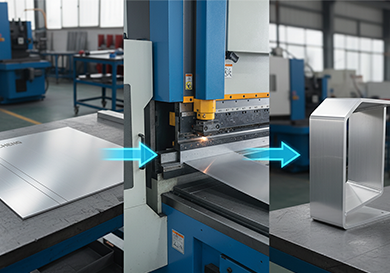
Every sheet metal part, no matter how complex it looks, starts as a single, flat sheet. Every feature, every bend, every hole, must be able to be "unfolded" into a 2D pattern. If you cannot unfold your 3D model into a clean flat pattern in your CAD software, it cannot be made.
This "2D thinking" is the foundation of Design for Manufacturability (DFM) in the world of Sheet Metal Fabrication. It forces you to think not just about what the part looks like, but about how it will be born from a single sheet.
Mistake #1: The Fantasy of the Sharp Corner
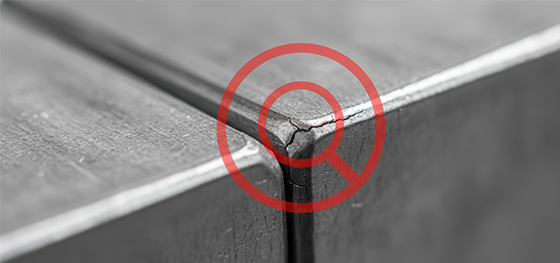
This is the most common and most damaging design mistake. An engineer designs a part with a perfect, 90-degree internal and external corner. It looks sharp and clean on the screen.
In reality, this is a fantasy. You cannot bend metal into a perfectly sharp corner. The material on the outside of the bend must stretch. If the corner is too sharp, the material will stretch too far and develop micro-cracks. This creates a massive point of weakness. The part will fail under vibration or stress.
The solution is simple. Every bend must have an inside bend radius. A safe and universal rule is to make this radius at least equal to the thickness of the material. This simple act of adding a radius is the difference between a professional design and an amateur one. It is the secret to a strong and reliable part.
Mistake #2: The Warped Hole
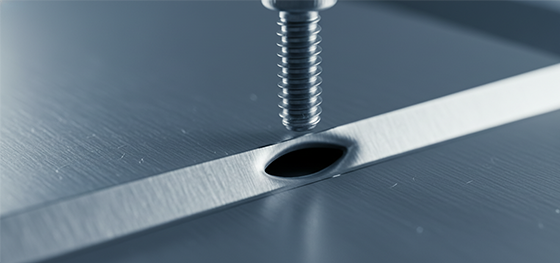
This is another classic mistake that causes huge assembly headaches. A designer places a mounting hole too close to a bend line.
When the part is formed on the press brake, the metal around the bend line stretches and deforms. Because the hole is in this deformation zone, it gets pulled and distorted. Your perfectly round hole becomes an ugly oval.
The consequence is severe. Screws will not fit. Pins will not align. Your entire assembly process comes to a grinding halt. The part is scrap.
The solution is another simple rule of thumb. Keep the edge of any hole at least 3 times the material's thickness away from the outside of the bend. For a 2mm thick part, this means a gap of at least 6mm. This ensures the hole stays in a stable, non-stretching zone, and remains perfectly round.
The Smartest Investment: A DFM Review
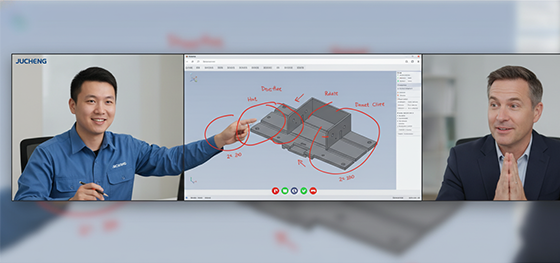
How do you avoid these and a dozen other potential mistakes? You do not have to be a fabrication expert yourself. You just need to work with one.
The smartest investment you can make in your project is to choose a manufacturing partner who provides a free, detailed DFM (Design for Manufacturability) review before you ever place an order.
At JUCHENG, this is a standard part of our process. Our experienced engineers become your partners. We review your design with a manufacturer's eye. We will catch the sharp corners. We will flag the holes that are too close to a bend. We will send you a clear, visual report showing you exactly what the problems are and how to fix them.
This free consultation is not a sales tactic. It is a risk reduction strategy. It saves you from costly rework. It speeds up your timeline. And it is the first and most important step in a successful Sheet Metal Fabrication project. A good design is the foundation for everything that follows.


ㆍPrivacy: We respect your privacy. Here you can find an example of a non-disclosure agreement. By submitting this form, you agree to our terms & conditions and privacy policy.
