


Fleet deployment is the ultimate proving ground for autonomous algorithms. When a robotics company transitions from a solitary laboratory prototype to deploying 500 quadruped dogs or warehouse AGVs into a real-world environment, the hardware must graduate from "fragile mockup" to "industrial asset." The primary adversary for hardware engineers in 2026 is the manufacturing "Valley of Death"—the awkward production volume that is too massive for 3D printing, yet far too small to justify the staggering capital expenditure of hardened steel molds. Navigating this critical scaling phase requires the strategic deployment of Low volume injection molding for robotics. This agile manufacturing discipline bridges the gap between VC-funded prototypes and mass-market saturation, utilizing cost-effective aluminum tooling to deliver end-use plastics. Jucheng Precision operates as a high-fidelity scaling partner in the Shenzhen precision manufacturing hub, providing the thermodynamic control and rapid tool fabrication needed to produce hundreds of identical, ruggedized humanoid robot parts. We don't just "make plastic covers"; we engineer a financial and structural bridge that ensures your beta fleet survives the dirt of the factory floor without incinerating your seed capital.
Establishing a resilient beta launch demands the absolute rejection of "Production-Scale" procurement dogma. Amateurs often commit to $200,000 steel molds for a robot that is still undergoing intense software iterations, unaware that a single geometric change to accommodate a new LiDAR sensor will require scrapping the entire tool. Jucheng Precision eliminates this "Tooling Ransom" by utilizing Rapid Tooling protocols. Whether you are developing complex electronics housings requiring UL94 V-0 flame retardancy or high-impact leg covers for rough terrain, our facility provides the material science and metrological rigor required to validate your hardware in the field. This guide deconstructs the economics of aluminum mold bases, the physics of real-world material testing, and why JUCHENG’s "On-Demand" protocol is the mandatory foundation for anyone navigating the treacherous waters of mid-volume robotic production.
The Valley of Death: Why is scaling from 10 to 500 robots a financial nightmare?
Rapid Tooling: How do aluminum molds slash tooling costs by 50%?
Real Materials: Why must beta testers evaluate true production-grade plastics?
The JUCHENG Angle: How does on-demand molding de-risk your Beta launch?
Frequently Asked Questions: Robotic Low Volume Molding
The "Valley of Death": Why is scaling from 10 to 500 robots a financial nightmare?
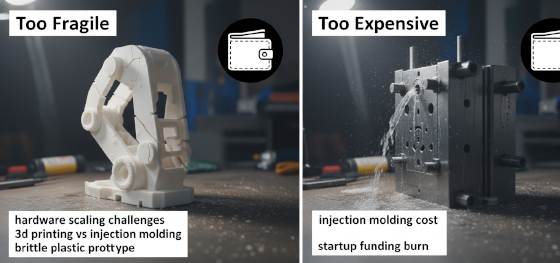
Capital starvation is the direct result of mismatched manufacturing methodologies. The "Valley of Death" occurs when a robotics firm requires 500 to 5,000 units for a beta test or regional rollout. At this volume, 3D printing 500 complex torso covers is financially toxic; the slow machine time keeps the unit price artificially high (e.g., $150 per part), and the layered resin is inherently brittle and prone to shattering upon impact. The traditional alternative is high-volume injection molding, which offers a $5 unit price but demands a $60,000 hardened steel mold that takes 12 weeks to build. Amortizing that $60k across only 500 robots adds a devastating $120 of "Tooling Debt" to every single machine. This forces startups to choose between shipping fragile, overpriced 3D prints or draining their entire runway on steel molds for a design that isn't finalized. Escaping this paradox requires a process designed specifically for this mid-tier volume.
Rapid Tooling (Aluminum Molds): How do aluminum molds slash tooling costs by 50%?

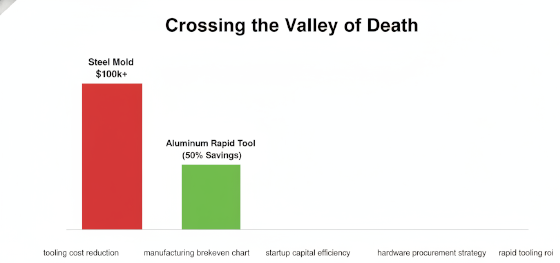
Machinability and thermodynamic efficiency unlock the economics of low-volume scaling. To bridge the Valley of Death, Jucheng Precision deploys Low volume injection molding for robotics utilizing Aerospace-Grade Aluminum 7075-T6 for the mold core and cavity. Unlike hardened H13 tool steel, which is punishingly slow to cut and requires extensive EDM sparking, aluminum machines up to three times faster on our 5-axis CNC centers. This "Spindle Agility" dramatically reduces the manual labor and machine-hour costs associated with tool building. We can deliver a functional, high-precision aluminum mold for $15,000 instead of $60,000, and we can do it in two to three weeks instead of three months. Furthermore, aluminum dissipates heat faster than steel, leading to shorter cycle times and lower per-part costs. While an aluminum tool won't last a million cycles, it easily survives the 5,000 to 10,000 shots perfectly aligned with a robotics beta launch, providing the exact "Tooling Lifespan" you need without paying for the longevity you don't.
Real Materials: Why must beta testers evaluate true production-grade plastics?
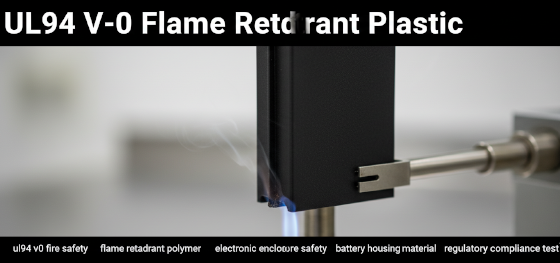
Environmental validation is meaningless if the substrate is a surrogate. When 500 robots are deployed into a warehouse or a hospital, they will impact walls, experience thermal soaking near heat-generating motors, and encounter potential electrical shorts. 3D printed resins or cast polyurethanes cannot legally or physically simulate these extremes. Jucheng Precision ensures your beta fleet utilizes the exact end-use engineering thermoplastics specified in your BOM. We inject real, high-impact Polycarbonate (PC) for sensor windows, and Glass-Filled Nylon (PA66-GF) for structural internal brackets. Crucially, for the main body enclosures housing the high-capacity lithium-ion battery packs, we utilize specialized UL94 V-0 flame-retardant ABS or PC/ABS blends. This ensures that if a thermal runaway event occurs during a field test, the plastic housing self-extinguishes within seconds, preventing a catastrophic fire. You gather actionable data on thermal expansion, impact survival, and regulatory safety using the exact molecular chemistry that will be used in mass production.
The JUCHENG Angle: How does on-demand molding de-risk your Beta launch?
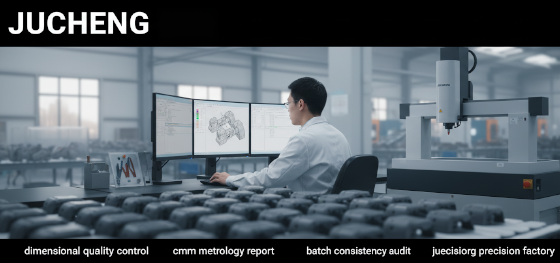
Manufacturing excellence at Jucheng Precision is built on the foundation of capital agility. We recognize that robotics hardware iterates violently; the design you launch today will likely need a modification next quarter. JUCHENG’s on-demand, low-volume injection molding de-risks your Beta launch by offering a "Zero-MOQ" fulfillment model. Once your rapid aluminum tool is cut and validated, we store it in our climate-controlled library for free. If you need 200 replacement leg covers next month, you simply send the PO, and we put your mold back on the press. If your field data dictates that a mounting boss needs to move by 2mm, an aluminum mold is significantly easier and cheaper to modify than hardened steel. We don't just supply plastic; we provide an adaptable manufacturing infrastructure that allows you to scale up or pivot your design without writing off massive tooling investments. Stop gambling your startup's runway on inflexible vendors. Leverage our decade of rapid scaling mastery to validate your robot fleet in the real world, safely and profitably. Contact our technical team today for a free DFM review.
Frequently Asked Questions: Robotic Low Volume Molding
Question: Does JUCHENG provide Mold-Tech or VDI textures on aluminum rapid tools?
Answer: Yes. Aluminum 7075-T6 takes chemical photo-etching and media blasting very well. We can apply industry-standard VDI 3400 or specific Mold-Tech leather grains to give your beta robots a premium, retail-ready cosmetic finish.
Question: Can insert molding (like threaded brass nuts) be done in a low-volume aluminum tool?
Answer: Absolutely. We routinely hand-load brass threaded inserts into our rapid tools before injection, providing the high torque-out resistance your robot assemblies need for repeated maintenance and teardowns.
Question: What is the typical lead time for a 500-unit robotic enclosure run?
Answer: Once the CAD is approved and the DFM is finalized, we typically machine the aluminum tool and deliver the first batch of 500 T1 production-grade enclosures within 15 to 21 business days.

