


You have probably heard its nickname: "18-8". It is the single most common and versatile stainless steel on the planet. It is the material of your kitchen sink, the tanks in a brewery, and the hardware on a sailboat.

This is 304 stainless steel. It is the industry's default choice for a huge range of applications. But its friendly, jack-of-all-trades personality hides a challenging secret for the machinist.
The process of machining 304 stainless steel is a battle against a phenomenon called work hardening. This guide, from a manufacturer's perspective, will show you how to win that battle.
content:
Properties: The Trustworthy '18-8'
Machining Challenges: Controlling 'Work Hardening'
Applications: A World of Versatility
JUCHENG's Advantage: Inventory and Expertise
Properties: The Trustworthy '18-8'
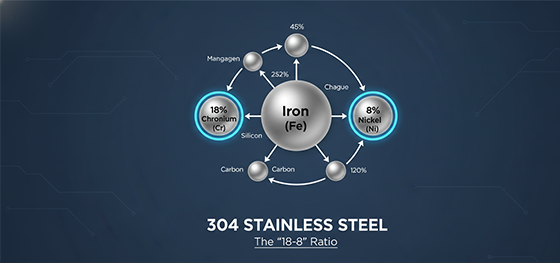
The nickname "18-8" comes directly from 304's chemical recipe. It is composed of approximately 18% chromium and 8% nickel. This specific composition gives it its famous and desirable properties.
The chromium is the key to its "stainless" nature. It forms a thin, invisible, and self-healing passive layer of chromium oxide on the surface, which protects the iron in the steel from rusting. This gives 304 excellent corrosion resistance in most normal environments.
The nickel is important for its mechanical properties. It makes the steel "austenitic," which means it is non-magnetic and has excellent toughness. It can be bent, formed, and welded with ease. This combination of good corrosion resistance, excellent formability, and reasonable cost makes it the most versatile of all stainless steels.
Machining Challenges: Controlling 'Work Hardening'
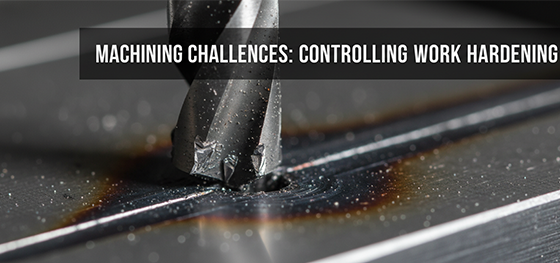
However, this toughness comes at a price on the factory floor. Like all austenitic stainless steels, 304 is prone to "work hardening." This is the primary challenge of any stainless steel cnc machining operation.
Work hardening means the material gets harder as you cut it. The pressure and heat from the cutting tool change the crystal structure of the surface, making it much harder than the material underneath.
This is a machinist's nightmare. It causes rapid tool wear and can lead to tool breakage. To combat this, a machinist must be aggressive. They must use sharp, tough, coated carbide tools. They must use a slow cutting speed but a constant, heavy feed rate. This strategy ensures the tool is always cutting "under" the hardened layer from the previous pass.
It is a demanding process that requires rigid machines and a deep understanding of cutting physics. It is why machining 304 stainless steel is significantly slower and more costly than machining mild steel or aluminum.
Applications: A World of Versatility
The amazing balance of properties makes 304 one of the most widely used CNC machining materials in the world.
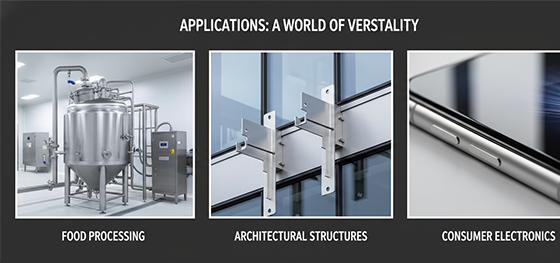
In the food and beverage industry, its corrosion resistance and hygienic, easy-to-clean surface make it the standard for tanks, pipes, and processing equipment.
In architecture, it is used for everything from handrails to decorative panels and structural brackets, where it provides both strength and a long-lasting, clean appearance.
In consumer products, it is used to create a premium feel. The frame of a high-end smartphone or the body of a luxury watch is often machined from a solid block of 304 stainless steel. It provides a satisfying weight, a beautiful finish, and a sense of uncompromising quality.
JUCHENG's Advantage: Inventory and Expertise

For a material that is so common, quick access and deep expertise are key competitive advantages.
At JUCHENG, we understand the importance of speed. That is why we maintain a large inventory of certified 304 stainless steel bars, plates, and sheets in a wide variety of thicknesses. This means we do not have to wait for a supplier. We can often start machining your parts the same day you place your order.
Our team of engineers and machinists has decades of combined experience in taming the challenges of stainless steel. We have the rigid, powerful machines. We have the advanced cutting tools. And we have the process knowledge to produce your 304 stainless steel parts with the precision, surface finish, and speed that your project demands.

