


Eliminating mechanical downtime is the ultimate metric for success in precision agriculture robotics. When an autonomous tractor navigates a multi-thousand-acre field, the drivetrain components must handle massive torque loads and constant abrasive friction without human intervention. Standard automotive parts often fail under the unique stresses of deep-tilling and high-payload transport. Engineering high-performance Machining parts for autonomous tractors requires a focus on hardened alloys and ultra-tight tolerances to ensure a zero-failure mission profile in [2026].
Drivetrain components in AgTech face a relentless assault from dust ingress, vibrational fatigue, and extreme torque spikes. A drive shaft or steering pivot that shears during the narrow planting window can cost a farm tens of thousands of dollars in lost productivity. Jucheng Precision addresses these critical vulnerabilities by utilizing aerospace-grade materials and specialized heat-treatment protocols. We produce hardware that survives where others shatter.
Operating out of the Shenzhen precision manufacturing hub, JUCHENG provides a comprehensive "Bridge to Production" for autonomous vehicle OEMs. Our facility handles everything from raw forging to final 5-axis precision grinding. This guide explores the essential material science and machining strategies required to manufacture tractor components that never quit, even in the harshest global farming environments.
High-Torque Actuators: Precision in Steering and Lift
Comparative Data: Hardened Steel Performance
Hardened Alloy Steels: Preventing Fatigue Failure
Sealed Bearing Housings: Keeping Mud and Grit Out
JUCHENG: The Hub for Heavy-Duty Tractor Components
FAQ: Drivetrain Durability for Autonomous Fleets
High-Torque Actuators: Precision in Steering and Lift
Steering linkages and lift-arm pivots in autonomous tractors handle dynamic loads that fluctuate by thousands of newtons every second. Traditional Machining parts for autonomous tractors must prioritize dimensional accuracy to prevent "slop" in the steering system. Even a 0.1mm deviation in a pivot pin can translate into a 10cm navigation error at the tool-head, compromising the entire precision agriculture mission. JUCHENG utilizes high-precision CNC turning to hold +/- 0.005mm tolerances on all critical rotational interfaces.
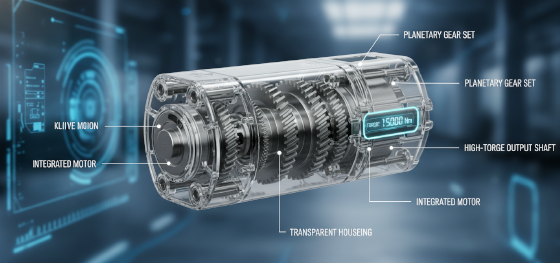
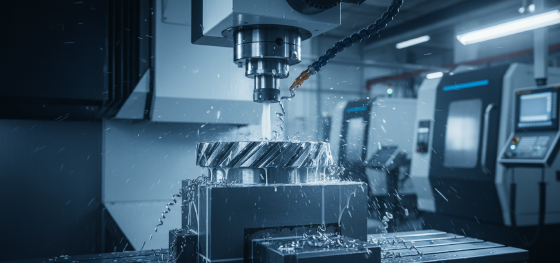
High-torque actuators require internal gears with optimized tooth profiles to minimize backlash. Backlash in a robotic tractor causes oscillations during path-following, which increases wear on the drivetrain and wastes battery or fuel. By utilizing 5-axis CNC milling, we carve complex gear geometries that provide maximum surface contact, distributing the torque load evenly and significantly extending the component life. This level of precision ensures that the robot’s steering remains crisp and responsive over thousands of operational hours.
Material density is also a factor in actuator performance. Porosity in low-quality cast parts can lead to sudden fractures under peak torque. JUCHENG utilizes forged billets as our starting substrate, ensuring a continuous grain flow that enhances the part's structural backbone. Whether it is a steering knuckle or a hydraulic manifold, starting with high-density metal is the first step in building a tractor that can handle the violent shocks of off-road travel.
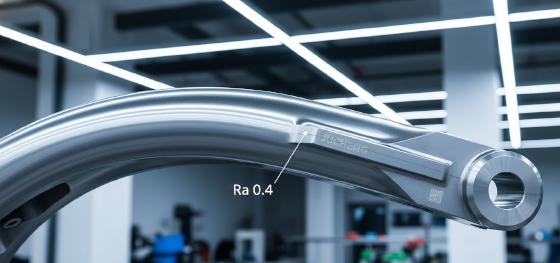
Surface roughness at the pivot points is controlled to a Ra 0.4 finish. This "mirror finish" reduces friction and prevents the localized heat buildup that can lead to galling—a common failure where the pin and housing effectively weld themselves together under load. By optimizing the surface-to-seal interface, JUCHENG ensures that lubricants stay where they belong, keeping the high-torque systems running cool and efficient during the peak of the harvest season.
Comparative Data: Hardened Steel Performance
Selecting the right alloy and hardening process is the difference between a part that lasts ten seasons and one that fails in ten days. Jucheng Precision provides technical consultations to ensure your drivetrain components match the torque requirements of your autonomous tractor. The following table compares the most common steels used in heavy-duty Machining parts for autonomous tractors to help you optimize for strength and cost.
| Steel Grade | Typical Hardness (HRC) | Yield Strength (MPa) | Best Use Case |
|---|---|---|---|
| 4140 Chromoly | 28 - 32 (Pre-Hard) | 650 - 950 | Steering Arms, Links |
| 4340 Ni-Cr-Mo | 50 - 55 (Induction) | 1100 - 1300 | Main Drive Shafts |
| 8620 Alloy Steel | 60 - 62 (Case Hard) | 550 (Core) | Transmission Gears |
| 1045 Carbon Steel | 40 - 45 (Quenched) | 450 - 600 | Low-Torque Shafts |
4140 Chromoly steel is the industry workhorse for components requiring high fatigue resistance. Its high chromium and molybdenum content allow it to maintain structural integrity even after millions of load-unload cycles. At JUCHENG, we often CNC machine 4140 in its pre-hardened state to avoid the dimensional warping that can occur during post-machining heat treatment. This ensures that every steering linkage fits perfectly into the assembly without the need for manual adjustment.
Hardened Alloy Steels: Preventing Fatigue Failure
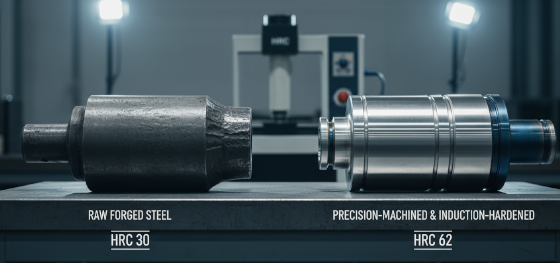
Fatigue is the silent killer of autonomous machinery. Unlike a human operator who may feel a vibration and stop the machine, an autonomous tractor will continue to drive until a component suffers total fracture. Induction hardening is JUCHENG’s primary defense against surface wear on drive shafts and gears. By localized heating and rapid quenching, we create a hard "case" of HRC 55 or higher, while the "core" remains ductile. This combination allows the part to resist surface abrasion from grit while still absorbing the massive vibrational energy of a high-torque engine.
Drive shafts in particular require specialized machining to eliminate stress risers. Sharp corners or tool marks from a rough CNC pass act as microscopic starting points for cracks. JUCHENG utilizes large-radius fillets and precision-ground surface finishes on all Machining parts for autonomous tractors to ensure smooth stress distribution across the entire part. This attention to detail is critical for shafts that rotate at high speeds for 20 hours a day during the planting season.
Case-hardening (carburizing) isReserved for transmission gears where maximum surface hardness is required to prevent "pitting"—the formation of tiny craters on the gear teeth. By diffusing carbon into the surface of 8620 steel, JUCHENG creates a wear-proof barrier that can withstand the crushing forces of high-gear ratios. This ensures that your autonomous tractor's transmission remains efficient and quiet over a 10-year service life, reducing the total cost of ownership for the end-user.
Testing these hardened parts involves magnetic particle inspection (MPI) and ultrasonic testing to verify that no internal cracks were introduced during the thermal cycles. At Jucheng Precision, we understand that a "strong" part is useless if it contains hidden defects. Our quality assurance lab ensures that every gear and shaft leaving the Shenzhen hub meets the exact OEM-grade durability standards required for high-torque precision agriculture robotics.
Sealed Bearing Housings: Keeping Mud and Grit Out

The farm environment is a toxic soup of abrasive dust, moist mud, and corrosive fertilizers. If these particulates reach the internal bearings, the drivetrain will seize within days. Designing Machining parts for autonomous tractors requires a "hermetic mindset" for all rotating assemblies. JUCHENG specializes in machining high-tolerance bearing housings with integrated gasket grooves and multi-lip seal interfaces. We hold tolerances of +/- 0.01mm on bearing bores to ensure a perfect press-fit that prevents the seal from "walking" out under vibration.
Aluminum housings are often used for weight reduction on auxiliary systems, but they require specialized stainless steel liners at the bearing interface to prevent "fretting"—the microscopic wear that occurs when a hard steel bearing vibrates against a soft aluminum housing. JUCHENG overmolds or press-fits these liners before final machining, creating a hybrid component that offers the lightness of aluminum with the industrial durability of steel. This ensures that your tractor’s auxiliary drives remain maintenance-free for the entire season.
Ingress protection (IP) is verified through pressure testing. JUCHENG’s machined housings are designed to meet IP67 and IP69K standards, meaning they can survive both deep mud submersion and high-pressure steam cleaning. By optimizing the "seal-to-shaft" concentricity through single-setup CNC machining, we guarantee that the oil seals maintain a constant 360-degree pressure, keeping the vital grease inside and the destructive grit out. This level of environmental defense is non-negotiable for autonomous fleets operating in remote regions.
JUCHENG: The Hub for Heavy-Duty Tractor Components

Dominating the [2026] AgTech market requires a manufacturing partner that can deliver aerospace precision at industrial scales. Jucheng Precision operates with a 24/7 manufacturing mindset in our Shenzhen precision manufacturing hub, delivering high-torque drivetrain components and precision-hardened gears with lead times as fast as 15 business days. We provide the "Bridge to Production" that allows you to move from a single hand-fitted prototype to a commercial fleet of 500 tractors without compromising on gear quality or shaft integrity.
Integrating your drivetrain design with JUCHENG’s expertise ensures that your autonomous tractor survives the "Peak-Season Test" and moves into mass adoption. We offer comprehensive DFM reviews within 24 hours, identifying potential fatigue points or "stress-risers" in your gear and shaft designs before they become costly liabilities in the field. Whether you are building an autonomous fruit harvester or a heavy-duty soil-tilling bot, Jucheng Precision provides the hardened steel foundations that keep your innovation running through the mud, the sun, and the years.
Our facility is equipped with 150+ CNC machines, including specialized gear hobbing and cylindrical grinding units. We manage the entire drivetrain lifecycle from raw forging to final hardened assembly. We manage the complexity of heavy-duty machining so your engineering team can focus on the AI and autonomy. By combining Shenzhen's speed with industrial-grade material verification, JUCHENG remains the preferred partner for the world's most aggressive AgTech hardware challenges. Contact us today to start your next heavy-duty project.
FAQ: Drivetrain Durability for Autonomous Fleets
What is the best steel for tractor drive shafts?
4340 alloy steel with induction hardening. It offers the best torque-to-fatigue ratio.
How do you prevent gears from wearing down in mud?
We utilize case-hardening (carburizing) to HRC 60+ and hermetically sealed housings to keep grit out.
Can JUCHENG machine large-scale gears for tractors?
Yes. We provide precision gear hobbing and 5-axis milling for diameters up to 800mm.
What surface finish is required for long-life oil seals?
A Ra 0.4 to 0.8 finish is mandatory to prevent seal wear and ensure a hermetic seal.
What are typical lead times for hardened transmission parts?
Precision hardened gears and shafts are typically delivered in 3 to 4 weeks.
Mechanical failure in autonomous farming is an absolute hardware killer. Partnering with Jucheng Precision ensures that your drivetrains are built with the hardened alloy steels and specialized 5-axis machining techniques the industry demands. Reach out to our Shenzhen manufacturing hub today for a complete DFM review and build the hardened foundation your autonomous fleet requires.

