


If Grade 2 Titanium is the workhorse of the chemical industry, Grade 5 (Ti-6Al-4V) is the undisputed king of the skies. It accounts for more than 50% of the total titanium usage worldwide. It is the material that allows fighter jets to endure supersonic stresses and Formula 1 cars to shed weight without snapping axles. However, this incredible strength comes at a price on the manufacturing floor.
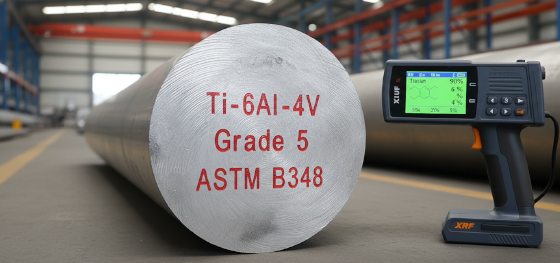
Machining Titanium Grade 5 is significantly more difficult than working with pure titanium. It is harder, tougher, and less forgiving of poor tool paths. It generates intense heat that can destroy cutting tools in minutes if not managed correctly. As a specialist in titanium cnc machining, Jucheng Precision has mastered the art of taming this aerospace-grade alloy, utilizing advanced 5-axis technology to turn complex CAD designs into flight-ready hardware.
This guide goes beyond the basics. We will explore the metallurgy of Ti-6Al-4V, why it eats tools for breakfast, and the strict safety protocols we employ to prevent titanium fires during production.
Decoding Ti-6Al-4V: The Alpha-Beta Alloy
The Thermal Nightmare: Why It Eats Tools
The 5-Axis Solution: Handling Complexity
Safety First: Fire Risks and Coolant
Critical Applications: Aerospace and Auto
JUCHENG's Aerospace Standard
Decoding Ti-6Al-4V: The Alpha-Beta Alloy
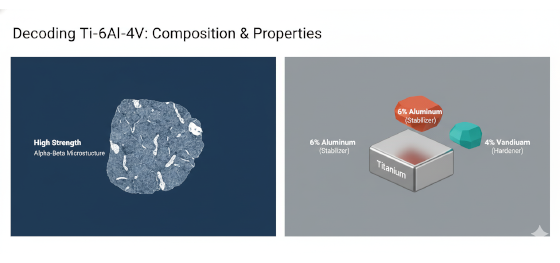
What makes Grade 5 so different from Grade 2? It is all in the recipe. By adding 6% Aluminum and 4% Vanadium to the titanium base, metallurgists created a dual-phase structure. Pure titanium has an "Alpha" crystal structure. The addition of Vanadium stabilizes a "Beta" phase.
This "Alpha-Beta" combination allows Grade 5 to be heat-treated, significantly boosting its strength. While Grade 2 has a yield strength of ~275 MPa, Grade 5 can reach ~900-1100 MPa. It offers the strength of high-end steel at nearly half the weight. However, this strength also makes it much harder to cut. The beta phase reduces the ductility, meaning the chips don't flow as easily, and the cutting forces required are much higher.
The Thermal Nightmare: Why It Eats Tools
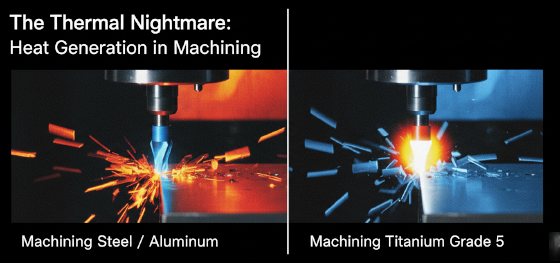
The biggest challenge in machining titanium grade 5 is heat management. Like Grade 2, Grade 5 is a terrible conductor of heat. But because it is harder, the friction generated during cutting is far greater.
Imagine machining aluminum: the hot chips fly away, taking the heat with them. With Ti-6Al-4V, the heat gets trapped right at the cutting interface. This can create temperatures exceeding 1000°C at the tool tip. At these temperatures, standard tool steels will soften and fail instantly. Even carbide tools can suffer from "chemical reactivity," where the titanium chemically attacks the tool binder. This is why tooling costs for Grade 5 projects are higher; we must use premium, heat-resistant carbide grades with specialized AlTiN coatings to survive the process.
The 5-Axis Solution: Handling Complexity
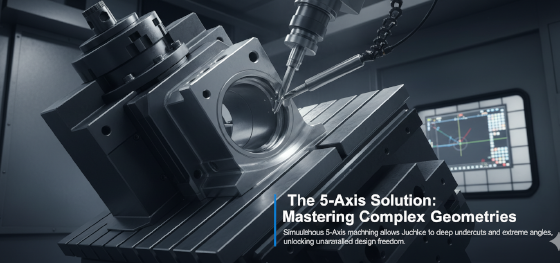
Ti-6Al-4V parts are rarely simple flat plates. They are usually complex structural nodes for aircraft, turbine blades, or racing suspension arms with organic, curved surfaces. Machining these on a standard 3-axis machine would require multiple setups, custom fixtures, and a high risk of misalignment.
Jucheng Precision employs 5-Axis CNC Machining to solve this. Our machines can rotate the part and the tool simultaneously, allowing us to access five sides of the workpiece in a single setup. This "Done-in-One" approach is critical for Grade 5 titanium. It minimizes work hardening (because we don't pause to flip the part) and ensures that the complex geometric tolerances required by aerospace blueprints are met perfectly.
Safety First: Fire Risks and Coolant
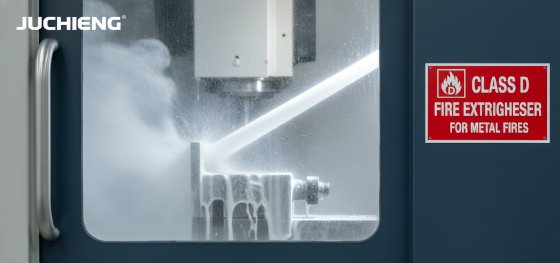
This is a topic many shops ignore, but we take it very seriously: Titanium fines are flammable. When machining Grade 5 at high speeds, the sparks generated can ignite the fine chips and dust accumulating inside the machine. A Class D metal fire is incredibly difficult to extinguish and can destroy a CNC machine in minutes.
To guarantee safety, Jucheng Precision uses High-Pressure Coolant systems (1000 PSI+) on all titanium runs. We never machine titanium dry. The coolant blast does two things: it keeps the temperature below the ignition point and physically flushes the chips away from the cutting zone before they can accumulate. Our facility is also equipped with Class D fire extinguishers at every titanium station. When you outsource to us, you are partnering with a safe, compliant, and responsible manufacturer.
Critical Applications: Aerospace and Auto
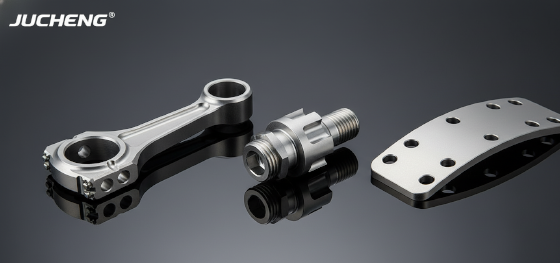
The unique strength-to-weight ratio of Grade 5 makes it indispensable in high-performance sectors.
Aerospace: Jet engine fan blades, airframe fasteners, and landing gear components. These parts must withstand extreme cyclic loading and temperature shifts.
Motorsports: Formula 1 and high-end automotive engineers use Grade 5 for connecting rods, valves, and suspension springs. Reducing unsprung weight directly translates to faster lap times.
Marine: While Grade 2 is better for general corrosion, Grade 5 is used for high-stress marine propeller shafts and rigging where pure strength is the priority.
JUCHENG's Aerospace Standard
Quality control for Grade 5 titanium is not just about checking dimensions; it is about verifying integrity. A microscopic crack caused by poor machining can lead to catastrophic failure in flight.
At Jucheng Precision, we implement strict tool life management policies. We change tools before they get dull to prevent stress-inducing rubbing. We also offer Coordinate Measuring Machine (CMM) reports and material certification (Mill Test Reports) with every shipment. Whether you are building a drone or a surgical robot, our team delivers the precision and documentation you need to fly with confidence.

