


Interfacial failure remains the single greatest threat to multi-material hardware integrity. When a hardware engineer designs an ergonomic power tool handle or a waterproof medical monitor housing, the "bond" between the rigid internal chassis and the soft elastomeric skin is not an aesthetic preference; it is a structural mandate. If the materials are misaligned at a molecular level, the resulting prototype will delaminate under the first thermal cycle or user stress test, turning a premium design into a cheap-feeling liability. Navigating this chemical standoff requires an uncompromising approach to overmold material compatibility chart logic. This technology is the cornerstone of the broader overmolding vs insert molding debate, where the goal is to create a monolithic part that refuses to peel. Jucheng Precision operates as a high-fidelity manufacturing partner, utilizing a deep material library and scientific molding protocols to ensure your multi-resin assemblies possess the permanent molecular spine your brand deserves.
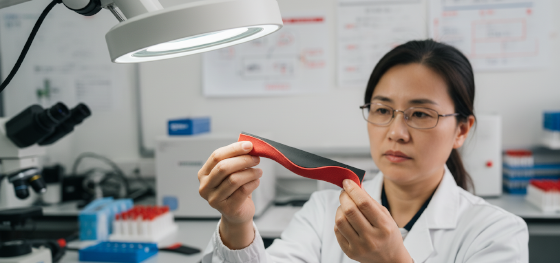
Establishing a tear-resistant bond requires moving beyond topical adhesives and entering the domain of "Molecular Interpenetration." Chemical bonding occurs only when the melt temperature of the second resin (the overmold) is sufficient to melt the surface "skin" of the first resin (the substrate), allowing the polymer chains to intertwine. Jucheng Precision eliminates "Peeling Disasters" by performing a surgical material audit before the first silicone or steel tool is cut. We map the surface energy and chemical polarity of your substrate to the optimal elastomer, ensuring that your test data is 100% predictive of production-grade behavior. This guide deconstructs the physics of the molecular handshake, providing the technical data needed to lock in your multi-material BOM.
Molecular Handshake: The Physics of Chemical Adhesion
Engineering Matrix: The Definitive Compatibility Chart
Surface Sovereignty: Preparation and Dyne Levels
Geometric Insurance: The Role of Mechanical Interlocks
JUCHENG Protocol: Eliminating the Delamination Crisis
Molecular Handshake: The Physics of Chemical Adhesion
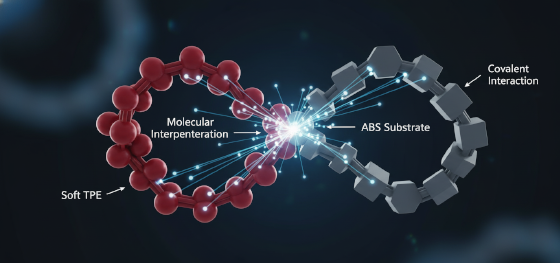
Permanent adhesion in overmolding is an act of thermodynamic synchronicity. For a true chemical bond to form, the two polymers must share similar "Polarity" and "Solubility Parameters." Imagine the polymer chains as microscopic Velcro; if the substrate is a non-polar material like Polypropylene (PP) and the overmold is a polar material like TPU, the chains have no chemical interest in one another. They will merely touch, creating a "Mechanical Contact" that fails the moment lateral force is applied. A professional overmold material compatibility chart serves as a roadmap for these molecular attractions. At Jucheng Precision, we calibrate the injection velocity and melt temperature to ensure that the overmold resin retains enough thermal energy to "weld" into the substrate skin. This localized re-melt is the secret to high-fidelity haptics. If the substrate is too cold, or the overmold melt is too thick, the "handshake" never completes, leaving your hardware vulnerable to environmental stress cracking and moisture ingress.
Engineering Matrix: The Definitive Compatibility Chart
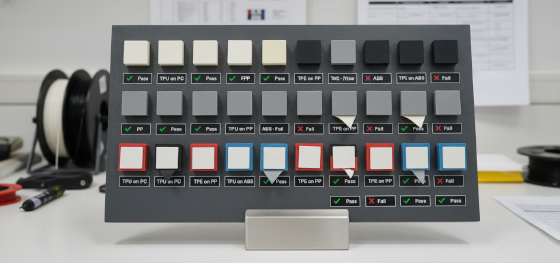
Selecting the correct resin pair requires a dispassionate look at the compatibility matrix. While primers can act as a "band-aid" for incompatible materials, they add uncontrolled cost and labor to your supply chain. Jucheng Precision prioritizes "Natural Affinities"—material combinations that bond through direct thermal fusion. Below is the primary overmold material compatibility chart utilized by our engineers to guide clients during the DFM phase:
| Substrate (Rigid) | TPU (Polyurethane) | TPE (Styrenic) | LSR (Silicone) |
|---|---|---|---|
| ABS | Excellent (Bond) | Good (Bond) | Poor (Needs Primer) |
| PC (Polycarbonate) | Excellent (Bond) | Excellent (Bond) | Excellent (Special) |
| Nylon (PA6/PA66) | Good (Bond) | Fair (Bondable) | Moderate |
| POM (Acetal) | Poor (No Bond) | Poor (No Bond) | None |
| PP (Polypropylene) | None | Excellent (Special Grade) | None |
Observing the "None" and "Poor" categories reveals a critical manufacturing truth: some materials simply refuse to cooperate. POM is a notorious "Adhesion Killer" due to its low surface energy and high crystallinity. If your project mandates a Delrin core with a soft grip, you must abandon the dream of chemical bonding and rely entirely on mechanical interlocks. JUCHENG’s engineers map these risks early, preventing you from ordering thousands of parts that will inevitably arrive in two pieces.
Surface Sovereignty: Preparation and Dyne Levels

Molecular readiness is a byproduct of meticulous surface preparation. Even the most compatible material pair on the overmold material compatibility chart will fail if the substrate surface is contaminated with mold-release oils, fingerprints, or atmospheric moisture. Jucheng Precision enforces a strict "Interface Protocol" to maximize bond strength. We target a surface energy of at least 38 to 42 Dyne/cm for optimal wetting. For high-requirement medical devices, we utilize plasma treatment or corona discharge to "open" the polymer chains of the substrate, creating active chemical sites for the overmold resin to latch onto. Furthermore, we pre-heat our rigid inserts in stabilized ovens before they are loaded into the overmolding tool. This reduces the "Thermal Shock Delta" and ensures the substrate surface reaches the fusion point the instant the molten elastomer strikes. We don't just "over-inject"; we engineer a surgical chemical environment that guarantees cohesive failure—where the material itself will tear before the bond gives way.
Geometric Insurance: The Role of Mechanical Interlocks
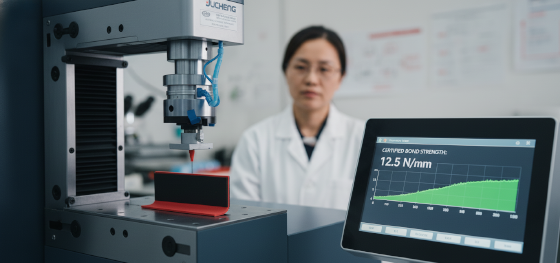
Engineering confidence relies on the "Belt and Suspenders" approach. While chemical bonding is the goal, Jucheng Precision advocates for "Geometric Insurance" in the form of mechanical interlocks. If your project utilizes a material pair with "Fair" compatibility, or if the device will be subjected to extreme shear forces (like an industrial drill grip), relying purely on the overmold material compatibility chart is a risk. We suggest integrating "Undercut Bridges," "Through-Holes," and "Dovetail Grooves" into your rigid substrate. These features allow the molten elastomer to flow through the part, physically trapping it within the rigid matrix once it solidifies. This mechanical trap ensures that even if the chemical bond is compromised by exposure to harsh cleaning solvents or oils, the part remains functionally monolithic. We turn multi-material assemblies into permanent industrial assets by combining the science of chemistry with the logic of geometry.
JUCHENG Protocol: Eliminating the Delamination Crisis
Manufacturing excellence at Jucheng Precision is built on the foundation of the material-first audit. We don't just execute your CAD files; we interrogate your Production Bill of Materials. When you upload a project to our facility, our veteran engineers pull from our database of over 50+ validated engineering resins. We identify the "Peeling Risks" and suggest the exact elastomer-substrate cocktail that fits your budget and your durability requirements. Our integrated facility, housing over 150 CNC machines and elite multi-shot injection bays, ensures that the overmolding vs insert molding transition is seamless and profitable. Stop gambling with vendors who "hope" it sticks. Leverage our decade of chemical replication mastery to secure prototypes that survive the laboratory and dominate the boardroom. Contact our technical team today for a free DFM review and an itemized overmold material compatibility chart audit for your next hardware breakthrough.

