


Designing high-precision structural hardware requires much more than simply drawing straight lines on a 3D CAD program. Managing sheet metal bending tolerances represents one of the most critical stages in custom sheet metal fabrication, directly determining whether your multi-flanged electronic chassis, card guides, or brackets will align perfectly during final assembly. This complex forming process relies on balancing material tensile limits, press brake clearances, and raw metal elastic recovery to prevent dimensional drift on the shop floor.
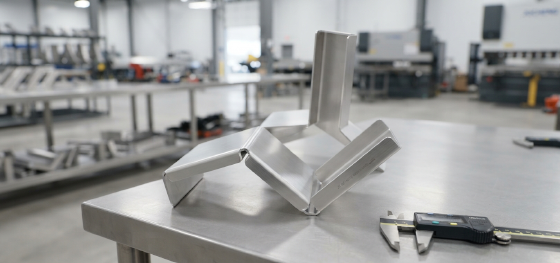
Suffer from folded flanges that continuously experience angular drift, throwing off your assembly clearances and racking up expensive rework bills? When brackets are modeled without analyzing the physical mechanics of springback, tool radius constraints, or metallurgical variables, it forces operators to manually adjust press strokes, slowing down production speeds. Proactively integrating material-specific springback variables into your unfolding software is the best way to secure your product quality.
Let's explore the physical forces behind angular springback, analyze how the rolling texture of raw sheets alters bending accuracy, and compare standard commercial limits directly against the tight tolerances achieved by multi-axis programmable press brakes.
The Physics of Bending: Why is Springback Unavoidable?
What physical metallurgical changes cause sheet metal to rebound after bending?
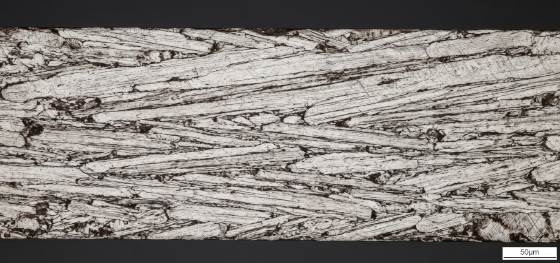
When the press brake punch deforms the sheet, the inner surface undergoes compressive stress while the outer surface undergoes tensile stress, leaving a middle neutral zone that recovers elastically upon pressure release.
To control your dimensional tolerances, understanding the physical mechanism of angular springback is essential. As the punch drives the flat sheet into the V-die, the material is forced past its yield point and into its plastic deformation zone. However, the outer fibers of the metal do not stretch uniformly, and a small percentage of elastic energy remains trapped within the metallurgical structure.
When the press retracts, this trapped elastic energy is released, forcing the folded flange to spring back toward its original flat profile. Different materials and thicknesses exhibit completely different springback behaviors. Harder tempers with high yield strengths display massive angular rebound, requiring our operators to over-bend the metal by a few calculated degrees to ensure that the material relaxes exactly into your target angle.
How Material Grain Direction Affects Bending Accuracy

How does the rolling texture of raw sheet metal impact its bending ductility and angular accuracy?
The grain direction developed during rolling at the steel mill creates anisotropic mechanical properties, making the metal more ductile when bent across the grain and highly prone to cracking when bent parallel to it.
A critical, often overlooked aspect of controlling sheet metal bending tolerances is the raw material's grain direction. During the cold or hot rolling process at the mill, the steel or aluminum grains are elongated along a single directional axis. This creates anisotropic mechanical properties, meaning the sheet behaves differently depending on the orientation of the fold.
If a bend is executed parallel to the rolling grain direction, the tensile stress concentrates along the grain boundaries, causing the outer fibers to experience micro-cracking and high angular springback variation. Conversely, folding perpendicular or diagonal to the grain direction maximizes the material's ductility and delivers highly consistent angles. Our programmers optimize our laser nesting layouts to ensure that all critical bends are oriented across the grain, keeping your angles within strict tolerance limits.
Standard Tolerance vs. Precision Press Brake Tolerance

What is the typical difference in angular and linear precision between standard air bending and high-precision bottoming?
Standard air bending typically holds tolerances of ±1.0 degree and ±0.3mm, while high-precision bottoming on multi-axis CNC press brakes can achieve ±0.5 degrees and ±0.1mm.
To minimize your manufacturing budget, understanding standard commercial tolerances is critical. In custom sheet metal fabrication, a standard press brake setup utilizing standard air bending (where the sheet only touches the die at three points) is highly cost-effective but has wider tolerance bands due to material thickness variations. Below is a direct comparison of standard commercial limits and our precision bending tolerances:
| Bending Parameter | Standard Commercial (Air Bending) | Jucheng Precision (Bottoming / Coining) |
|---|---|---|
| Angular Precision | ±1.0° (Standard commercial default) | ±0.5° (High-precision industrial) |
| Linear Flange Length | ±0.3 mm (11 GA to 20 GA) | ±0.1 mm (Tight-tolerance alignment) |
| Hole-to-Bend Clearance | ±0.4 mm | ±0.15 mm (Ensures round holes after fold) |
| Cumulative Error (5+ Folds) | ±1.2 mm (Requires loose assemblies) | ±0.4 mm (Perfect for tight box builds) |
While standard air bending is ideal for low-cost brackets and large frames, high-precision electronic chassis require bottoming (squeezing the sheet flat into the V-die bottom). This high-tonnage process minimizes springback variation and delivers exceptionally tight tolerances. We select the optimal bending method based on your chosen aluminum, stainless steel, or carbon steel gauge to ensure your assemblies align perfectly.
How Jucheng Precision Achieves Tight Bending Angles

How does Jucheng Precision guarantee consistent, tight-tolerance bends across high-volume production runs?
We operate advanced multi-axis CNC benders integrated with an extensive standard tooling library, automating all backgauge adjustments and springback calculations.
Why pay premium prices for scattered processing? At Jucheng Precision, we manage cutting, bending, and powder coating under one roof, keeping your overall sheet metal tolerances remarkably low. Our advanced press brakes utilize dynamic hydraulic compensation and automated backgauges to execute complex, multi-bend sequences in a single setup, ensuring that your parts are cut, formed, and finished with extreme consistency.
We calibrate our unfolding software with precise, empirically verified K-factor data for every gauge we stock. Our technical department provides a 24-hour free DFM analysis to evaluate your CAD models, checking clearances and tolerances before production. Supported by our no MOQ policy and rapid delivery guarantee, we manage your project from initial flat pattern cutting to final, high-durability packaging and assembly.
FAQ: Critical Questions About Sheet Metal Bending Tolerances
Our engineering team has compiled professional solutions to the most common quality challenges faced during industrial press brake operations:
Why is my bent sheet metal part out of tolerance?
Part variations are typically caused by utilizing a generic, theoretical K-factor that fails to match the actual material stretching, or by using raw sheets with high thickness tolerances from different mills. We prevent this by physically measuring every incoming batch of raw steel sheets with calibrated digital micrometers and inputting these real measurements into our CAD unfolding systems, ensuring that our progressive calculations are perfectly matched to the actual metal thickness.What is the standard sheet metal bending tolerance for commercial enclosures?
Under standard industrial norms (such as ISO 2768-m), the standard commercial bending tolerance is approximately ±1.0 degree for angular dimensions and ±0.3mm for linear flange lengths. These limits are highly cost-effective to manufacture, but high-end medical and aerospace enclosures often require tighter custom tolerances down to ±0.5 degrees and ±0.1mm, which we achieve using advanced bottoming dies.Does a smaller bend radius increase custom manufacturing costs?
Yes. Forcing a sheet into an inner radius that is smaller than the material's physical ductility limit concentrates intense tensile stress on the outer fibers, causing micro-cracking and material failures. This increases scrap rates and forces the shop to run secondary annealing heat treatments to soften the metal before forming, driving up your final unit cost. We recommend maintaining a bend radius equal to at least 1.0 times the material thickness to optimize both cost and quality.How does Jucheng Precision prevent surface defects during high-precision sheet metal fabrication?
We protect the soft, delicate surfaces of raw aluminum and polished stainless steel sheets by executing CNC bending with specialized urethane die inserts or applying high-density protective vinyl masking films. This prevents direct metal-on-metal friction between the steel tooling and the sheet, delivering clean, scratch-free decorative faceplates ready for immediate anodizing or final assembly.

