


Integrating robust, reusable machine threads into thin-gauge panels without compromising flat panel flatness is a major engineering milestone. Specifying pem fasteners in sheet metal provides your custom brackets, electrical cabinets, and electronic chassis with an exceptionally high-strength mounting thread that far outperforms standard tapped holes. This specialized cold-pressing process utilizes hydraulic forces to permanently lock threaded inserts into flat blanks, ensuring that your delicate printed circuit boards and internal sensors mount securely with zero risk of thread stripping.
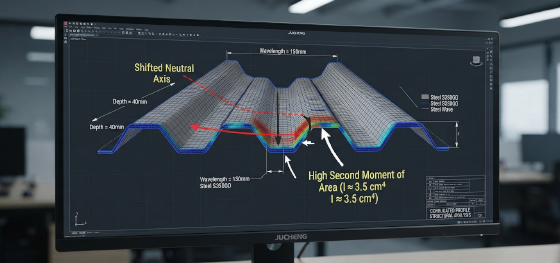
Suffer from loose fasteners that spin or pull out of their holes during high-torque screw assembly on your production line? When mounting threads are tapped directly into sheets under 1.5mm, the material lacks the thickness to support enough thread engagements, leading to instant stripping. Moving to a dedicated hydraulic hardware-pressing setup completely eliminates these assembly failures, providing exceptionally high retention force.
Let's explore the physical mechanics of self-clinching fasteners, analyze why hole precision dictates hardware retention, and review the cost-quality trade-offs of installing hardware before versus after surface coating.
What are PEM Fasteners and How Do They Work?
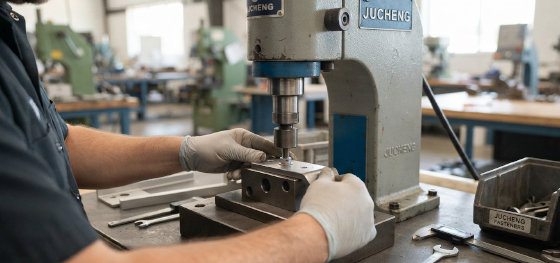
What is the physical locking mechanism of a self-clinching PEM fastener?
The process utilizes controlled hydraulic force to press the fastener into a pre-punched hole, forcing the soft parent metal to cold-flow into the undercut groove of the shank.
Unlike standard screws that rely on thread friction, self-clinching fasteners utilize material displacement to establish a permanent mechanical bond. When the press drives the fastener into the sheet, the serrated clinching ring on the fastener shank penetrates the metal surface, causing the raw alloy to flow plastically into the undercut groove.
This cold-flowing action locks the fastener permanently against high axial loads. The serrated clinching ring provides exceptional torque-out resistance, ensuring that the fastener will not spin or loosen during high-torque screw assembly, while the undercut groove provides high pull-out force protection.
Common Types: Nuts, Standoffs, and Captive Screws
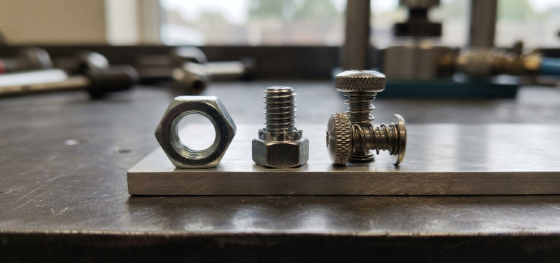
What are the most common self-clinching hardware types used in custom enclosures?
The primary types are self-clinching nuts for standard threads, threaded standoffs for stacking PCBs, and captive panel screws for tool-less cover removal.
Integrating these versatile fasteners into your early sheet metal design is the standard approach to establish modular assembly coordinates. Self-clinching nuts (such as standard S or SS series) are heavily specified to provide strong, reusable machine threads on sheets under 1.5mm thickness. For stacking circuit boards and maintaining internal air-venting gaps, threaded standoffs (such as SO or BSO series) act as rigid mounting pillars.
Additionally, we install captive panel screws (such as PF or SC series) on enclosure access doors. These spring-loaded fasteners remain securely mounted to the panel even when unscrewed, preventing loose hardware from falling into sensitive electronics and causing short-circuits during field maintenance.
Material Compatibility: Matching Fastener Hardness to the Panel
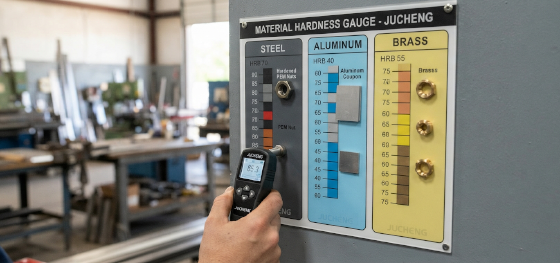
Why must the self-clinching fastener possess a higher hardness rating than the parent plate?
If the fastener is softer than the sheet, the clinching groove will collapse under the press force instead of displacing the parent metal, failing to lock.
To ensure a successful mechanical bond, managing material hardness compatibility is critical. When executing hardware insertion of pem fasteners in sheet metal, the parent sheet must deform plastically around the insert shank. This physical flow is only possible if the fastener is significantly harder than the sheet itself.
For standard aluminum and soft carbon steel panels, standard carbon steel or stainless steel PEM fasteners work beautifully. However, if your chassis is fabricated from high-strength stainless steel (such as SUS304), standard stainless fasteners will collapse under the press. In these scenarios, we specify specialized, high-hardness precipitation-hardened stainless fasteners (such as the PEM SP series) to ensure a secure, high-strength clinch without joint failure.
PEM Hardware Integration at Jucheng Precision
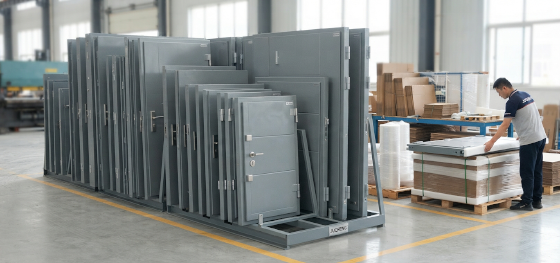
Sourcing high-integrity threaded connections requires automated precision on the shop floor. Jucheng Precision houses advanced pneumatic and hydraulic hardware presses equipped with automatic vibratory bowl-feeders, allowing us to install thousands of self-clinching fasteners per hour with extreme perpendicularity control. By monitoring press tonnages electronically, we prevent local panel crushing and deliver completely flat assemblies ready for immediate system integration.
Every custom order is managed under a unified quality system certified to ISO 9001 and IATF 16949 standards, ensuring that high-speed stamping and sheet metal fabrication runs meet strict automotive and industrial regulations. We provide certified pull-out and torque-out testing reports to verify the mechanical integrity of every batch. Supported by our flexible no MOQ policy and rapid delivery turnaround, we manage your project from initial flat pattern laser blanking to final, fully integrated packaging with zero dimensional drift.
FAQ: Critical Questions About Pem Fasteners in Sheet Metal
Our engineering team has compiled professional, concise solutions to the most common quality challenges faced during PEM hardware pressing runs:
Does inserting self-clinching hardware deform the sheet metal?
No, provided you use precise hydraulic tonnage and maintain proper edge distances (minimum 2x the hole diameter) to prevent material buckling.How do you test the mechanical strength of inserted hardware?
We conduct standardized torque-out and pull-out force tests to verify that the cold-flow locking rings have securely engaged with the metal.What is the standard tolerance required for the mounting hole?
Self-clinching fasteners demand a very tight hole diameter tolerance of +0.08/-0.00mm; oversized holes will drastically reduce retention strength.How does Jucheng Precision prevent tolerance errors during high-volume pem fasteners in sheet metal installation?
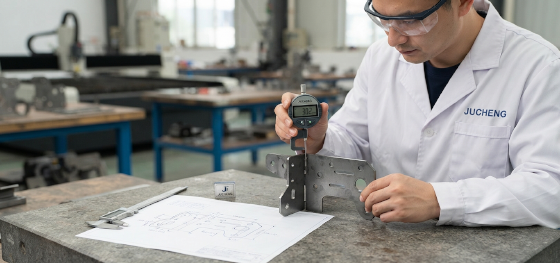
We verify mounting hole diameters using digital pin gauges before pressing, and conduct real-time coordinate measuring machine (CMM) audits to ensure perfect perpendicularity and thread alignments.

