


Integrating safe, smooth edges and high structural stiffness into raw plate profiles is a vital mark of manufacturing quality. Adhering to a robust sheet metal hem design guide prevents sharp edge cuts, protects internal wiring from abrasion, and significantly increases the moment of inertia on large, unsupported panels. To execute these folded safety seams repeatably, designers must understand the physical stress boundaries of metal deformation while identifying how the mechanical hemming process behaves under compression.

For many product developers, overlooking these essential edge rules leads to severe folding cracks and crushed sheet metal features. Attempting to fold hard alloys into dead-flat seams without pre-calculating the internal material stretch will split the outer grain boundaries, ruining both aesthetics and structural integrity. Proactively designing your hem profiles to match standard press brake tooling limits is the best way to secure your product quality.
Let's examine the primary functional purposes of hemming, analyze the geometric design rules for closed, open, and teardrop profiles, and review the proper tooling and tonnage required to execute flat folds safely.
content:
The Purpose of Hemming: Safety and Stiffness
Design Rules for Different Hem Types
Proper Tonnage and Press Brake Tooling for Hemming
Custom Enclosure Hemming at JUCHENG
FAQ: Critical Questions About Sheet Metal Hem Design Guide
The Purpose of Hemming: Safety and Stiffness
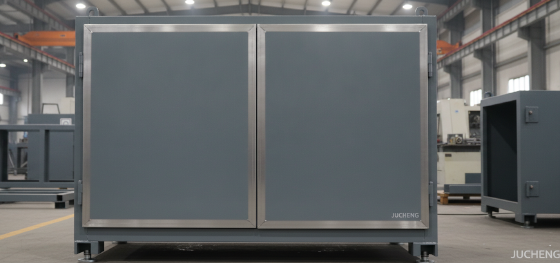
Why are hemmed edges specified on industrial cabinet skins and consumer faceplates?
Hemming folds the sharp sheared edge of a metal sheet back on itself, creating a smooth, safe edge for handling while significantly reinforcing the rigidity of thin panels.
The primary purpose of running a mechanical hemming process is twofold: safety and structural reinforcement. Raw sheets straight from the laser cutter possess razor-sharp burrs that can easily cut assembly operators or end-users. Fusing the raw edge back onto the sheet body creates a smooth, rounded contour that satisfies strict safety standards.
Furthermore, hemming essentially doubles the material thickness along the edge of the panel. This local reinforcement provides outstanding stiffness, preventing thin sheet skins from flexing or vibrating under load. This allows engineers to specify lighter, thinner raw plates while maintaining a highly rigid and robust structure, optimizing overall product weight.
Design Rules for Different Hem Types
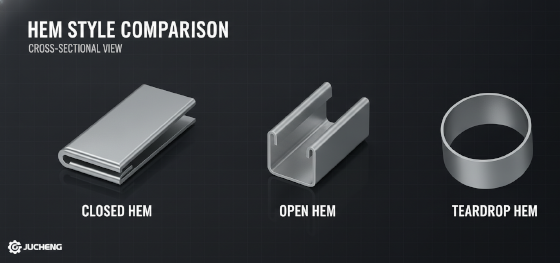
What are the geometric design rules for closed, open, and teardrop hems?
Closed hems require highly ductile alloys to prevent cracking, open hems maintain an air loop to reduce strain, and teardrop hems utilize a curved bulb for materials with lower ductility.
When implementing the rules within this sheet metal hem design guide, designers must select the correct shape based on material ductility. Choosing an incompatible profile for a hard temper will lead to immediate metallurgical splitting along the outer fold. Standard geometries must be chosen based on the mechanical properties of your selected material:
| Hem Type | Geometric Profile | Minimum Flange Height | Best Material Match |
|---|---|---|---|
| closed hem | Flat fold, zero inner loop gap | 4.0 x Material Thickness | Highly ductile carbon steel, soft aluminum (5052-H32) |
| open hem | Folded loop, maintains a small air gap | 4.0 x Material Thickness | Standard steels, medium-temper aluminum alloys |
| teardrop hem | Folded loop, features a round bulb profile | 4.0 x Material Thickness + loop radius | Hard, low-ductility alloys (SUS304, 6061-T6 aluminum) |
Proper Tonnage and Press Brake Tooling for Hemming
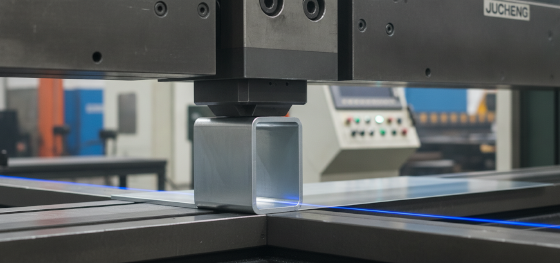
What machinery and tooling setups are required to execute flat hems?
Hemming requires a two-stage press brake operation, utilizing an acute 30-degree punch to pre-bend the flange, followed by a flat flattening die to compress the seam.
Unlike standard 90-degree V-bends that are completed in a single vertical stroke, forming a hem is a more intensive two-stage process. In the first stage, the operator utilizes an acute punch to fold the flange to a 30-degree angle. In the second stage, the part is transferred to a flat flattening die, which drives the pre-bent flange downward to collapse the loop.
This flattening stage demands exceptionally high press forces. Compressing a folded double-layer steel seam requires up to three times the tonnage of a standard air bend. If your press brake has insufficient tonnage, the hem will not flatten uniformly, resulting in uneven thicknesses and poor cosmetic alignments across long panels.
Custom Enclosure Hemming at JUCHENG
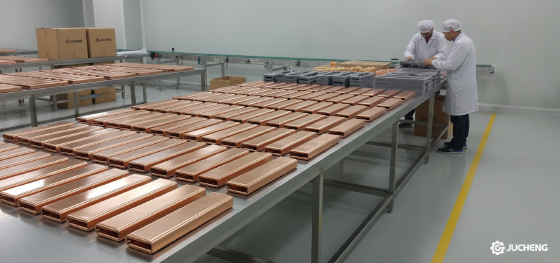
How does JUCHENG ensure flawless hemmed edges on precision custom housings?
We operate advanced multi-axis CNC press brakes equipped with pre-loaded acute punches and specialized flattening dies, matching press tonnage to your selected gauge.
Integrating these folded safety edges into your early sheet metal design phase is the single most effective way to eliminate cosmetic defects. JUCHENG integrates these advanced geometric and material validations into our digital manufacturing network, ensuring that your CAD files translate into fully finished, durable assemblies with extreme dimensional precision.
We process a wide range of raw sheets, including lightweight aluminum, high-yield stainless steel, and easily formable carbon steel. Our technical department provides a 24-hour free DFM analysis to check your CAD models, checking tolerances and tool clearances before production. Supported by our no MOQ policy and rapid delivery guarantee, we manage your project from initial flat pattern cutting to final packaging and assembly.
FAQ: Critical Questions About Sheet Metal Hem Design Guide

Why does aluminum 6061-T6 crack when folded into a closed hem?
Aluminum 6061-T6 is a precipitation-hardened alloy with low ductility. Forcing this material into a tight, flat closed hem compresses the inner radius past its plastic limits, causing severe cracking along the fold. To prevent this, we recommend utilizing highly ductile aluminum 5052-H32, or upgrading your design to an open or teardrop hem to reduce stress on the outer fibers.
What is the minimum recommended flange height for a closed hem?
To allow the press brake dies to clamp and fold the metal safely, the hem flange must possess a minimum height. If the flange is too short, the tooling cannot grip the edge, causing the sheet to slip and warp. As a general DFM rule, the minimum flange height must be at least four times the material thickness.
How do you calculate the flat pattern length of a hemmed part?
Calculating flat pattern dimensions for hems requires specific math. For a closed hem, the flat length is roughly equal to the sum of the outer dimensions plus a calculated percentage of the material thickness (typically 0.43 times the thickness). Our unfolding software automates this, ensuring that your laser blanks match your 3D CAD dimensions perfectly after hemming.
How does JUCHENG help engineers configure custom details matching this sheet metal hem design guide?
Our technical department analyzes your CAD models during our complimentary DFM stage. If your enclosure design features closed hems on hard alloys that are highly prone to cracking, we suggest upgrading to a teardrop hem or utilizing softer tempers, ensuring that your assemblies remain safe, durable, and cost-effective.

