


Your product needs to be clear, like glass. But it also needs to survive contact with the most corrosive chemicals known to man. And it cannot, under any circumstances, contaminate the liquid it is holding.
This is not a job for polycarbonate or acrylic. This is a challenge that pushes past the limits of almost all plastics. This is a job for an elite family of polymers known as fluoropolymers.
And within that family, one material offers a unique and powerful combination of properties. This is the world of pfa plastic material. It is a material designed for environments where purity is everything.
content:
The Engineer's Challenge: Purity Under Attack
PFA: The Purity of Teflon, with a Key Advantage
The Superpower: Ultimate Chemical Inertness
The Manufacturing Nuance: A Tricky Customer
When is PFA the Only Answer?
The Engineer's Challenge: Purity Under Attack
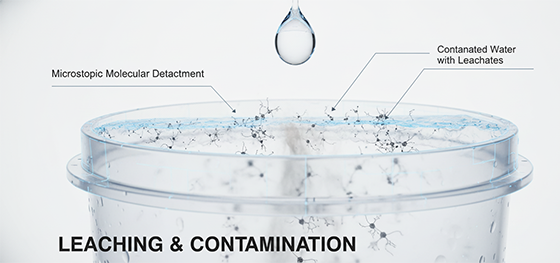
In industries like semiconductor manufacturing or pharmaceuticals, purity is measured in parts per billion. Even a microscopic amount of contamination can ruin a multi-million dollar batch of microchips or a life-saving drug.
The problem is that many standard plastics are not perfectly stable. When they come into contact with a liquid, they can "leach." This means a tiny amount of their own molecules, or additives within the plastic, can dissolve into the liquid. This is contamination.
On top of that, the chemicals used in these industries are often incredibly aggressive. They can physically attack and break down the polymer chains of most types of plastics. So, you need a material that does not leach, and does not break down.
PFA: The Purity of Teflon, with a Key Advantage

Most people have heard of PTFE, commonly known by the brand name Teflon. It is famous for its non-stick properties and incredible chemical resistance. PFA, or Perfluoroalkoxy, is a very close cousin to PTFE.
They are both fluoropolymers. They share the same superpower of being almost completely immune to chemical attack. But they have one huge difference.
PTFE cannot be melt-processed. You cannot inject it into a mold in the same way you do with ABS or polycarbonate. It must be formed using a slower, more complex process of compression and sintering.
pfa plastic material was invented to solve this problem. It has nearly identical chemical and temperature resistance to PTFE. But it has been chemically modified so that it can be melt-processed. This means you can use it in traditional, high-speed manufacturing methods like injection molding. This is a massive advantage. It allows you to create complex, intricate parts with the superpowers of Teflon.
The Superpower: Ultimate Chemical Inertness

The defining characteristic of PFA is its chemical inertness. It is one of the most non-reactive materials known.
It can handle a huge range of super-aggressive chemicals, even at high temperatures. This includes strong acids, bases, and organic solvents that would destroy most other materials.
It also has extremely low levels of leaching and extractables. This means it does not contaminate the pure liquids it comes into contact with.
This combination is why PFA is an essential material in the semiconductor industry. It is used to make all the tubing, valves, fittings, and tanks that handle the ultra-pure, highly corrosive chemicals used to etch microchips. Without PFA, modern electronics would be impossible to make.
The Manufacturing Nuance: A Tricky Customer
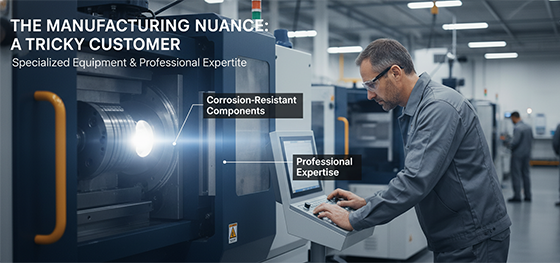
Just because PFA is melt-processable does not mean it is easy. It is a very tricky customer in our machines.
It has a very high melting temperature, and the molten plastic is very corrosive to metal. A standard injection molding machine cannot handle it. The machine's barrel and screw would be eaten away.
Manufacturing PFA requires specialized equipment. The molding machine must have a barrel and screw made from special, corrosion-resistant superalloys. The process control must be extremely precise. The temperature must be controlled very tightly to avoid degrading the material.
This is a highly specialized field. Only manufacturers with deep expertise and the right equipment can successfully mold or machine PFA.
When is PFA the Only Answer?
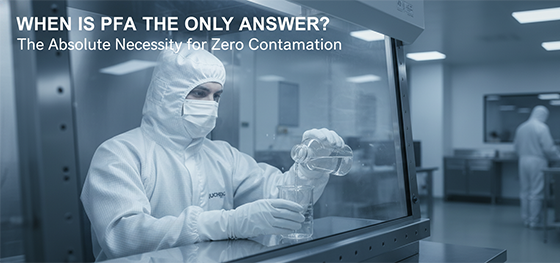
PFA is an expensive, specialist material. When is it the only choice?
You must choose PFA when your application has a "zero tolerance" policy for both chemical attack and contamination.
This includes fluid handling systems in semiconductor and electronics manufacturing. It includes piping and vessels in the pharmaceutical and biotech industries. It includes lab equipment that must handle unknown, aggressive samples.
If your project demands the absolute highest level of purity and chemical resistance, PFA is not just an option. It is a necessity. Working with an expert partner who understands the nuances of this material is the key to a successful and reliable final product.

