


Catastrophic mechanical failure often begins where clarity ends. In the uncompromising sectors of automotive lighting, medical diagnostics, and industrial safety, a material that shatters upon impact is a liability that no engineer can authorize. While Acrylic (PMMA) offers superior transparency, it possesses the structural fragility of glass. When your design requires the "unbreakable" soul of a high-performance polymer combined with crystal-clear optics, polycarbonate injection molding is the only strategically sound maneuver. Polycarbonate (PC) is an amorphous engineering thermoplastic that offers an impact strength 250 times that of glass and 30 times that of acrylic. Jucheng Precision operates as an elite injection facility, navigating the volatile thermodynamics of Injection molding materials to deliver parts that serve as physical shields. Mastering PC is not merely about melting plastic; it is about managing extreme melt viscosities and internal residual stresses to ensure your hardware survives the boardroom and the battlefield.
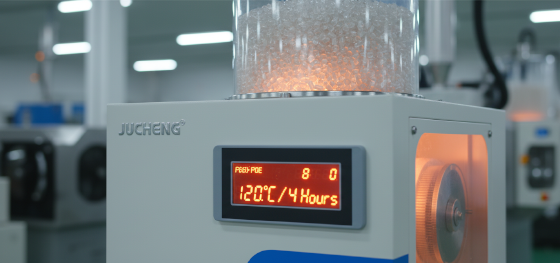
Molecular integrity dictates the success of high-pressure optical replication. PC molecules are characterized by long, rigid chains that resist flow, making it one of the most viscous polymers in the injection room. Attempting to process PC with standard "low-pressure" thinking leads to incomplete fills, silver streaks, and brittle failure caused by moisture-induced hydrolysis. Jucheng Precision eliminates these manufacturing disasters by enforcing a strict "Desiccant Shield" protocol—drying every gram of PC resin at 120°C for at least four hours before the first shot. We don't just "mold plastic"; we engineer a thermal event that locks in the material’s structural and optical potential. This guide deconstructs the mechanical sovereignty of PC, leveraging hard data to compare it against competing transparent resins.
Optical Battleground: PC vs. PMMA vs. Glass
Mechanical Sovereignty: Technical Property Matrix
Viscosity Warfare: Managing High Melt Temperatures
Internal Stress: Eradicating Birefringence and Crazing
JUCHENG Protocol: S136 Steel and SPI A-1 Finishing
Optical Battleground: PC vs. PMMA vs. Glass
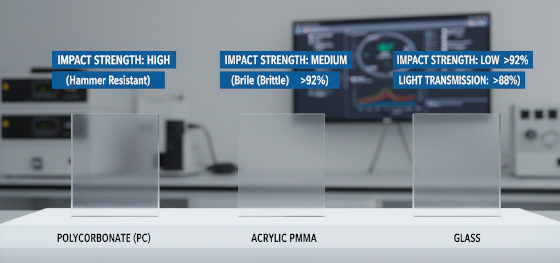
Selecting the correct transparent medium requires a cold-blooded analysis of the "Toughness-to-Clarity" ratio. While glass is the gold standard for scratch resistance, its weight and catastrophic failure mode make it unsuitable for modern portable hardware or automotive exteriors. Acrylic (PMMA) is lighter and clearer (92% transmission), but it is brittle; a single impact can send shards flying. polycarbonate injection molding occupies the strategic middle ground. It is slightly softer and more prone to scratches than acrylic, but its ability to absorb kinetic energy is unparalleled. Below is the comparative matrix used by Jucheng Precision engineers during the material validation phase:
| Property | Polycarbonate (PC) | Acrylic (PMMA) | Glass |
|---|---|---|---|
| Impact Strength (Notched) | 600 - 900 J/m | 15 - 20 J/m | < 5 J/m |
| Light Transmission (%) | 88% - 90% | 92% | 98%+ |
| Heat Resistance (HDT) | 135°C - 145°C | 85°C - 95°C | 500°C+ |
| Scratch Resistance | Moderate (Needs Coating) | High | Extreme |
Mechanical Sovereignty: Technical Property Matrix
Engineering confidence in polycarbonate is built on its spectacular ductility across extreme temperature deltas. Unlike most Injection molding materials, PC remains tough at -40°C, making it essential for outdoor automotive sensors and high-altitude aerospace enclosures. Jucheng Precision utilizes premium grades from Sabic (Lexan) or Covestro (Makrolon) to ensure that the "Molecular Spine" of your part is optimized for its specific mechanical burden. Below is the technical data matrix our engineers use to validate structural PC designs:
| Mechanical Property | Typical PC Value |
|---|---|
| Tensile Strength at Yield | 60 - 70 MPa |
| Flexural Modulus | 2,300 - 2,500 MPa |
| Elongation at Break | 80% - 120% |
| Specific Gravity | 1.20 |
Viscosity Warfare: Managing High Melt Temperatures
Fluid dynamics within the PC cavity resemble the movement of cold honey under extreme pressure. Polycarbonate is notoriously high-viscosity, requiring melt temperatures between 280°C and 320°C. If the mold temperature is set too low, the melt "freezes off" before it can reach the distal features of the part, resulting in short shots. Jucheng Precision eliminates these flow bottlenecks by utilizing high-performance oil-heaters to maintain mold temperatures at 100°C or higher. This "Hot Tooling" approach reduces the thermal shock at the interface, allowing the long polymer chains to relax and fill the cavity with minimal "Shear Stress." Furthermore, we utilize over-sized gates and wide runners to minimize the pressure drop. By respecting the material’s refusal to flow easily, we deliver parts with high structural integrity and zero "Silver Streaks" (splay) that would otherwise plague a rushed or under-heated molding cycle.
Internal Stress: Eradicating Birefringence and Crazing
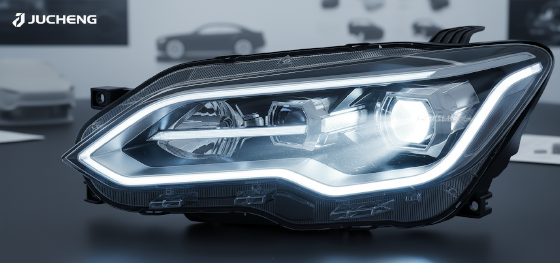
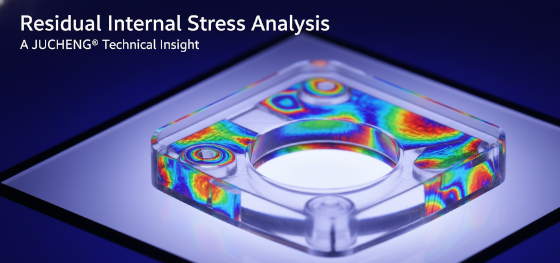
Residual stress is the invisible predator of polycarbonate longevity. Because PC requires high pressure to fill, the polymer chains are often "frozen" in a state of extreme tension. This manifests visually as birefringence—rainbow patterns when viewed through polarized light—and physically as "Crazing." If a stressed PC part is exposed to a cleaning solvent or even high humidity, it will develop a network of microscopic surface cracks that eventually lead to catastrophic fracture. Jucheng Precision combats this through "Post-Molding Annealing." We subject critical PC components to a stabilized thermal cycle in our digital ovens, allowing the molecular chains to reorganize and "relax" without altering the part’s geometry. This stabilization is mandatory for medical devices and aerospace windows, ensuring that your hardware survives years of use without becoming a brittle hazard. We don't just eject the part; we audit its internal energy to guarantee long-term survival.
JUCHENG Protocol: S136 Steel and SPI A-1 Finishing
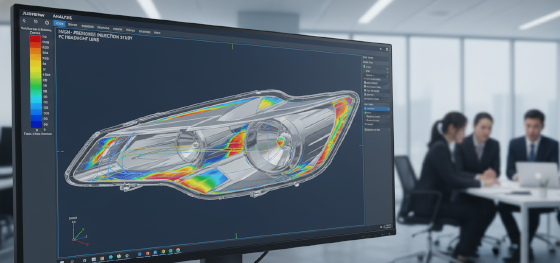
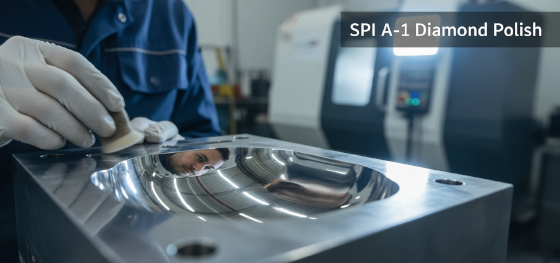
Manufacturing excellence at Jucheng Precision is built on the foundation of the "Optical Standard." For polycarbonate injection molding, the quality of the part is a direct mirror of the quality of the tool steel. We utilize S136 through-hardened stainless steel for our PC optical molds. Unlike standard P20 steel, S136 can be polished to an SPI A-1 diamond finish, achieving a mirror-like surface energy that minimizes light diffraction. Our finishing cleanrooms ensure that your headlight lenses and diagnostic windows are free of the "Black Specks" and "Dust Inclusions" that destroy photometric data. We also offer secondary anti-scratch and anti-fog coatings to enhance the material’s natural performance. Stop settling for "cloudy" or "fragile" transparent mockups. Not sure if your wall thickness is uniform or your gate location is optimal? Upload your 3D CAD file to JUCHENG today for a Free DFM Review. Our experts will identify Injection molding materials bottlenecks before they cost you money, ensuring your transition to production optics is crystalline, profitable, and retail-ready.

