


Why wait six weeks for a part that might be obsolete by the time it reaches your desk? This is the central frustration of modern product development. In the relentless landscape of CNC machining industry applications, the gap between a digital CAD file and a physical, tangible component is where innovation either thrives or dies. Most manufacturers treat every job the same, forcing a single prototype through the same sluggish bureaucracy as a million-unit production run. This is a strategic error. Prototype CNC Machining is not just a sub-category of manufacturing; it is an entirely different technical discipline that prioritizes speed, flexibility, and real-world validation above all else.
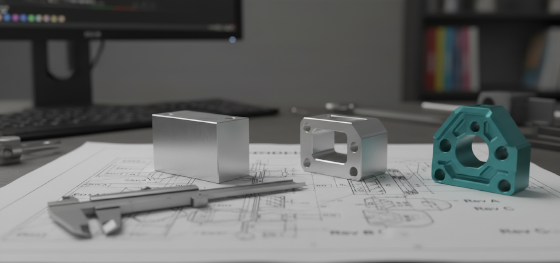
Precision is a baseline, but in the world of prototyping, speed is the currency. At Jucheng Precision, we have dismantled the traditional machine shop hierarchy to create a "Rapid Response Cell." We understand that a prototype is a question—a physical query about fit, form, and mechanical survival. If the answer takes too long to arrive, the project stalls. By leveraging our fleet of 5-axis centers and Swiss lathes, we turn these questions into physical answers in as little as 72 hours. This guide moves beyond the corporate gloss to explore the actual mechanics of rapid iteration, the importance of material fidelity, and why the right prototyping strategy is the ultimate insurance policy for your final product launch.
Success in hardware innovation requires the ability to "fail fast." You need to know if that thin wall will buckle or if those internal threads will strip before you invest in expensive production tooling. Let us examine the technical pillars that allow JUCHENG to compress your development timeline without sacrificing a single micron of accuracy.
Speed: The Currency of Modern Innovation
Material Fidelity: Testing Real Physics Early
Solving the Geometry Riddle: 5-Axis Freedom
The Chasm: Moving from One to One Thousand
JUCHENG’s Rapid Response Cell: Beyond the Spindle
Speed: The Currency of Modern Innovation

Time is the one variable you cannot recoup in a product launch cycle. When an engineer specifies prototype cnc machining, they are essentially buying time. In a conventional job shop, your single-part order sits in a queue behind high-volume contracts, often waiting two weeks just for a quote. Jucheng Precision has re-engineered this process. We treat prototyping as a sprint. Our internal logic bypasses the standard production roadblocks; we utilize dedicated "Bridge Machines" that are kept open specifically for R&D work. This allows us to provide quotes within hours and start cutting chips within the same day.
But speed without control is just a fast way to make scrap. We utilize high-speed toolpath algorithms that prioritize rapid material removal while maintaining the part’s thermal stability. For a consumer electronics designer, this speed means they can test three different versions of a hinge in a single week. For a medical device startup, it means validating a surgical handle before their next round of clinical feedback. We don't just "rush" the job; we optimize the cnc machining process for agility, ensuring that the "Revision A" part you have in your hand today is the catalyst for the "Revision B" part we will ship on Friday. This compressed feedback loop is what allows our clients to out-pace their competitors and reach the market first.
Material Fidelity: Testing Real Physics Early
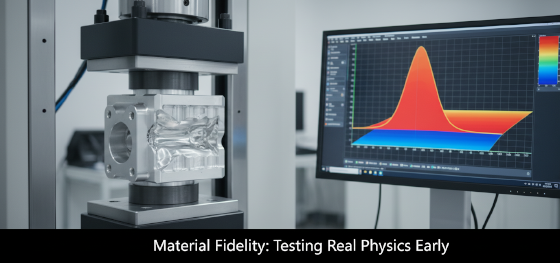
3D printing has its place, but it cannot replicate the soul of an engineered metal or high-performance plastic. A printed part might look like your design, but it will never behave like your design. It won't have the same heat dissipation as 6061 aluminum, the same coefficient of friction as Delrin, or the same impact strength as Titanium Grade 5 Machining. This is the primary technical argument for Prototype CNC Machining: Material Fidelity. We use the exact same production-grade billets for your prototypes that will be used in your final assembly.
Testing with real physics prevents "Post-Launch Disasters." We have seen projects where a 3D-printed prototype passed a vibration test, only to have the final machined part fail because the resonance frequencies of the solid metal were different. By machining your prototypes, you are validating the structural integrity of the part under real-world loads. Jucheng Precision provides full material certifications with every prototype batch, ensuring you are testing against a known, certified baseline. Whether you are dealing with high-temp superalloys or moisture-sensitive nylons, our prototyping service gives you the data you need to sleep soundly at night, knowing that your design isn't just a visual model, but a functional mechanical survivor.
Solving the Geometry Riddle: 5-Axis Freedom
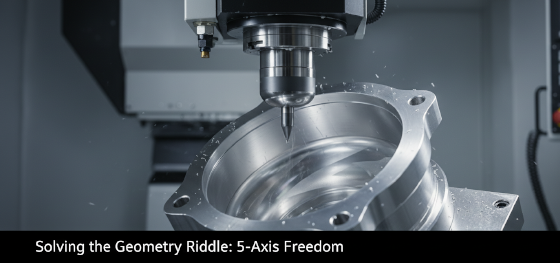
Prototyping often involves complex, non-optimized geometries that are a nightmare to hold in a standard vice. An engineer might design a "dream part" with undercuts, organic curves, and compound angles that would require five separate setups on a traditional 3-axis machine. In the time it takes to build a custom fixture for a 3-axis machine, Jucheng Precision has already finished the part on one of our 5-axis simultaneous centers. This technology is the ultimate enabler for Prototype CNC Machining.
Simultaneous 5-axis movement allows us to reach into the most difficult areas of a part in a single setup. This isn't just about saving time; it's about preserving the "geometric truth" of the design. When you move a part from one machine to another, you introduce tolerance stack-up. By machining a prototype in one continuous operation, we maintain absolute concentricity and position accuracy. This is critical for CNC machining industry applications like aerospace manifolds or medical instrumentation where features are intertwined. We remove the "manufacturability fear" from your design process, allowing you to iterate on complex shapes that were once thought impossible to machine, giving you the freedom to optimize for performance rather than for the shop's convenience.
The Chasm: Moving from One to One Thousand
The most dangerous moment for a product is the transition from "one perfect prototype" to "one thousand consistent parts." Many shops can make one good part if given enough time and manual labor. But if the prototype process doesn't mirror the production process, you will encounter a wall of problems during the scale-up. At Jucheng Precision, we use our Prototype CNC Machining phase to perform a "Production Simulation." We use the same high-speed spindles, the same multi-axis logic, and the same quality protocols that we will use for your low-volume production run.
This "Bridge Strategy" identifies potential production bottlenecks before they become expensive. If we find that a certain deep-hole feature in your design causes tool deflection during the prototype phase, we provide DFM (Design for Manufacturing) feedback immediately. We might suggest a slight increase in a radius or a modification to a wall thickness that will save you thousands of dollars in the production phase. By the time your prototype is approved, we already have a validated, high-yield CNC program ready to go. We don't just ship you a part; we ship you a manufacturing roadmap. This seamless transition from the R&D bench to the factory floor is what makes JUCHENG a vital link in the global supply chains of the automotive and medical sectors.
JUCHENG’s Rapid Response Cell: Beyond the Spindle
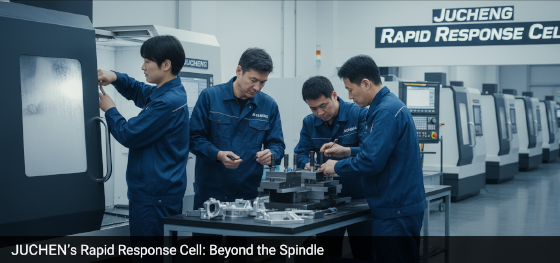
Why choose JUCHENG for your next sprint? Because we recognize that prototyping is a service industry, not just a machining industry. Our facility is structured to absorb the chaos of the R&D cycle. We maintain a huge inventory of certified materials—from 7075 aluminum to aerospace-grade PEEK—so we never have to wait for a supplier to ship a single bar. Our "Rapid Response Cell" is staffed by our most senior master-machinists—technicians who can interpret a rough hand-sketch as easily as a 200MB STEP file.
We close the gap between your engineering team and our machine shop through a collaborative DFM culture. We act as an extension of your lab. When you send us a prototype order, you aren't just sending a file to a black box; you are engaging with a team that treats your deadline with the same urgency as you do. We provide 100% CMM inspection reports for prototypes, ensuring that even your earliest iterations are verified against the digital master. Whether you are building the first functional model of a new surgical robot or the third revision of a high-performance EV inverter, Jucheng Precision has the technical rigor and the agility to deliver. Contact our team today for a rapid quote and see how our specialized Prototype CNC Machining services can clarify and accelerate your next engineering vision.

