


Flight is a constant defiance of physics. In the high-stakes world of CNC machining industry applications, the sky is not a limit—it is a relentless laboratory that demands perfection. Every gram of excess weight on an aircraft represents a loss in fuel efficiency and payload capacity, yet every structural failure represents a potential catastrophe. This is the uncompromising reality of Aerospace CNC Machining. It is a sector where "standard" tolerances are discarded in favor of micron-level certainty, and where the materials used are often as difficult to shape as the environments they are built to survive.
At Jucheng Precision, we have engineered our facility to meet these atmospheric demands. We recognize that aerospace engineers are looking for more than a vendor; they need a technical partner who understands the nuances of stress-relief and the metallurgical behavior of exotic alloys. Operating from our advanced 5-axis centers, we provide the manufacturing infrastructure to produce monolithic structures and thin-walled enclosures that remain stable under supersonic stress. This guide explores the mechanical foundations of flight engineering, the critical role of material selection, and why JUCHENG’s commitment to absolute traceability defines our success in the global aerospace supply chain.
Efficiency in the air starts with precision on the ground. Whether you are building a commercial landing gear assembly or a satellite housing for a deep-space mission, the success of the part depends on the integrity of the manufacturing process. Let us examine the technical pillars that allow JUCHENG to translate complex flight designs into verified physical reality.
Gravity’s Mandate: Mastering the Strength-to-Weight Ratio
Metallurgy of Flight: Navigating 7075 to Inconel
Monolithic Revolution: Simultaneous 5-Axis Strategies
Thin-Wall Stability: Machining Without Dimensional Warping
Audit Trail: Absolute Traceability and Defense Standards
Gravity’s Mandate: Mastering the Strength-to-Weight Ratio
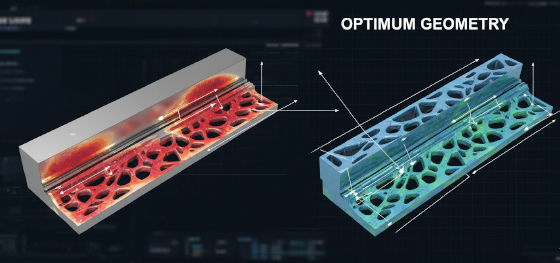
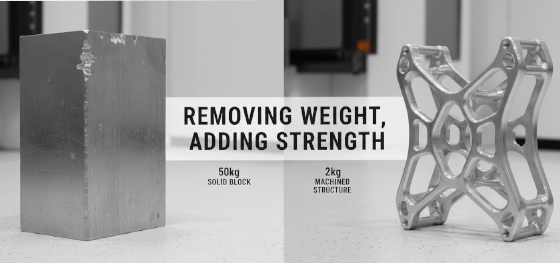
In aerospace engineering, weight is the ultimate enemy. Every unnecessary pound requires more thrust, more fuel, and more structural support. This has led to the "Strength-to-Weight" mandate that governs Aerospace CNC Machining. Unlike industrial machinery where mass can be used to provide damping, aerospace parts must be skeletal yet invincible. This creates a geometric challenge: designers must remove as much material as possible, leaving behind only the "load paths" necessary to hold the part together.
Achieving this requires a deep understanding of structural optimization. We often receive designs for "pockets within pockets," where the material thickness is reduced to less than 1mm in non-critical areas. Machining these lightweight geometries is a test of tool pressure management. If the cutter exerts too much force, the thin web of metal will deflect or vibrate, leading to "chatter" marks or a complete structural collapse. At Jucheng Precision, we utilize high-speed spindles and advanced CAM algorithms to maintain a constant "chip load," ensuring that we can evacuate 95% of a block’s mass while leaving behind a high-integrity frame. We treat every aerospace bracket as a study in efficiency, balancing the need for lightness with the absolute requirement for safety in the CNC machining industry applications arena.
Metallurgy of Flight: Navigating 7075 to Inconel
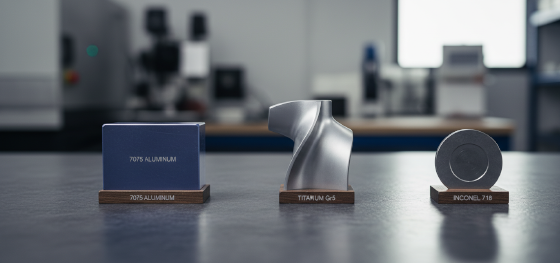
The materials found in an aircraft are a diverse mix of "fast" and "tough" alloys. For structural airframes and wing ribs, Aluminum 7075-T6 is the standard. It offers the strength of many steels but at one-third of the density. However, 7075 is prone to internal stress; if you cut it too fast without a proper cooling strategy, the part will "potato chip" or warp. JUCHENG specializes in the nuanced Machining of 7075 Aluminum, utilizing multi-stage stress relief to ensure large structural plates stay flat.
As we move toward the engine and exhaust sections, the heat requirements skyrocket. Here, we master Titanium Grade 5 Machining and Inconel 718. These materials are "Superalloys" because they maintain their strength at temperatures where aluminum would melt. Machining Inconel is a battle of attrition; it is work-hardens instantly and is incredibly abrasive on cutting edges. We utilize high-torque, rigid CNC centers and specialized ceramic or cobalt-carbide tooling to overcome these materials. By managing the thermal life of the tool and the part, we ensure that the finished component retains the metallurgical properties required for jet engine survival. We don't just cut these alloys; we survive them, providing our clients with the extreme-environment hardware they demand.
Monolithic Revolution: Simultaneous 5-Axis Strategies
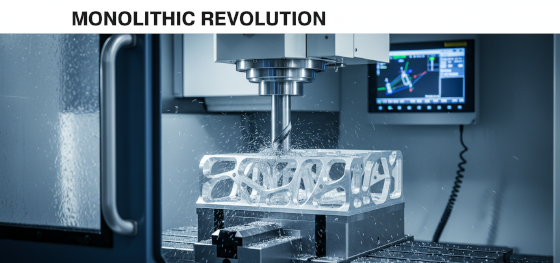
The biggest shift in Aerospace CNC Machining over the last decade has been the move toward "Monolithic" parts. Instead of riveting ten different components together, modern engineers design a single, complex part machined from a solid billet. This reduces the part count, eliminates the weight of fasteners, and increases overall reliability. However, machining these parts is impossible on a standard 3-axis mill. You need the freedom of a 5th axis.
Jucheng Precision operates more than 25 high-performance 5-axis centers dedicated to aerospace work. This technology allows us to reach deep into "undercut" pockets and machine complex organic curves in a single setup. By never releasing the part from the fixture, we eliminate the cumulative errors that occur during re-clamping. This "One-Setup" accuracy is vital for maintaining the strict position tolerances required for engine mounts and sensor housings. Our 5-axis simultaneous capability also allows for the use of shorter, more rigid tools, which reduces vibration and delivers a superior surface finish. We bridge the gap between design complexity and manufacturing feasibility, allowing your engineers to dream in five dimensions.
Thin-Wall Stability: Machining Without Dimensional Warping
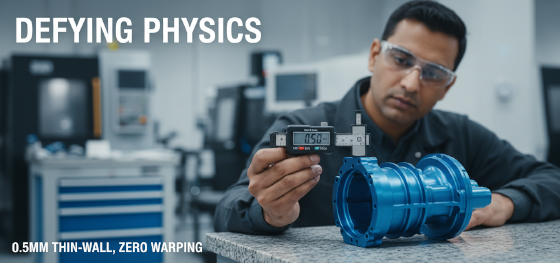
In Aerospace CNC Machining, "thin" is a relative term. We often produce enclosures and heat exchangers with wall thicknesses of 0.5mm or less. The technical challenge here is not the thickness itself, but the "spring-back" of the material. When you remove 98% of a metal block to leave a thin skin, the internal residual stresses are released, causing the part to twist or warp. Many shops ship parts that meet the print on day one but are out of spec by the time they reach the customer.
At Jucheng Precision, we use a "Staged Material Removal" protocol to conquer thin walls. We perform a heavy roughing pass, followed by an annealing cycle to relax the metal, and finally a series of high-speed finishing passes using "light-touch" tool paths. This methodical approach ensures that the part stays dimensionally stable. We also utilize specialized vacuum fixtures and "ice-clamping" techniques to support these delicate walls during the cut, preventing the vibration that leads to surface cracking. By controlling the physics of the material's relaxation, we deliver aerospace components that stay "true" from our inspection room to your final assembly line.
Audit Trail: Absolute Traceability and Defense Standards

The final hallmark of a world-class aerospace facility is not the machines, but the data. In the defense and flight sectors, a part without a documented history is a liability. Aerospace CNC Machining requires an absolute audit trail. If a structural fastener fails at 30,000 feet, the manufacturer must be able to trace that failure back to the specific batch of raw ore.
Jucheng Precision implements a rigorous traceability system. Every raw billet is verified via our in-house XRF spectrometer before it enters the machine. We maintain full records of Heat Numbers, Mill Test Reports (MTRs), and process validation logs. Our quality control department utilizes high-resolution CMMs and laser scanners to provide a 100% inspection report for critical dimensions. This level of transparency is why JUCHENG is a trusted partner for CNC machining industry applications in the military and aerospace sectors. We don't just give you a part; we give you the verified certainty that your hardware is flight-ready. Whether you are building a commercial satellite or a high-performance turbine assembly, our engineering team provides the technical rigor and documentation required to succeed in the sky. Contact Jucheng Precision today for a technical DFM review and see how our aerospace protocols can elevate your next mission-critical project.

