


Validating the structural clearances and tactile aesthetics of complex injection-molded components before mass production is a vital milestone in commercial R&D. Specifying professional rapid plastic prototyping provides your engineering teams with a clear path to verify custom snaps, sliding locks, and aesthetic panel fits using highly simulated materials. This specialized manufacturing path serves as a quick-turn rapid prototyping service, utilizing advanced subtractive, additive, and casting methods to translate virtual CAD models into physical parts with tight tolerances.

Suffer from delicate printed parts that snap during functional testing, or custom components that warp and fail to lock flush along joint seams? When drawings are modeled without analyzing thermal shrinkage differences, wall thickness limits, or gate freeze variables, the resulting prototypes fail to mimic the behavior of end-use parts. Proactively selecting the optimal processing method based on your target evaluation volume is the best way to secure your launch budget.
Let's explore the mechanical challenges of simulating production-grade plastics, compare 3D printing against high-speed milling, and review how silicone molds and rapid tooling injection molding bridge the gap to continuous manufacturing.
The Challenges of Prototyping Production-Grade Plastics
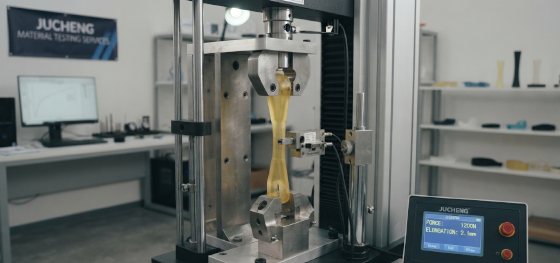
To design high-yield consumer enclosures or medical housings, choosing the correct material state is critical. Standard injection molding utilizes production-grade thermoplastics (such as ABS, polycarbonate, or nylon) processed under high heat and pressure. However, replicating these material behaviors during the early rapid prototyping process is extremely difficult because alternative rapid processes use different raw polymer structures.
For example, standard additive 3D printing relies on UV-curable resins or layered filaments that have lower tensile limits and micro-structural voids. These physical variations can yield misleading test results during drop-tests or snap-fit cycles. Product designers must align their prototype requirements with either subtractive machining (carving parts from solid blocks) or temporary tooling (molding parts in soft steel/aluminum dies) to secure realistic performance data.
3D Printing for Speed vs. Machining for Accuracy

When selecting a quick-turn method, designers must balance lead times against required dimensional limits. Industrial 3D printing (such as SLA or SLS) is exceptionally fast, requiring zero custom tooling setups. It allows us to produce highly complex, organic shapes with internal undercuts in hours. This speed makes 3D printing highly economical for initial form verification and visual scale mock-ups.
However, if your design demands tight linear tolerances (within ±0.05mm) or requires real, production-grade materials (like POM or PEEK), CNC machining is the superior choice. Subtractive milling blocks have uniform physical density and can easily hold precise thread and bore clearances. This ensures that your mechanical joints align perfectly under dynamic testing loads without premature failure.
Vacuum Casting for Low-Volume Cosmetic Plastics
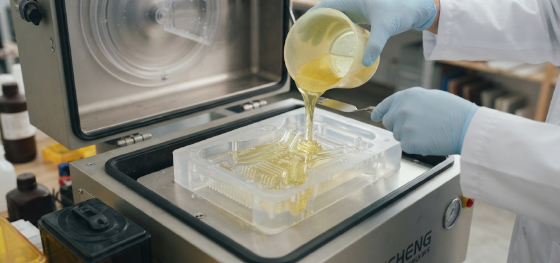
For small batches of 10 to 50 cosmetic parts (such as handheld device outer skins or medical panel bezels), subtractive milling is too slow, and 3D printing is too expensive per part. To overcome these limitations, we utilize vacuum casting. This process prints a high-resolution SLA master pattern, suspends it inside a frame, and pours liquid silicone around it to form flexible silicone molds.
Once cured, we cut the mold open and inject dual-component urethane resins under a vacuum. These advanced liquid resins are formulated to mimic the exact mechanical properties, colors, and textures of standard injection-molded plastics (such as simulating ABS, PMMA, or soft rubber). This versatile process provides a highly cost-effective method to produce short-run, fully colored custom rapid plastic prototyping batches with outstanding cosmetic finishes.
Rapid Tooling for Functional Injection Molded Plastics

When your project scales to hundreds or thousands of functional parts, transitioning to rapid tooling is the ultimate B2B design safety net. Instead of cutting expensive tool steel molds, we utilize high-speed vertical mills to cut modular aluminum molds (such as Al6061-T6) in days. This rapid mold manufacturing allows us to bypass the high cost and long lead times of traditional production tooling.
At Jucheng Precision, we operate a unified rapid injection molding department equipped with over 35 automated molding machines (50 to 650 tons). We injection-mold true, production-grade engineering plastics under standard process pressures, ensuring that your parts carry identical mechanical properties to final, mass-produced hardware. This integrated workflow allows you to validate parts using real thermoplastics and then scale seamlessly to high-volume production without changing your manufacturing partner.
FAQ: Critical Questions About Rapid Plastic Prototyping
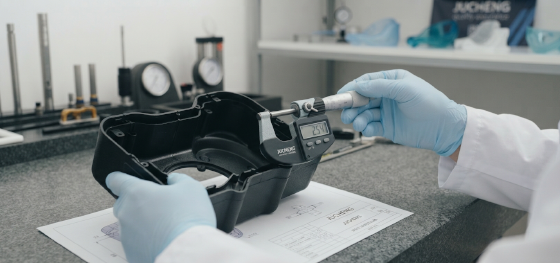
Our engineering team has compiled professional, concise solutions to the most common quality challenges faced during quick-turn plastic runs:
How do you choose the best rapid plastic prototyping process for my custom parts?
We select based on material demands and volume: utilize 3D printing for fast visual mock-ups, CNC machining for ultra-tight dimensions, vacuum casting for 10-50 aesthetic parts, and rapid tooling for actual production-grade molding.Why is aluminum tooling significantly cheaper than standard steel molds?
Aluminum is softer and exhibits superior thermal conductivity, allowing CNC cutters to machine the core cavities up to three times faster than tool steel, which slashes mold-making labor costs.Can vacuum cast urethane parts handle high-temperature testing?
Standard urethanes possess limited thermal limits compared to true thermoplastics. However, we utilize specialized, high-temperature simulated resins that can handle temperatures up to 120 degrees Celsius.How does Jucheng Precision prevent shrinkage and sink marks on rapid plastic prototyping orders?
Our engineers perform a comprehensive CAD DFM review before cutting aluminum molds, suggesting uniform wall thicknesses and strategic rib placement to prevent localized cosmetic sink marks during injection runs.

