


Sourcing high-performance metal components with complex internal pathways or organic, curved profiles represents a major manufacturing bottleneck during the early R&D phase. Specifying dmls rapid prototyping provides your engineering teams with exceptionally dense, fully functional metal parts that match the mechanical properties of forged alloys with zero tooling investments. This advanced powder-bed fusion process serves as the ultimate high-end rapid prototyping service, utilizing precise fiber lasers to micro-weld fine metal powders layer-by-layer directly from your 3D CAD models.

Suffer from mechanical components that cannot be manufactured because traditional CNC cutters cannot reach internal cavities? Standard subtractive milling is strictly limited by tool access, forcing engineers to split complex manifolds into multiple pieces, which introduces high assembly costs and potential fluid leak points. Transitioning to a direct laser sintering strategy completely removes these subtractive limits, delivering ready-to-test monolithic structures directly from the build platform.
Let's explore how metal powder-bed fusion enables revolutionary design freedom, evaluate the high-performance aerospace and medical alloys available, and review why combining metal printing with secondary CNC machining is essential to securing tight assembly tolerances.
Breaking Design Rules with DMLS
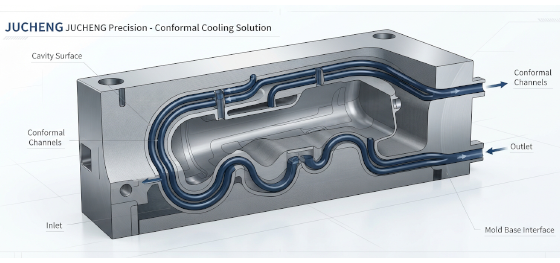
To design high-efficiency heat exchangers and advanced fluid manifolds, bypassing traditional subtractive constraints is essential. Traditional drilling is limited to straight lines, making it impossible to machine curved conduits. Metal powder-bed fusion resolves this by allowing engineers to integrate topology optimization and curved conformal cooling channels directly into the core of the part.
This additive freedom allows product developers to significantly compress their thermal cycles. By routing coolant channels that wrap around complex internal cavities, moldmakers can distribute heat uniformly, eliminating localized thermal stresses. This revolutionary design freedom elevates the overall rapid prototyping process, allowing for functional trials that were previously impossible to manufacture.
High-Performance Materials: Titanium, Inconel, and Stainless Steel
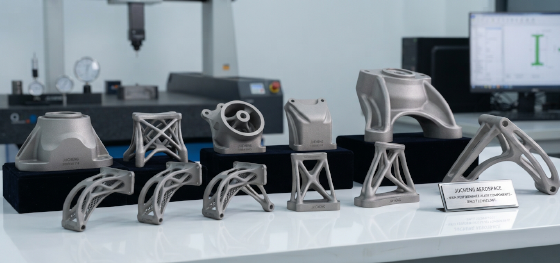
Sourcing advanced superalloys that are notoriously difficult to cut using traditional milling tools is a primary benefit of laser sintering. Commercially pure titanium (such as Ti-6Al-4V) offers an exceptional strength-to-weight ratio and perfect biocompatibility, making it the standard choice for orthopedic implants and aerospace structures. It allows engineers to minimize panel thicknesses without sacrificing structural strength.
For extreme-temperature environments, we process high-nickel Inconel alloys (like Inconel 718) to fabricate gas turbine parts, exhaust manifolds, and chemical reactors. Additionally, high-hardness stainless steel (such as SUS316L) is heavily specified for food processing and surgical brackets, providing dense, corrosion-resistant components that can survive continuous environmental stress.
DMLS vs CNC Machining for Metal Prototypes
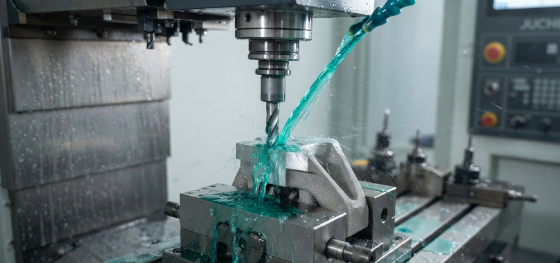
When evaluating metal prototyping options, product designers must balance geometric complexity against required dimensional accuracy. While custom CNC machining is the gold standard for tight linear tolerances (within ±0.015mm) and mirror-polished surfaces, it requires significant tooling setup times and is restricted by tool head accessibility, making it highly expensive for hollow, low-volume geometries.
Conversely, dmls rapid prototyping builds highly complex, topological lattices easily in a single run. However, raw metal prints have a rough surface finish (Ra ~10-15 microns) and standard tolerances of ±0.1mm to ±0.2mm due to thermal contraction. This makes raw DMLS impractical for tight bearing fits or sealed faces, requiring a balanced, hybrid manufacturing approach to secure precise alignments.
Secondary CNC Machining for Critical DMLS Tolerances
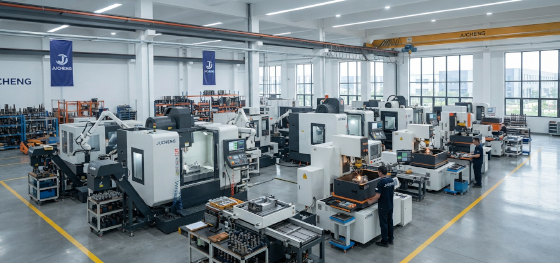
To overcome the rough surface limits of raw metal prints, Jucheng Precision offers a highly precise hybrid approach. We operate multiple multi-laser DMLS systems alongside our advanced, 150-machine CNC workshop. We print the complex structural core of your bracket or manifold with a slight material allowance, stress-relieve the parts, and then mount them on our multi-axis CNC mills to execute precision post-machining on critical mating surfaces, thread bores, and bearing fits down to ±0.015mm.
Every hybrid project is managed under a unified quality system certified to ISO 9001 and IATF 16949 standards, ensuring that aerospace, defense, and medical sub-assemblies are fully compliant. Our in-house toolroom executes precise wire EDM and CMM audits to verify final alignments before shipping. Supported by our flexible no MOQ policy and rapid delivery guarantee, we manage your project from initial flat CAD unfolds to final, fully certified post-treatment packaging, acting as your premier rapid prototyping service partner.
FAQ: Critical Questions About DMLS Rapid Prototyping
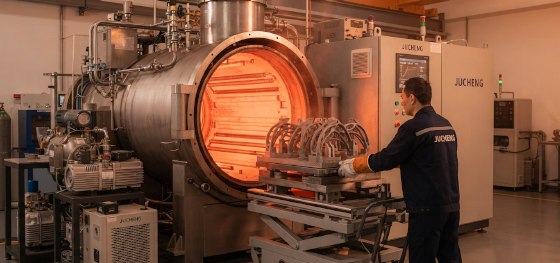
Our engineering team has compiled professional, concise solutions to the most common quality challenges faced during metal laser sintering runs:
What causes micro-cracking during DMLS, and how do we prevent it?
Rapid heating and cooling cycles create intense internal residual stresses. We prevent cracking by executing vacuum stress relief annealing on the build plate before cutting the parts off, letting the micro-grain boundaries relax.Is the physical density of DMLS parts comparable to solid metal blocks?
Yes, modern industrial DMLS systems achieve a relative density exceeding 99.5% for titanium and stainless steel, delivering mechanical and yield strength comparable to forged or cast metals.How do you remove support structures from hard alloys like Inconel?
DMLS supports are made of the same metal and must be physically cut or machined off. Jucheng Precision utilizes high-precision wire EDM and CNC multi-axis milling to cleanly slice supports away from hard superalloys.How does Jucheng Precision guarantee the dimensional consistency of dmls rapid prototyping orders?
We verify mounting clearances using in-house digital coordinate gauges and run automated probe calibrations on our Zeiss coordinate measuring machines (CMM) before final shipping, ensuring total compliance.

