


Navigational integrity in the autonomous era is a direct hostage to the purity of the material interface. When a design team finalizes the CAD architecture for a new hotel concierge bot or a high-speed warehouse sorter, the primary adversary is not the SLAM algorithm—it is the physical "Optical Noise" generated by poor surface finishes. For service robots navigating crowded public environments, the sensor window is the primary defense for expensive LiDAR and stereoscopic camera arrays. If this window exhibits even ten microns of surface roughness or internal molecular voids, the incoming laser pulses will refract, creating "Ghosting" artifacts that ruin the robot’s spatial awareness. Navigating this requirement for crystalline, distortion-free perception requires the strategic deployment of Robot sensor window machining. Jucheng Precision operates as a high-fidelity optics sanctuary in the Shenzhen precision manufacturing hub, providing the technical depth to transform opaque polymer billets into 92% light-transmissive assets. We bridge the gap between "blind hardware" and "certified perceptual sovereignty," ensuring your autonomous fleet operates with absolute dimensional and optical certainty.

Establishing a resilient autonomous supply chain in 2026 demands the absolute rejection of "commodity-grade" clear plastics. Amateurs often settle for 3D printed clear resins, unaware that the inherent layering and UV instability will cause the window to yellow and scatter light within weeks of field deployment. Jucheng Precision eliminates these "System Failures" by enforcing a strict "Molecular Smoothing" protocol. We utilize 5-axis CNC machining followed by specialized chemical vapor treatments to deliver windows that possess the mechanical spine of an industrial part and the aesthetic soul of a camera lens. Whether you are developing a surgical assistant robot or a last-mile delivery rover, our facility provides the material science and finishing rigor required for global market entry. This guide deconstructs the necessity of vapor polishing, the physics of refractive index matching, and why JUCHENG’s metrological audit is the mandatory foundation for anyone developing Robot sensor window machining projects for high-stakes autonomy.
Perception Physics: Why clear windows dictate SLAM accuracy?
Material Standoff: Selecting PC for impact vs. PMMA for clarity
Vapor Polishing: How to achieve Ra 0.05 mirror surfaces?
Mechanical Integrity: Preventing mounting-stress refraction
JUCHENG Protocol: Zero-Defect Metrology for Robot Eyes
FAQ
Perception Physics: Why clear windows dictate SLAM accuracy?
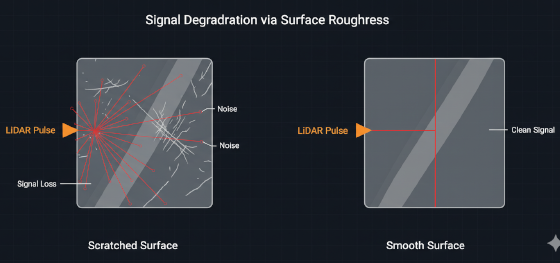
Signal diffraction acts as the primary assassin of robotic localization. In Robot sensor window machining, the surface topography of the plastic window functions as a massive lens for the internal LiDAR or TOF (Time-of-Flight) sensor. If the CNC machining process leaves even microscopic "rhythmic ridges" (tool marks), the outgoing laser pulse is scattered. This creates a "Halo Effect" in the data, where the robot perceives non-existent obstacles or fails to see a glass door. Jucheng Precision engineers utilize 5-axis CNC passes to ensure the window geometry is perfectly flat or possesses the exact intended radius. We don't just "cut a hole"; we manage the refractive index of the boundary layer, ensuring your AI algorithms receive 100% accurate point-cloud data. By eliminating surface noise at the hardware level, we reduce the computational load on your software, allowing for faster response times and safer human-robot interaction.
Material Standoff: Selecting PC for impact vs. PMMA for clarity
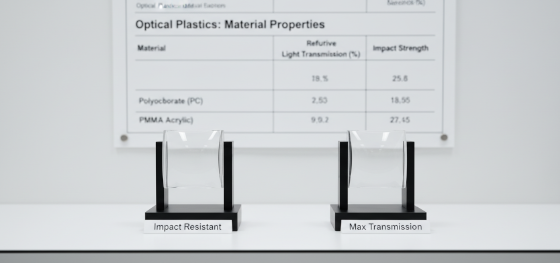
Molecular toughness dictates the survival of sensor pods in public spaces. When selecting a substrate for Robot sensor window machining, engineers must navigate the trade-off between impact resistance and raw light transmission. Jucheng Precision recommends Polycarbonate (PC) for delivery robots and hospitality bots operating around children; its "bulletproof" soul resists vandalism and accidental strikes that would shatter standard glass. However, for indoor diagnostic bots where light transmission is supreme, we pivot to Acrylic (PMMA). PMMA offers a spectacular 92% light transmission rate and natural UV stability, preventing the "yellowing" that kills long-term sensor calibration. Below is the technical comparison matrix our facility uses to guide MedTech and robotics material selection:
| Optical Metric | Polycarbonate (PC) | Acrylic (PMMA) |
|---|---|---|
| Light Transmission (%) | 88% - 90% | 92% (Clarity King) |
| Refractive Index | 1.58 | 1.49 (Low Distortion) |
| Impact Strength | Extreme (Unbreakable) | Low (Brittle) |
| Scratch Resistance | Poor (HB) | High (3H) |
Vapor Polishing: How to achieve Ra 0.05 mirror surfaces?
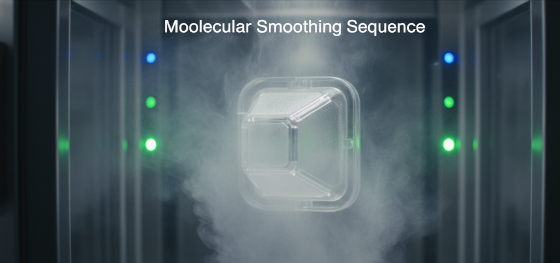
Subtractive artifacts must be neutralized at the molecular level. A standard CNC mill leaves a frosted finish that is a death sentence for LiDAR data. Jucheng Precision restores crystalline truth via a proprietary Vapor Polishing protocol. This process involves exposing the machined Robot sensor window machining components to a highly volatile chemical vapor (solvent-based) inside a sealed convection chamber. The vapor reacts with the outer microns of the PC or PMMA, causing a localized melt that flows into the microscopic valleys of the tool marks. Within seconds, the material re-solidifies into a mirror-like finish with a surface roughness (Ra) as low as 0.05 µm. Unlike manual buffing, which can round off critical sharp corners or introduce "heat-wavy" distortions, vapor polishing maintains the geometric integrity of the window. We provide the "Optical Armor" needed to ensure your robot sees the world with surgical focus, effectively eradicating the haze that plagues amateur hardware.
Mechanical Integrity: Preventing mounting-stress refraction

Internal residual stress is the invisible predator of optical longevity. When a plastic window is squeezed into an aluminum housing, any uneven pressure creates "Stress-Birefringence"—internal energy patterns that bend light in unpredictable ways. Jucheng Precision eliminates this "Birefringence Trap" by utilizing integrated DFM (Design for Manufacturing). We suggest O-ring seal configurations and mounting tab designs that distribute clamping forces evenly across the perimeter. Furthermore, we utilize polyurethane overmolding casting to bond soft-touch gaskets directly onto the machined window, providing a cushioned mechanical interface that prevents the polymer chains from warping under the torque of assembly screws. We turn "vulnerable lenses" into "stable optical assemblies," ensuring your AGV and AMR Parts fit Monday and stay precise Sunday.
JUCHENG Protocol: Zero-Defect Metrology for Robot Eyes
Manufacturing excellence at Jucheng Precision is built on the foundation of the documented spectral audit. We don't just "look" through your windows; we prove their transparency with data. Our facility, housing over 150 CNC machines and specialized polishing bays, is optimized for high-requirement robotics and medical hardware. For every Robot sensor window machining batch, we utilize spectrophotometers to measure light transmission and haze across the visual and IR spectrums. We provide full material lot traceability and dimensional inspection reports, providing the "Paper Trail of Quality" required for global regulatory approval. Stop gambling your robot's vision on inaccurate mockups or uncertified vendors. Leverage our decade of high-performance replication mastery to validate rapidly and scale profitably. Contact our technical team today for a free DFM review.
FAQ
Q: Which material is better for outdoor LiDAR sensors?
A: Polycarbonate (PC) is superior due to its extreme impact resistance, provided JUCHENG applies a UV-protective coating to prevent yellowing over time.
Q: Does vapor polishing affect part tolerances?
A: The dimensional change is negligible (microns). The process only melts the microscopic peaks of the machining marks, maintaining the macro-geometry of the CAD intent.
Q: Can JUCHENG handle large curved sensor canopies?
A: Yes. We utilize 5-axis CNC machining to carve complex 3D optical geometries up to 2 meters in size, followed by specialized large-chamber vapor polishing.

