


Visual authority defines the commercial ceiling of autonomous hospitality and delivery platforms. In the hyper-agile landscape of 2026, the success of service robots—whether a hotel concierge bot or a last-mile delivery rover—is dictated by the "Retail-Ready" soul of its exterior skin. For hardware innovators, the primary adversary is the "Oversized Component Barrier." Designing a meter-long torso panel that is lightweight enough for battery efficiency but rigid enough to survive a crowded shopping mall is a massive manufacturing hurdle. Navigating this requirement for high-fidelity, impact-resistant protective shells requires the strategic deployment of Service robot enclosure manufacturing. Jucheng Precision operates as a high-fidelity manufacturing sanctuary in the Shenzhen precision manufacturing hub, providing the low-pressure thermodynamic depth needed to transform digital CAD intents into structurally sovereign physical assets. Within the broader framework of AGV and AMR Parts, we bridge the gap between "experimental mockups" and "market-ready sovereignty," ensuring your autonomous fleet maintains its aesthetic authority through thousands of operational cycles.
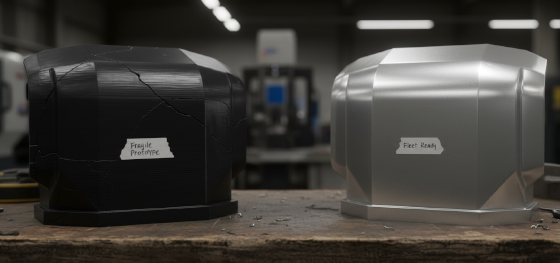
Establishing a resilient robotics supply chain in 2026 demands the absolute rejection of "Office-Grade" fabrication logic. Amateurs often spend forty percent of their R&D budget attempting to sand large-format 3D prints for investor demos, unaware that the inherent surface porosity and layering signal a lack of manufacturing maturity. Jucheng Precision eliminates this "Visual Doubt" by positioning Reaction Injection Molding (RIM) as the primary engine for your robot’s exterior. Whether you are developing a 200-unit pilot run for a restaurant chain or a high-gloss interactive kiosk, our facility provides the material science and finishing rigor required for global market entry. This guide deconstructs the necessity of Service robot enclosure manufacturing, focusing on the economics of low-pressure tooling, the physics of zero-sink geometry, and why JUCHENG’s "Showroom Protocol" is the mandatory foundation for anyone developing autonomous service hardware.
Why are large robot shells too expensive for standard injection molding?
How does Reaction Injection Molding (RIM) solve the large-part problem?
What are the engineering advantages of variable wall thickness in RIM?
How does JUCHENG deliver showroom-quality robotic enclosures?
FAQ
Why are large robot shells too expensive for standard injection molding?
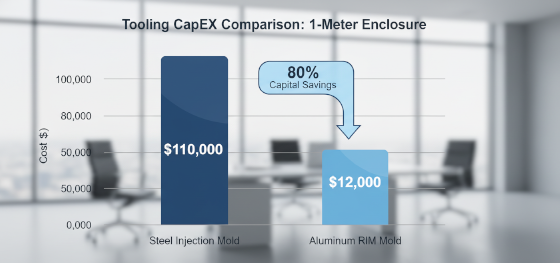
Financial paralysis occurs when high-volume manufacturing logic is applied to iterative robotics phases. Service robot enclosure manufacturing typically involves part quantities between 100 and 2,000 units—the exact "Valley of Death" where 3D printing is too slow and structurally fragile, but traditional injection molding is prohibitively expensive. A one-meter torso cover requires a massive steel mold that must withstand injection pressures exceeding 20,000 psi. To keep this tool from blowing open, the machine must be a 2,000-ton press, which carries an hourly rate that consumes all profit margins. Jucheng Precision eliminates this "CapEx Anchor" by offering low-pressure alternatives. We understand that for a delivery bot startup, spending $100,000 on a single steel tool is a misallocation of capital. We turn that debt into a tactical expense, allowing you to iterate your hardware rapidly while maintaining production-grade material properties.
How does Reaction Injection Molding (RIM) solve the large-part problem?
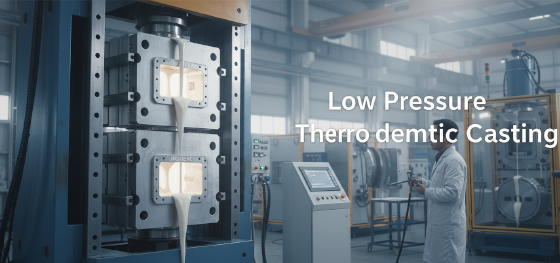
Thermodynamic passivity represents the "unfair advantage" of the RIM process. Unlike standard molding that rams molten pellets into a tool, Service robot enclosure manufacturing via RIM utilizes a chemical reaction between two low-viscosity liquid components. These liquids enter the cavity at less than 100 psi, flowing like water to fill oversized 2.5-meter cavities effortlessly. This transition in physics allows Jucheng Precision to utilize lightweight aluminum tools that are 80% cheaper and machined 3x faster than tool steel. Because the material expands and cures via an exothermic reaction rather than hydraulic force, the resulting part possesses virtually zero internal residual stress. This is why our large-format covers remain perfectly flat and stable across massive spans, effectively eradicating the warping that ruins assembly tolerances in high-pressure thermoplastics.
What are the engineering advantages of variable wall thickness in RIM?
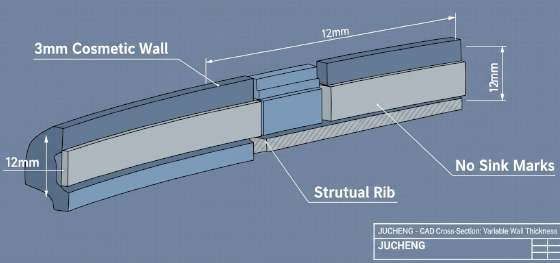
Geometric sovereignty in RIM allows for the violation of standard injection molding laws. The "Sink Mark" is the primary architect of cosmetic failure in large plastic panels. In standard molding, an internal rib thicker than 60% of the wall causes the exterior surface to pull inward as it cools, creating an ugly dimple. Service robot enclosure manufacturing at Jucheng Precision is immune to this constraint. Because the liquid resin fills the tool completely before the expansion reaction begins, you can mold 15mm thick structural mounting points directly behind a 3mm high-gloss "A-side" wall without a single surface blemish. This "Zero-Sink Advantage" allows our engineers to design massive internal strengthening structures into your enclosures, ensuring your robots survive the rigors of hospital use or retail floor impact while maintaining a showroom-ready soul.
How does JUCHENG deliver showroom-quality robotic enclosures?
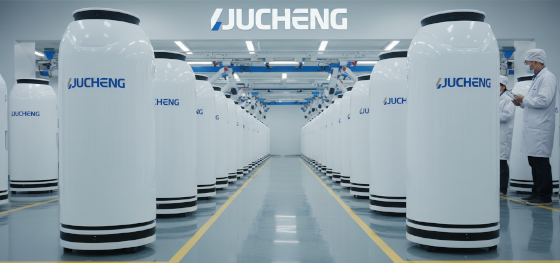
Manufacturing excellence at Jucheng Precision is built on the foundation of single-source cosmetic authority. We don't just "pour plastic"; we deliver finished physical brands. Our facility integrates automated painting cleanrooms optimized for oversized service robots. Because RIM polyurethanes possess high surface energy, they provide a superior bond for automotive-grade 2K coatings and UV-resistant clear coats. We perform a surgical surface audit on every 1.5-meter panel, sanding parting lines and applying primers to ensure a level canvas for high-gloss silver or matte black finishes. We provide full material lot traceability and CMM metrology reports for every batch, providing the "Paper Trail of Quality" required for global deployment. Stop gambling your brand’s visual identity on vendors who treat finishing as a secondary thought. Leverage our decade of large-scale replication mastery to validate rapidly and launch with an armor that looks as advanced as the AI driving it.
FAQ
Q: What is the maximum size for service robot enclosure manufacturing at JUCHENG?
A: Our Shenzhen hub can produce monolithic RIM enclosures up to 2.5 meters in length, making it ideal for full-size delivery and hospital robots.
Q: Can RIM enclosures pass UL94 V-0 fire testing?
A: Yes. Jucheng Precision utilizes specialized flame-retardant polyurethanes that meet strict safety standards for any robot housing high-capacity electronics or batteries.
Q: How long does a RIM mold last for large batches?
A: Our high-grade aluminum RIM tools are rated for 500 to 5,000 shots. This is the optimal "Sweet Spot" for niche hardware before transitioning to permanent steel.

