


Production lines grind to a halt when the physical reality of a part fails to reach the digital borders of the CAD file. In the high-velocity environment of precision manufacturing, encountering a short shot injection molding defect—an incomplete part where molten plastic fails to fill the entire cavity—is more than a visual flaw; it is a structural failure that renders an entire batch of enclosures or components worthless. This specific failure signals that the molten polymer literally "ran out of energy" before reaching the finish line. Navigating the pathology of Injection molding defects requires stripping away the simplistic assumption that "more pressure solves everything." Increasing injection force on a fundamentally flawed tool often results in flashing or burnt resins without ever achieving a full fill. Jucheng Precision operates as a fluid dynamics authority, utilizing advanced simulation and high-precision gating to ensure every thin rib and distant snap-fit receives the necessary material volume and pressure, effectively eradicating the risk of incomplete geometry in your most ambitious designs.
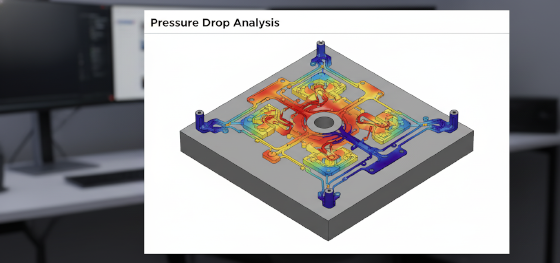
Eliminating short shots requires a forensic interrogation of the "Melt Front" journey. As plastic travels from the nozzle through the runners and into the intricate details of the tool, it is fighting a losing battle against heat loss and frictional resistance. If the path is too narrow or the air in the cavity has nowhere to go, the flow stalls and solidifies prematurely. Jucheng Precision eliminates these "Premature Deaths" by performing a surgical Moldflow analysis before the first block of P20 steel is cut. We identify where the plastic velocity will drop to dangerous levels and suggest gate optimizations to keep the melt moving. This guide deconstructs the logistics of gate sizing, the thermodynamics of thin-wall cooling, and the invisible barrier of air back-pressure to ensure your hardware arrives 100% complete.
Fluid Exhaustion: Defining the Short Shot Phenomenon
Logistics of Pressure: Gate and Runner Constraints
Thermodynamic Barriers: The Thin-Wall Freeze-off
Atmospheric Sabotage: Venting and Air Backpressure
JUCHENG Protocol: Scientific Simulation for Total Fills
Fluid Exhaustion: Defining the Short Shot Phenomenon
Molecular stagnation occurs when the kinetic energy of the polymer melt is overwhelmed by the resistive forces of the mold. A short shot injection molding event is the physical manifestation of this energy imbalance. Imagine a runner system as a high-pressure highway; as the plastic enters the mold, it encounters friction against the cold steel walls. This friction generates "Shear Heating," which keeps the plastic fluid, but it also creates a massive "Pressure Drop." By the time the melt reaches the furthest extremities of a large part, the pressure may have dropped below the threshold required to force the plastic into tight corners. Amateurs often view this as a simple machine setting issue, but it is deeply rooted in the "Non-Newtonian" behavior of plastics. If the viscosity is too high or the flow path is too tortuous, the melt front becomes sluggish and eventually stops moving altogether. We treat every cavity as a thermodynamic race track, ensuring the "Melt Front Velocity" remains high enough to keep the plastic in its fluid state until the last micron of the part is occupied.
Logistics of Pressure: Gate and Runner Constraints
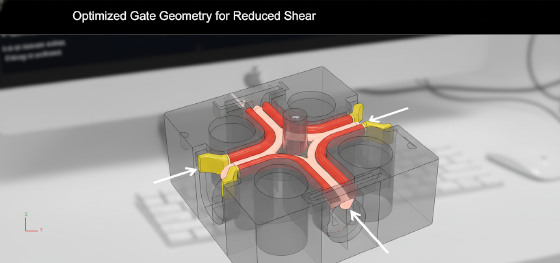
Gate geometry serves as the primary bottleneck for cavity filling. Many toolmakers design small, restrictive gates to make "Part Degating" easier, but this often triggers short shot injection molding in complex parts. A small gate forces the plastic to travel at extreme velocities, which can cause material degradation, but more importantly, it induces a massive pressure loss at the very start of the fill cycle. If the pressure drop across the gate is 40% of the machine's total capacity, there is very little "fuel" left in the tank to fill the actual part features. Jucheng Precision engineers utilize scientific molding principles to size runners and gates based on "Shear Rate" data. We ensure the flow path is a gradual descent in pressure rather than a sudden cliff. By optimizing the gate location—placing it near the thickest sections and allowing for a "Progressive Fill" toward the thinner areas—we provide the manufacturing insurance needed to achieve 100% density in every shot.
Thermodynamic Barriers: The Thin-Wall Freeze-off
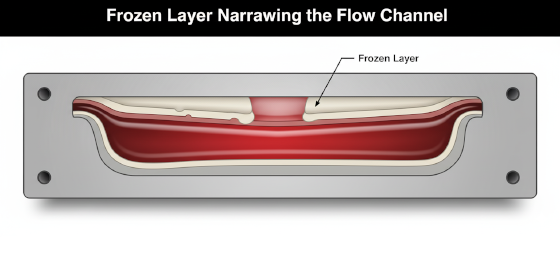
Thermal quenching is the natural enemy of thin-walled enclosures. In modern electronics, where wall thicknesses often dip below 1.5mm, the molten plastic is squeezed through a gap that is rapidly cooling from both sides. As the melt touches the steel, it forms a "Frozen Layer"—a skin of solid plastic that effectively narrows the flow channel. If the wall is too thin or the injection speed is too slow, the two frozen layers from the top and bottom will meet in the middle, creating a "Freeze-off" that blocks any further flow. This is the catalyst for short shot injection molding in high-precision medical devices and smart home hubs. Jucheng Precision combats this by utilizing "High-Speed Injection" protocols. By filling the mold in a fraction of a second, we outrun the cooling cycle, keeping the core of the plastic molten long enough to reach the distal features. We also recommend materials with high "Melt Flow Index" (MFI) for these applications, ensuring the resin has the inherent slipperiness needed to navigate narrow geometric corridors.
Atmospheric Sabotage: Venting and Air Backpressure

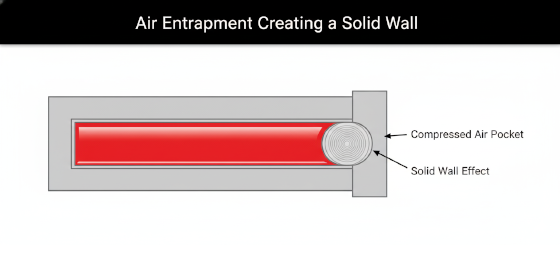
Compressed air acts as a solid physical wall inside the tool. Before the plastic enters, the mold cavity is full of atmospheric air. As the melt front advances, it must push this air out through the vents. If the vents are clogged, too small, or poorly located, the trapped air becomes pressurized. This "Air Backpressure" pushes back against the molten plastic with equal force. In extreme cases, the pressure of the trapped air equals the injection pressure, causing the flow to stop—resulting in a "Short Shot" even though the machine has plenty of power. This is one of the most frequently misdiagnosed Injection molding defects. Jucheng Precision manages this atmospheric sabotage by utilizing "Surgical Venting." We cut micro-channels (0.015mm to 0.03mm deep) at the end of every flow path and around complex bosses. This allows the air to escape at the speed of sound while keeping the viscous plastic contained. We don't just fill cavities; we manage the atmosphere inside the steel, ensuring the path is always clear for a perfect fill.
JUCHENG Protocol: Scientific Simulation for Total Fills
Engineering success at Jucheng Precision is built on the foundation of the proactive fill audit. We do not wait for incomplete parts to appear during mold trials; we predict them in the digital realm. When you upload a CAD file to our facility, our veteran engineers perform a comprehensive Moldflow simulation to identify "Flow Hesitation" and "Pressure Bottlenecks." We analyze the "Fill Time" and "Pressure at End of Fill" to guarantee that your parts arrive retail-ready. Our facility, equipped with 150+ CNC machines and high-speed injection presses, provides the precision needed to execute the complex venting and gating strategies required for a zero-defect launch. Stop compromising your project's integrity with parts that are "almost" complete. Not sure if your wall thickness is uniform or your gate size is sufficient? Upload your 3D CAD file to JUCHENG today for a Free DFM Review. Our experts will identify Injection molding defects before they cost you money, ensuring your transition to mass production is stable, complete, and profitable.

