


The moment of truth has arrived. Your new, expensive injection mold is on the machine for its first trial. The first parts drop into the bin. You rush over to inspect them. And your heart sinks.

There are ugly dips on the surface. Thin flaps of plastic stick out from the edges. Some parts are not even fully formed. Your first batch is a batch of failures.
This is a costly and stressful scenario. But it is a common one. Understanding the causes of these common Injection molding defects is the first step to preventing them. This guide is a forensic investigation into the culprits behind bad parts.
Culprit #1: Sink Marks
Culprit #2: Flash
Culprit #3: Short Shots
Culprit #4: Weld Lines
Prevention is the Best Cure: Smart Design
Culprit #1: Sink Marks

The Crime: You see shallow depressions or dimples on the flat, cosmetic surfaces of your part.
The Cause: This is almost always caused by a poor Injection molding design. Specifically, non-uniform wall thickness. As molten plastic cools, it shrinks. A thick section of plastic will shrink much more than a thin section. If you have a thick feature, like a boss or a rib, behind a cosmetic wall, it will cool slower and pull the material on the outer wall inward as it shrinks. This creates the sink mark.
The Solution: Good design. A fundamental rule of molding is to maintain a uniform wall thickness throughout the part. Ribs and bosses should be designed to be no more than 60% of the thickness of the wall they are attached to. A good manufacturer can also help by adjusting the packing pressure and cooling time, but the best cure is to fix the design.
Culprit #2: Flash

The Crime: You find thin, paper-like flaps of excess plastic extending from the edges of your part.
The Cause: Flash happens when molten plastic escapes from the mold cavity. This can be caused by a few things. The clamping force of the machine might not be high enough to hold the two halves of the mold tightly shut against the injection pressure. The parting line of the mold itself might be damaged or worn out. Or, the injection pressure or speed might be set too high.
The Solution: This is primarily a process control issue. An experienced manufacturer will ensure the mold is in good condition and is used on a machine with the correct clamping tonnage. They will then optimize the injection parameters to be just right, filling the part completely without forcing plastic out of the seams.
Culprit #3: Short Shots
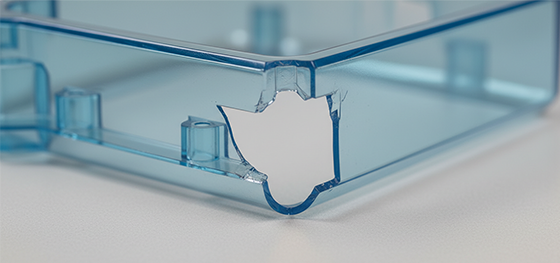
The Crime: The part is incomplete. The plastic did not fill the entire mold cavity, leaving missing features or holes.
The Cause: This is the opposite of flash. It means the molten plastic solidified before it could reach the furthest corners of the mold. The cause could be that the injection pressure or speed is too low. The material temperature might be too cold, making the plastic sluggish. Or, a critical design flaw: the walls of the part might be too thin for the plastic to flow through.
The Solution: This is a combination of design and process. The designer must ensure their part has a minimum wall thickness appropriate for the chosen material. The manufacturer must then use the correct processing parameters to ensure a complete fill. Trapped air in the mold can also prevent filling, which highlights the need for well-designed vents.
Culprit #4: Weld Lines
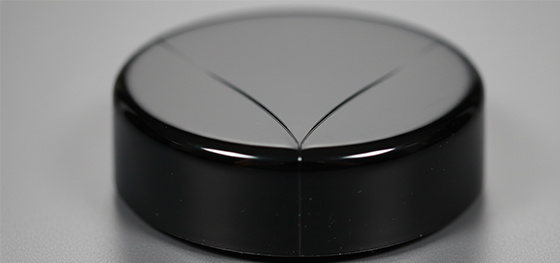
The Crime: You see a thin, hair-like line on the surface of your part, often in a V-shape. It is not a crack, but it is an aesthetic flaw.
The Cause: A weld line is formed when two or more fronts of molten plastic meet inside the mold. This often happens when the plastic has to flow around an obstacle, like a hole or a core. By the time the two fronts meet, they have already started to cool. They may not be able to fuse together perfectly at a molecular level.
The Solution: Weld lines are often unavoidable, but they can be managed. A smart mold designer can change the location of the injection "gate" to move the weld line to a less visible, non-critical area of the part. Also, by optimizing the injection temperature and speed, a good process can make the weld line much stronger and less noticeable.
Prevention is the Best Cure: Smart Design
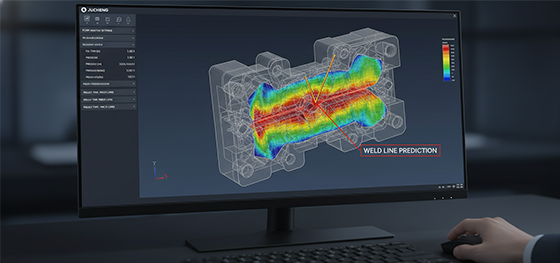
Notice a pattern? Most of these devastating Injection molding defects can be traced back to the initial design. This is why the partnership between the designer and the manufacturer is so critical.
A professional manufacturing partner does not just blindly make what you send them. At JUCHENG, our most valuable tool is not a CMM or a molding machine. It is our Moldflow Analysis software and our experienced engineers.
Before we build your mold, we simulate the entire Injection molding process on a computer. We can predict where sink marks will occur. We can see where weld lines will form. We can tell if the part will fill completely.
This allows us to work with you to optimize your Injection molding design before any costly mistakes are made in steel. This proactive, preventative approach is the secret to a smooth, successful, and defect-free production run.

