


Scraping excess plastic off a thousand identical parts destroys profit margins instantly. Factory managers absolutely hate seeing razor blades on the assembly line. Relying on human labor to manually trim defects means the steel tooling has fundamentally failed your hardware scaling goals.
Dealing with injection molding flash forces hardware teams to confront serious tooling degradation head-on. Liquid resin operates under immense thermodynamic pressure inside the barrel. Molten polymer will aggressively find the weakest point in your steel plates and violently escape before it freezes.
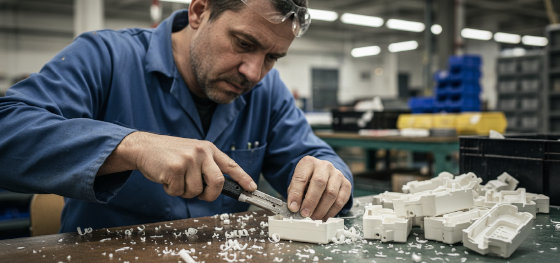
Catching these microscopic resin leaks early prevents massive secondary CNC costs down the line. Procurement managers must demand perfect steel-to-steel mating surfaces from their suppliers. Ignoring a tiny millimeter of plastic bleed inevitably leads to permanent mold damage on the next clamping cycle.
Optimizing standard injection molding physics dictates that precision engineers must perfectly balance melt temperatures against raw hydraulic power. Failure here triggers a catastrophic chain reaction on the assembly floor. Press-fit bearings will fail, and waterproof seals will leak instantly.
content:
What Causes Liquid Resin to Escape the Mold Cavity?
How Do Parting Line Mismatches Destroy Assembly Margins?
Why Does Inadequate Clamping Force Trigger Leaks?
JUCHENG Hub: Shenzhen Precision Deflashing Solutions
Frequently Asked Questions
What Causes Liquid Resin to Escape the Mold Cavity?

Does high injection pressure automatically create plastic leakage?
No, but pairing extreme injection speeds with exhausted tool steel practically guarantees that molten polymer will bleed past the designated parting line.
Viscosity plays a terrifying role in daily factory defect rates. Super-thin materials like nylon flow exactly like water when pushed past their melting point. These aggressive polymers instantly penetrate microscopic gaps left between poorly machined steel plates.
Tooling amortization depends heavily on catching these microscopic gaps early. Crushed air vents are a notorious culprit for factory scrap rates. Engineers design tiny channels to let trapped air escape, but cutting these vents too deep transforms them into escape tunnels for pressurized liquid plastic.
Ignoring this reality causes severe mechanical nightmares. Hardened resin left sitting on the parting line physically crushes the surrounding steel during the next high-tonnage closing cycle. Toolmakers call this hobbing, and it permanently destroys the expensive cavity alignment.
How Do Parting Line Mismatches Destroy Assembly Margins?

Can manual trimming save a batch of heavily leaked components?
Trimming saves the physical part but violently destroys your BOM reduction goals due to the massive, unpredictable human labor costs involved.
Sending operators to cut plastic bleed with utility knives introduces severe human error into your supply chain. You can never achieve tight engineering tolerances if an exhausted worker is physically carving the critical mating surface by hand.
Consumer electronics demand absolute cosmetic perfection out of the box. Scrape marks left behind by razor blades ruin the premium feel of a medical enclosure instantly. End-users interpret these rough, uneven edges as cheap manufacturing.
Preventing this mismatch requires aggressive CNC milling during the initial mold creation phase. The core and cavity blocks must mate perfectly before the first shot is fired. World-class facilities utilize heavy spotting presses with blue transfer ink to physically verify absolute steel-to-steel contact.
| Root Cause of Defect | Factory Floor Symptom | Corrective Engineering Action |
|---|---|---|
| Undersized Clamping Force | Leakage around the entire part perimeter | Move tool to a higher tonnage press |
| Oversized Air Vents | Spikes of plastic only at specific edges | Weld vents shut and re-machine shallower |
| Extreme Melt Temperature | Material drips out of the sprue bushing | Lower barrel heater bands by 10 degrees |
| Deformed Parting Line | Thick plastic chunks tearing the part | Extensive laser welding and surface grinding |
Why Does Inadequate Clamping Force Trigger Leaks?
Will increasing hydraulic pressure solve all mold parting issues?
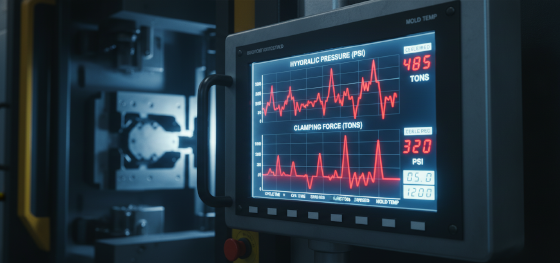
Increasing clamping tonnage stops simple leaks, but over-clamping will permanently warp the tool steel and crush delicate internal shut-offs.
Solving injection molding flash mechanically means balancing internal cavity pressure against external hydraulic muscle. Calculating the exact projected area of your plastic part is non-negotiable before quoting the job.
Internal pressures inside a hot runner system are violently aggressive. If the outward force of the expanding liquid exceeds the machine's holding power, the heavy steel halves will literally blow apart by a fraction of a millimeter.
Factory veterans always look at the machine gauge first when troubleshooting scrap. Running a massive automotive bumper on an undersized 200-ton press is engineering suicide. You need raw, unyielding hydraulic muscle to keep that liquid safely contained.
JUCHENG Hub: Shenzhen Precision Deflashing Solutions
How does your facility eliminate secondary trimming operations?
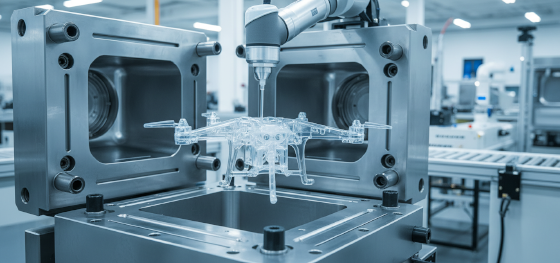
We engineer zero-defect tooling upfront and utilize automated cryogenic deflashing for highly complex geometries, completely removing unpredictable human error.
Partnering with Jucheng Precision guarantees your components drop out of the mold completely ready for retail packaging. Our internal metrology department meticulously scans every tool face before mass production begins.
Operating deep inside the Shenzhen precision manufacturing hub allows us to execute rapid, hardcore tool maintenance. We refuse to run compromised steel just to hit a deadline.
Detecting injection molding flash during a long shift triggers an immediate quality control shutdown on our floor. Our seasoned technicians will laser weld and re-machine the defect overnight so your global supply chain never experiences a delay.
Frequently Asked Questions
Can modifying the polymer melt temperature stop bleeding?
Dropping the barrel heater temperature slightly increases the plastic viscosity. This mathematically prevents thin, runny plastics from slipping into damaged tool crevices.
Does polishing the mold surface fix existing parting line gaps?
No, aggressive polishing only improves cosmetic release. Fixing a physical gap requires laser welding fresh steel onto the damaged parting line and precision grinding it completely flat.
Are certain plastics more prone to leaking than others?
Absolutely. Liquid crystal polymers (LCP) and highly abrasive glass-filled nylons are notoriously difficult to seal because they require extreme heat and flow incredibly fast under pressure.

