


Deploying autonomous mobile robots into the chaotic environments of high-traffic warehouses or gravel-filled construction sites in [2026] reveals a critical mechanical weakness: standard Polypropylene (PP) fenders crack and deform permanently under sudden impact. While PP is prized for its low cost and toughness in consumer goods, its performance in large-scale industrial formats is often compromised by stress whitening and poor dimensional memory. Achieving a truly "Unbreakable" exterior for your prototype robot requires a sophisticated material pivot. Mastering simulating Polypropylene with elastomeric RIM allows engineers to manufacture oversized, high-impact components that bend without breaking and return to their original geometry perfectly.
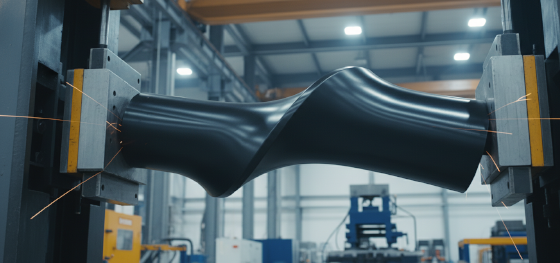
Mechanical resilience in Industrial Robot Parts is no longer just about avoiding fracture; it is about maintaining the aesthetic and functional integrity of the machine after a collision. Standard injection-molded PP often displays ugly white stress marks at the point of impact, signaling a permanent loss of material strength. Jucheng Precision addresses these durability hurdles by utilizing high-performance polyols that exhibit 100% flexural memory. Jucheng provides high-tier Polyurethane Molding Services that prioritize energy absorption and zero-defect surface quality in our Shenzhen precision manufacturing hub.
Operating under the strict quality standards of ISO 13485, ISO 14001, and IATF 16949, Jucheng Precision serves as the high-tier material partner for global autonomous vehicle OEMs. We transform complex bionic designs into validated, impact-proof hardware in as fast as 15 business days, leveraging our fleet of 150+ CNC machines. This guide explores the essential elongation standards, the elimination of stress whitening, and the application logic required for simulating Polypropylene with elastomeric RIM to ensure your next fleet of autonomous machines survives the transition from the lab to the mud.
Flexural Memory: Can Elastomeric RIM Outperform Real PP?
Technical Data: Comparing Elastomeric RIM vs. Injection Molded PP
Zero Defect Logic: Eliminating Stress Whitening in Large Parts
Applications: Protective Bumpers and Fenders for Industrial Bots
Jucheng Hub: Rapid Prototyping for High-Impact Hardware
FAQ: Logistics and Durability of Durability of Simulated PP Materials
Flexural Memory: Can Elastomeric RIM Outperform Real PP?
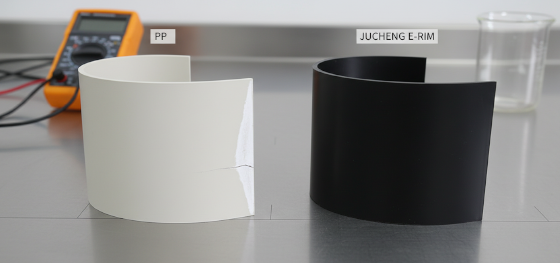
Absolute toughness in autonomous hardware is determined by the material's ability to return to its original shape after a 10-G impact. In simulating Polypropylene with elastomeric RIM, the primary engineering advantage is the material's "spring-back" capability. Traditional PP fenders often "kink" or dent permanently when struck by a heavy object, requiring expensive replacement or manual reshaping. Jucheng Precision utilizes specialized elastomeric polyurethane resins that act like a solid spring. When an impact occurs, the molecular cross-links deform elastically and then pull the part back to its exact CAD dimensions. This ensures your robot's sensors remain aligned even after a minor warehouse collision.
Why is elastomeric RIM better for bumpers?
It offers an elongation-at-break of up to 400%, allowing the part to absorb massive energy without fracturing or losing its structural geometry.
Fatigue resistance is the second mechanical win for simulated PP. In industrial robot parts, components like protective gaiters or flexible joint covers undergo thousands of bending cycles daily. Traditional PP will eventually develop "Hinge Failure," where the plastic thins and snaps along the fold line. Jucheng’s elastomeric RIM parts maintain their integrity over millions of cycles because the thermoset matrix does not experience the same molecular "sliding" that causes fatigue in thermoplastics. By delivering these high-cycle components, we ensure your maintenance intervals are measured in years, not months, significantly reducing the total cost of ownership for your clients.
Weight management is also enhanced by the liquid logic of the reaction injection molding process. We can mold a 1.5-meter long fender that is 4mm thick at the mounting points but tapers to 2mm in non-critical areas. This variable wall thickness allows us to reduce part weight by 20% compared to standard injection-molded PP, which requires uniform walls to avoid sink marks. Jucheng Precision performs a free DFM analysis in 24 hours to identify these weight-saving opportunities, ensuring your battery-powered robots move faster and work longer in the field.
Technical Data: Comparing Elastomeric RIM vs. Injection Molded PP
Success in hardware validation depends on matching the material's energy absorption to your robot's crash profile. High-fidelity simulations require accurate stress-strain data. Jucheng Precision provides full material characterization reports back to the primary chemical batch. The following table compares the essential performance metrics of simulating Polypropylene with elastomeric RIM against standard industrial Polypropylene for the current market.
| Mechanical Metric | Simulated PP (Elastomeric RIM) | Injection Molded PP | Engineering Impact |
|---|---|---|---|
| Elongation at Break (%) | 150 - 400 | 50 - 150 | Superior Energy Absorption |
| Tensile Strength (psi) | 3,500 - 5,500 | 4,500 | Equivalent Load Capacity |
| Tear Strength (pli) | 350 - 500 | 150 - 250 | Resists Sharp Object Piercing |
| Stress Whitening | None (Permanent Color) | High (Visual Failure) | Preserves Retail Aesthetic |
The higher "Tear Strength" of elastomeric RIM is a critical factor for robots operating in environments with sharp debris, such as scrap yards or forests. While a real PP part would experience "crack propagation" from a single scratch, our simulated PP material stops the crack in its tracks due to the rubbery molecular structure. Jucheng Precision’s Polyurethane Molding Services ensure that your hardware remains functionally sound and aesthetically pristine even after heavy mechanical abuse.
Zero Defect Logic: Eliminating Stress Whitening in Large Parts
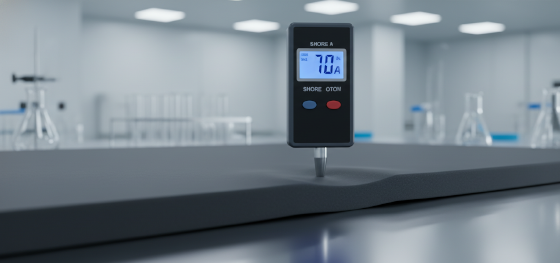
Aesthetics and structural integrity are linked through the phenomenon of stress whitening. When traditional PP is bent beyond its elastic limit, the internal crystalline structure breaks, scattering light and creating a white mark. In simulating Polypropylene with elastomeric RIM, Jucheng Precision eliminates this failure mode entirely. Our thermoset polyurethanes do not use the same semi-crystalline structure as PP. Instead, they utilize an amorphous molecular mesh that can bend 180 degrees without any change in color. This ensures that your autonomous tractors and delivery bots look as good on their 1,000th day as they did on their first.
How to achieve custom colors for bumpers?
We mix high-stability pigments directly into the liquid Side B component, creating a "Color-Through" part that hides scratches better than painted alternatives.
Chemical resistance is another silent advantage of our elastomeric formulations. In [2026] agricultural environments, hardware is constantly exposed to liquid fertilizers and acidic pesticides. Real PP is prone to "Environmental Stress Cracking" (ESC) when exposed to these chemicals under tension. Because Jucheng’s RIM parts cure in a "Relaxed State" at low pressure, they possess zero internal stress. Combined with the naturally inert chemistry of polyurethane, this ensures your robot fenders survive years of chemical application without losing their flexibility.
Precision at the parting line is maintained through our 150+ CNC machines capacity. We machine high-strength aluminum molds with sub-micron accuracy, ensuring that the "Flash" on your flexible parts is kept to a microscopic film. This reduces the need for aggressive post-processing that can mar the surface of an elastomeric part. By delivering parts with a Ra 0.8 finish directly from the mold, Jucheng Precision allows your assembly team to move from crate to robot in minutes, providing a true "Bridge to Production" service in the Shenzhen hub.
Applications: Protective Bumpers and Fenders for Industrial Bots
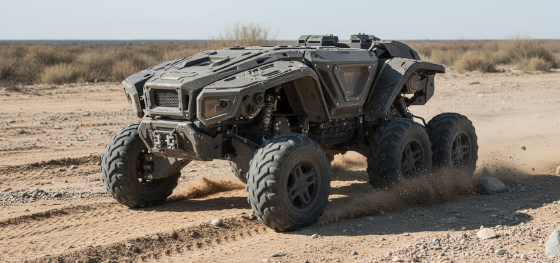
Impact protection is the primary mission of simulating Polypropylene with elastomeric RIM. In the fulfillment centers of the future, AMRs operate in high-density areas alongside human workers. A rigid plastic bumper is a safety risk to humans and a liability for the robot. Jucheng Precision specializes in manufacturing "Soft-Skin" bumpers that provide a 50mm "Crush Zone." By utilizing structural foam RIM techniques, we create bumpers with a dense, tear-resistant skin and a microcellular core that dissipates impact energy, protecting both the human and the machine’s internal AI compute stack.
Can elastomeric RIM handle low temperatures?
Yes. Unlike standard PP which becomes brittle and shatters at 0°C, our elastomeric PU remains flexible and impact-resistant down to -40°C, ideal for cold-storage robotics.
Agricultural robotics demand a level of "Gravel-Resistance" that standard plastics cannot match. Fenders for autonomous tillers are constantly blasted by rocks and dirt. Jucheng Precision’s simulated PP materials possess a "Self-Healing" surface quality—minor scratches are absorbed by the rubbery matrix, making them invisible to the naked eye. This environmental resilience is essential for maintaining the "High-Tier" brand image required for global AgTech OEMs. Our Shenzhen facility manages the entire production cycle, from raw chemical blending to final robotic trimming, ensuring your Beta fleet is ready for the harvest.
Multi-material integration is the final pillar of protective design. Jucheng Precision can overmold flexible elastomeric panels directly onto a rigid CNC-machined skeleton. This creates a monolithic part with a "Hard Bone and Soft Skin" architecture. This technique is frequently used for Industrial Robot Parts where the mounting interface must be rigid for sensor accuracy, but the external face must be flexible for impact safety. By consolidating these functions into a single Polyurethane Molding Services cycle, we eliminate the cost and weight of secondary bolted assemblies, delivering a sleeker and more reliable autonomous platform.
Jucheng Hub: Rapid Prototyping for High-Impact Hardware
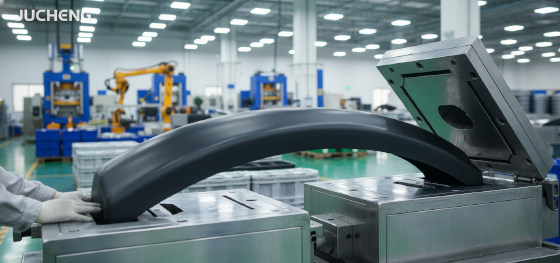
Dominating the hardware market requires a partner that can scale from a single functional prototype to a commercial deployment of 5,000 units without losing a millisecond of momentum. Jucheng Precision operates with a 24/7 manufacturing mindset in our Shenzhen precision manufacturing hub, delivering high-tolerance simulating Polypropylene with elastomeric RIM components with industry-leading speed. We provide a "Bridge to Production" that allows you to move from a CAD file to a fleet of 50 Beta robots with consistent tactile and mechanical quality.
Integrating your structural design with Jucheng’s expertise ensures that your hardware survives the "First-Field Contact" and moves into mass adoption. We offer a No MOQ policy, allowing you to source 1 to 10 units for initial Alpha testing without the crushing cost of mass-production tools. Whether you are building an autonomous vineyard scout or a heavy-duty industrial mobile base, Jucheng Precision provides the rigid, precise, and chemically optimized foundations that keep your innovation moving through the high-stakes cycles and the years of hard labor.
Our facility is equipped with dedicated high-pressure RIM assembly cells and ISO-standard quality labs, allowing us to manage the entire hardware lifecycle in one location. we manage the complexity of multi-material bonding and custom textures so your engineering team can focus on the motion control and the AI. By combining Shenzhen's speed with industrial-grade material verification and global quality standards, Jucheng Precision remains the preferred partner for the world's most aggressive hardware challenges. Contact us today to start your next project.
FAQ: Logistics and Durability of Simulated PP Materials
Is simulated PP as light as real Polypropylene?
Yes. By utilizing microcellular foaming, we can achieve specific gravities below 1.0, making our elastomeric parts float on water while maintaining structural strength.
Can JUCHENG overmold rubber skins onto aluminum parts?
Absolutely. We specialize in bonding medical and industrial elastomers to CNC-machined metal cores for ergonomic and safety applications.
How do you ensure the flexible parts don't sag over time?
We utilize high-tier polyols with superior thermal stability and manage the curing cycle to eliminate internal residual stresses.
What is the maximum part length for flexible RIM at Jucheng?
We regularly produce flexible protective bumpers and fenders up to 2,000mm in length with consistent wall thickness.
What is the lead time for a set of 20 flexible fenders?
Aluminum rapid tools and the first 20 parts are typically delivered in 15 to 20 business days.
Material fatigue and stress whitening are absolute innovation killers for high-end industrial robotics. Partnering with Jucheng Precision ensures that your functional iterations are built with the spring-back polyurethane reaction injection molding and specialized simulating Polypropylene with elastomeric RIM techniques the industry demands. Reach out to our Shenzhen manufacturing hub today for a complete DFM review and build the unyielding foundation your autonomous fleet requires.

