


Demanding environments such as surgical theaters, pharmaceutical labs, and marine vessels require materials that can withstand aggressive chemical washes without degrading. Deploying stainless steel sheet metal fabrication provides the elite level of mechanical strength, thermal limits, and exceptional corrosion resistance needed to satisfy strict sanitary and structural regulations. For product designers engineering high-end enclosures, fluid tanks, and complex brackets, this robust material provides an unmatched lifetime value.
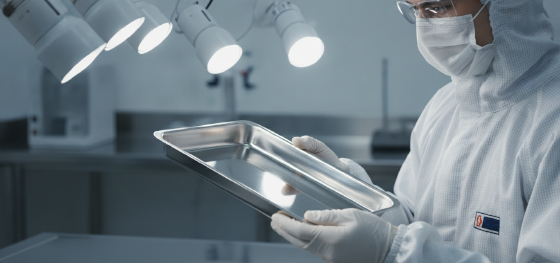
Unlike softer alloys that easily scratch or lose their protective coatings over time, iron-based alloys containing chromium possess a natural self-healing surface. However, processing this incredibly hard metal introduces severe manufacturing challenges. If your manufacturer lacks high-tonnage forming machinery and specialized tool steel punch sets, you will face severe tool wear, out-of-tolerance bend angles, and cosmetic surface contamination.
Balancing the material's rapid strain-hardening rate against press brake tonnage requirements is what separates successful industrial designs from costly scrap. Let's examine the unique chemistry behind this metal's corrosion resistance, evaluate the standard grades used in modern shops, and review professional finishing methods that deliver clean, sanitary surfaces.
content:
The Unmatched Corrosion Resistance of Stainless Steel
Grade 304 vs. Grade 316
Overcoming the Challenges of Bending and Cutting Stainless
Bead Blasting and Polishing for a Flawless Finish
JUCHENG’s High-Precision Stainless Fabrication
FAQ: Critical Questions About Stainless Steel Sheet Metal Fabrication
The Unmatched Corrosion Resistance of Stainless Steel
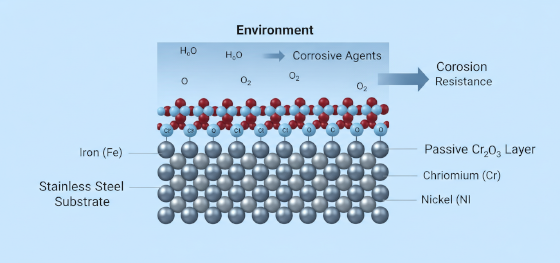
What makes stainless steel impervious to rust and oxidation?
The material contains a minimum of 10.5% chromium, which reacts with atmospheric oxygen to form an invisible, self-healing chromium oxide passive layer that blocks moisture.
Understanding the chemistry of this stainless steel alloy is essential to managing product lifecycles in harsh environments. Unlike carbon steels that rely on paint or galvanization to block moisture, stainless possesses an integrated protection mechanism. If the surface is physically scratched or gouged, the exposed chromium instantly reacts with surrounding oxygen to rebuild the passive layer.
This unique metallurgical property makes it highly valued in medical devices and chemical processing hardware. The material can handle daily sterilization, extreme steam washes, and aggressive disinfectants without experiencing surface degradation, pitting, or rust. This ensures long-term hygiene and structural integrity in critical applications.
Grade 304 vs. Grade 316
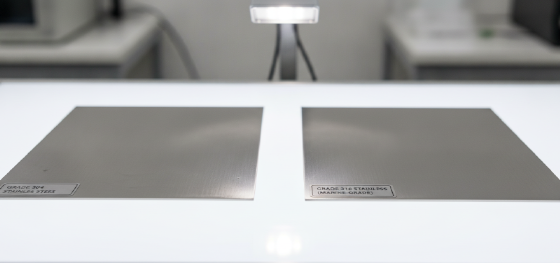
What is the difference between standard Grade 304 and marine-grade Grade 316?
Grade 304 is the industry workhorse for standard corrosion resistance, while Grade 316 contains molybdenum, which drastically reduces pitting caused by chlorides and saline.
To optimize costs during stainless steel sheet metal fabrication, engineers must understand the metallurgical differences between these common austenitic grades. Selecting the incorrect alloy can lead to premature stress corrosion cracking in high-saline environments, while over-specifying can inflate your material budget.
For most indoor, medical, and consumer electronics applications, 304 stainless steel is the preferred material choice, providing outstanding formability and excellent weldability at a balanced price point. However, if your hardware must survive saltwater exposure, industrial acids, or high-humidity coastal environments, upgrading to 316 stainless steel is essential. The addition of molybdenum protects the metal from localized chloride pitting, ensuring reliable performance in harsh marine applications.
Overcoming the Challenges of Bending and Cutting Stainless
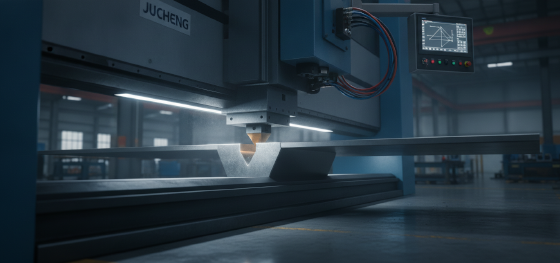
Why does forming stainless steel require high-tonnage CNC press brakes?
Stainless steel possesses high yield strength and work-hardens rapidly during deformation, requiring up to double the bending force of carbon steel to fold successfully.
Bending stainless steel requires a deep understanding of its high physical resistance to deformation. This metallurgical behavior is known as work hardening, where the metal becomes significantly harder and more resistant to bending as it is deformed. To force this tough material past its plastic limit, we deploy high-tonnage, rigid press brakes equipped with hardened tool steel dies.
Managing springback is also critical when forming these hard sheets. Due to high tensile limits, stainless steel exhibits extreme angular rebound when the punch retracts. Our programmers compensate for this by over-bending the metal by calculated angles in our CNC systems. Applying incorrect pressure when forming stainless can trigger local work hardening, causing the sheet to crack along the outer radius if the minimum bend radius is set too tight.
Bead Blasting and Polishing for a Flawless Finish
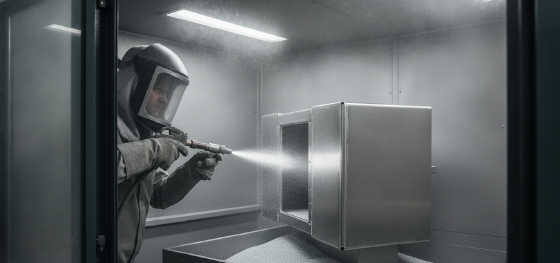
How do you achieve a uniform, aesthetic surface finish on fabricated stainless parts?
We execute physical bead blasting to create a uniform, non-reflective matte finish, or perform progressive polishing to achieve a highly cosmetic brushed texture.
Raw stainless steel parts straight from the welding booth often display localized heat tint and superficial weld marks. To restore cosmetic uniformity, we recommend advanced surface treatments. Running the parts through a professional bead blasting cabinet sprays fine glass beads under high pressure, producing a beautifully smooth, satin-matte texture that easily hides finger oils and light surface wear.
For high-end appliances, food processing panels, and architectural covers, we execute progressive abrasive polishing. Using fine-grit sanding wheels, our finishing technicians blend weld joints flat, creating a continuous, parallel-brushed direction. This highly skilled manual blending removes all geometric seams, leaving a premium finish that looks like a single continuous block of stainless.
JUCHENG’s High-Precision Stainless Fabrication
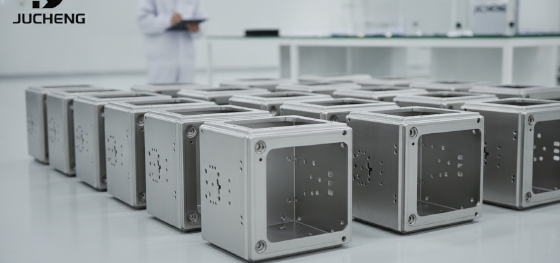
What sets JUCHENG's custom stainless steel manufacturing apart?
We operate high-power fiber laser cutters and high-tonnage press brakes managed by skilled operators, utilizing dedicated tooling to prevent carbon cross-contamination on your assemblies.
Whether your project requires high-durability brackets or sanitary enclosures, selecting the correct sheet metal material is critical to long-term lifecycle performance. JUCHENG integrates advanced laser profiling and high-force forming into our full-service production lines. This allows us to transition your 3D models into fully finished, durable stainless hardware with extreme dimensional accuracy.
We stock a wide variety of raw gauges in both 304 and 316 grades, matching each to its mathematically calculated springback allowances. Our technical queue provides a 24-hour free DFM analysis to check your CAD designs for bend limits and tooling access before production. Supported by our no MOQ policy and rapid delivery guarantee, we manage your project from initial flat pattern cutting to final, fully integrated packaging.
FAQ: Critical Questions About Stainless Steel Sheet Metal Fabrication
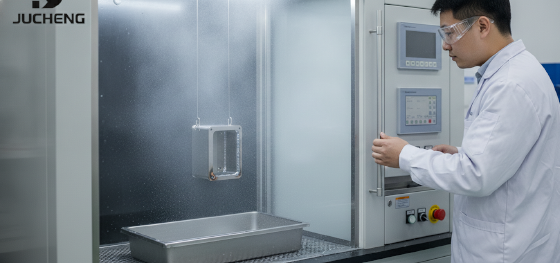
What causes carbon cross-contamination on stainless steel, and how is it prevented?
Carbon contamination occurs when stainless steel comes into contact with carbon steel tools, such as grinding discs or press brake dies. The carbon steel particles embed in the stainless surface, disrupting the passive chromium layer and initiating rapid rust. To prevent this, we utilize dedicated, stainless-only tooling on our shop floor and perform complete chemical passivating washes to clean the metal after fabrication.
Why is laser cutting stainless steel with nitrogen assist gas preferred over oxygen?
Oxygen assist gas causes the cut edge of stainless steel to oxidize and turn black, requiring extensive secondary grinding before welding or painting. Utilizing high-pressure nitrogen assist gas cools the cut zone and completely prevents oxidation, delivering a clean, bright, and shiny edge that is ready for immediate structural welding.
Can stainless steel 304 be hardened through post-weld heat treatment?
No, austenitic stainless steels like 304 and 316 cannot be hardened by heat treatment. They can only be hardened mechanically through cold-working processes like rolling or bending. If your design requires high post-weld hardness, we recommend utilizing martensitic stainless steel grades (such as 410) which are highly responsive to thermal hardening.
How does JUCHENG prevent surface contamination during stainless steel sheet metal fabrication?
We keep our stainless steel fabrication area strictly segregated from our carbon steel processing bays to prevent airborne metal dust cross-contamination. Our finishing team utilizes certified iron-free grinding discs, performs electro-chemical weld cleaning, and runs automated passivation treatments to ensure that every finished component maintains its flawless corrosion resistance.

