


Capturing geospatial data with a fifty-thousand dollar LiDAR scanner means absolutely nothing if your aircraft vibrates like a cheap toy. Surveying companies frequently blame their software algorithms when topographical maps come out blurry, completely ignoring the mechanical flaws hidden inside their flight hardware. Developing a dedicated Survey drone body prototype forces engineering teams to confront these severe structural defects before mass production begins. Flimsy airframes physically twist during high-speed maneuvers, throwing expensive optical payloads completely out of alignment and ruining days of aerial inspection work.
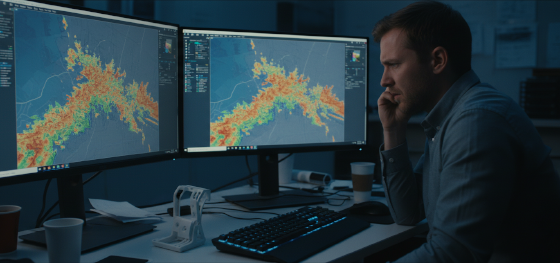
Integrating heavy, highly sensitive cameras onto a flying platform requires mastering two opposing physical forces: absolute rigid stability and extreme aerodynamic weight reduction. Executing Custom Drone and UAV Parts Manufacturing for enterprise inspection fleets goes far beyond slapping a sensor onto a plastic box. Operating our Shenzhen precision hub, Jucheng Precision specifically targets and eliminates the micro-vibrations that blind high-definition imaging equipment.
Securing lucrative infrastructure contracts demands hardware that looks and performs like military-grade equipment. Let's dissect exactly how aerodynamic housings extend your battery range, why rigid CNC mounting brackets save your camera data, and how hybrid manufacturing accelerates your commercial market launch.
content:
Design Requirements: Surviving Long-Range Mapping
Integrating Payloads: Securing LiDAR and Cameras
Vibration Damping: Stopping the Jello Effect
Prototyping Processes: Mixing Metal and Polymers
JUCHENG Hub: Shenzhen's Turnkey Assembly Arsenal
FAQ: Honest Answers About Wind Resistance and Weight
Design Requirements: Surviving Long-Range Mapping

What specifically dictates the physical exterior shape of a commercial inspection aircraft?
Maximizing battery endurance requires an ultra-lightweight, aerodynamically smooth outer shell that drastically reduces parasitic wind drag during grueling, hour-long mapping missions.
Forcing an unrefined, blocky chassis through the air wastes massive amounts of electrical power. Every time the motors spool up to fight aerodynamic drag, your overall flight time plummets. Mapping thousands of acres of farmland or inspecting miles of power lines requires extreme energy conservation.
Drafting a sleek, teardrop-shaped exterior minimizes this friction beautifully. However, manufacturing those sweeping, organic curves using standard fabrication methods is notoriously difficult. Hardware founders must rely on advanced molding techniques to translate their aerodynamic computer simulations into physical, weather-resistant reality.
Integrating Payloads: Securing LiDAR and Cameras
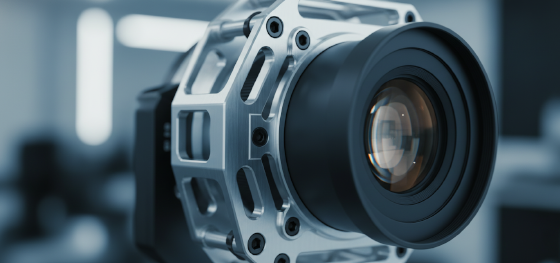
Why do expensive optical sensors demand custom-machined mounting brackets?
Flimsy printed plastic mounts flex wildly under the heavy weight of advanced LiDAR modules, forcing the sensor out of mathematical alignment and permanently destroying the accuracy of the geospatial data.
Trusting a zip-tie or a basic plastic clip to secure a heavy cinematic lens is a terrifying commercial gamble. When the aircraft banks aggressively, the G-forces exert massive torque on the payload connection point. If that joint bends even half a degree, your high-resolution map becomes heavily distorted.
Carving these critical integration points out of solid aerospace aluminum guarantees absolute rigidity. We CNC mill these specific payload docks to microscopic zero-gap tolerances, ensuring your expensive scanning equipment remains permanently locked into its designated focal trajectory.
Vibration Damping: Stopping the Jello Effect
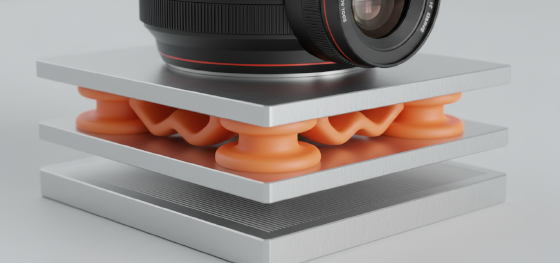
How do hardware teams prevent high-speed motor resonance from blinding the camera?
By engineering complex, multi-component dampening systems that physically isolate the rigid optical payload chassis from the violently vibrating external motor arms using precise elastomeric materials.
Spinning four massive brushless motors generates brutal, high-frequency kinetic energy. If your airframe transfers that energy directly into the camera lens, the resulting video footage will suffer from severe "jello effect," rendering pipeline inspections entirely useless.
Defeating this kinetic energy requires a multi-layered material approach. Engineers design a "dirty" outer frame to absorb the brutal motor shock, and a "clean" internal suspended frame strictly for the electronics. Sandwiching custom-molded silicone or rubber dampeners perfectly between these two frames completely neutralizes the destructive harmonic waves.
Prototyping Processes: Mixing Metal and Polymers
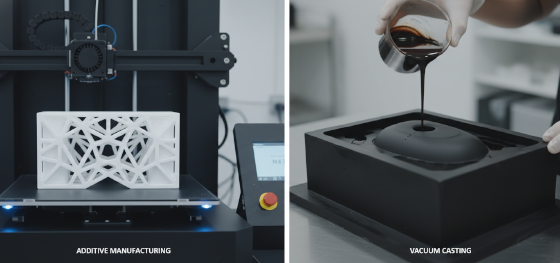
Evaluating different fabrication technologies ensures you capture both aesthetic beauty and structural survival. The matrix below outlines how combining different factory processes creates the ultimate inspection test unit.
| Manufacturing Process | Specific Drone Component | Core Engineering Advantage |
|---|---|---|
| Vacuum Casting (Polyurethane) | Aerodynamic Outer Shells | Flawless smooth finish, totally waterproof, zero RF signal blocking. |
| 5-Axis CNC Milling (Aluminum) | Camera Mounts & Motor Arms | Ultimate tensile rigidity, eliminates camera wobble completely. |
| SLS 3D Printing (Nylon) | Internal Wiring Brackets | Extremely fast iteration, impact-resistant, lightweight organization. |
Attempting to build the entire aircraft out of just one material always ends in failure. A pure metal drone blocks GPS signals, while a pure plastic drone shakes itself to pieces. Marrying these unique technologies together represents the absolute pinnacle of uncrewed vehicle development.
JUCHENG Hub: Shenzhen's Turnkey Assembly Arsenal
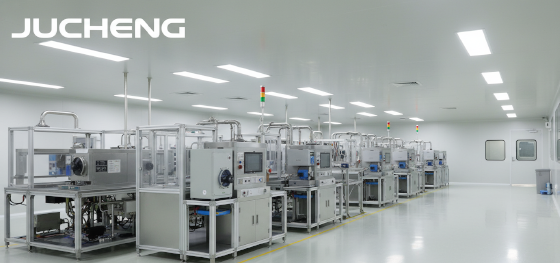
Why trust Jucheng Precision to assemble your highly sensitive multi-component mapping hardware?
Because we execute the CNC milling, vacuum casting, and final payload integration entirely under one roof, guaranteeing absolute zero-gap tolerances across the entire assembled aircraft.
Outsourcing your metal mounts to one factory and your plastic shells to another guarantees massive assembly nightmares. When the parts arrive, the screw holes will inevitably fail to align, stalling your investor presentation indefinitely. Our Shenzhen facility actively test-fits your entire assembly before shipping.
Stop risking your geospatial data on vibrating, poorly fitted components. Send your complete multi-part CAD assemblies to our engineering team today for a rigorous DFM analysis. We will lock in your camera tolerances, slash your aerodynamic drag, and deliver flight-ready perfection.
FAQ: Honest Answers About Wind Resistance and Weight

Will the polyurethane outer shell shatter if the aircraft makes a hard landing?
No. We utilize specialized casting resins formulated specifically to mimic the slight flexibility of ABS plastic, allowing the shell to absorb kinetic impacts without cracking like brittle glass.
How do you ensure the heavy CNC metal parts do not ruin the flight time?
Our engineers deploy aggressive topological optimization, using 5-axis mills to hollow out deep pockets inside the metal brackets, removing dead weight while preserving the critical load-bearing geometry.
Can you cast customized rubber dampeners specifically for our camera payload?
Absolutely. We regularly pour custom durometer silicone and elastomeric rubber grommets tuned precisely to absorb the exact vibration frequencies generated by your specific brushless motors.
Does painting the exterior shell interfere with the internal GPS antennas?
Standard polyurethane paints have zero effect on RF transparency. However, you must strictly avoid any metallic-flake automotive paints, as the metal particles will actively disrupt satellite reception.

