


Failing a critical X-ray inspection because your custom metal parts are full of hidden air bubbles destroys your entire production schedule. Hardware engineers designing heavy-duty automotive suspension arms or aerospace brackets cannot tolerate a single microscopic internal void. Relying on standard injection methods forces extreme turbulence into the mold, trapping atmospheric oxygen directly inside the freezing alloy. Executing the die casting process under these standard conditions produces parts that look beautifully smooth on the outside but resemble a fragile sponge on the inside. Solving this fatal structural flaw requires completely changing the atmospheric conditions inside the factory tooling.
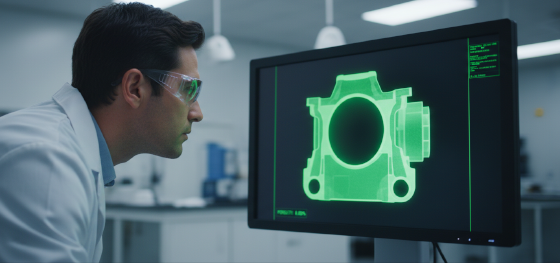
Procurement teams often learn the hard way that you cannot heat-treat or weld porous metal components. Heating a standard casting causes the trapped internal air to violently expand, pushing outward and ruining the surface with massive metal blisters. Attempting to weld these parts causes the trapped gas to explode, destroying the weld seam instantly. Operating from our Shenzhen precision manufacturing hub, Jucheng Precision deploys advanced evacuation technology to permanently eliminate these chemical and physical limitations.
Deploying the vacuum die casting process fundamentally alters the structural integrity of your hardware. By violently sucking all the oxygen out of the massive steel blocks milliseconds before the liquid metal arrives, we deliver a solid, unyielding commercial component. Let's explore exactly why traditional high-speed injection ruins critical parts, how mechanical evacuation valves work, and why this specific technology is the undisputed standard for load-bearing structural hardware.
content:
Mechanical Evacuation: How Vacuum-Assisted Technology Works?
The Porosity Trap: Why Standard Processes Fail Critical Parts?
Technical Data: Vacuum Casting vs. Standard HPDC
JUCHENG Hub: Shenzhen's Advanced Structural Metal Arsenal
FAQ: Honest Answers About Heat Treatment and Welding
Mechanical Evacuation: How Vacuum-Assisted Technology Works?
How do you remove the air from a massive steel box before liquid metal fills it?
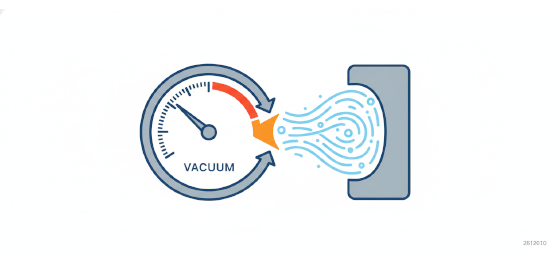
By attaching high-capacity mechanical vacuum pumps and specialized timing valves to the exhaust vents of the mold, violently extracting the atmospheric oxygen just milliseconds before the hydraulic plunger fires.
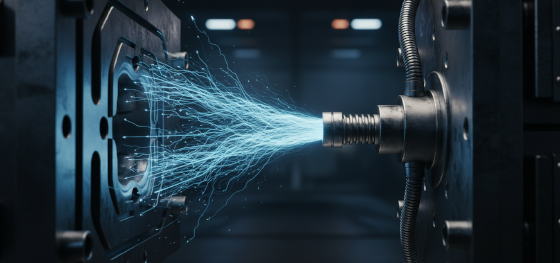
Timing dictates the success or failure of this entire operation. The massive hydraulic plunger begins pushing the glowing liquid aluminum forward inside the shot sleeve. At that exact microsecond, the external pumps rip the air out of the empty cavity, creating a deep negative pressure environment.
Protecting the delicate vacuum equipment from the incoming 1,200-degree molten metal requires incredible mechanical precision. Specialized chill blocks and massive mechanical shut-off valves slam shut the moment the liquid metal touches them. This allows the metal to pack densely into every corner of the mold without a single molecule of oxygen getting trapped inside the freezing alloy.
The Porosity Trap: Why Standard Processes Fail Critical Parts?
Why can't you weld or heat-treat a standard metal casting?
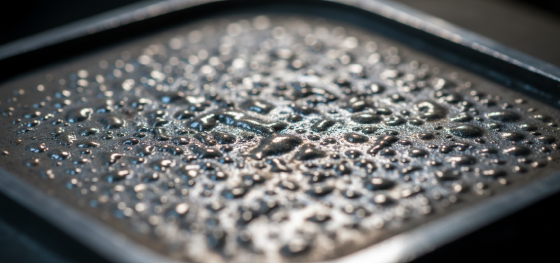
Standard injection violently traps microscopic air bubbles inside the metal; when exposed to welding torches or heat-treatment ovens, these hidden gas pockets violently expand, destroying the part's structural integrity.
Hardware teams designing complex chassis parts often rely on the standard high pressure die casting process because it is incredibly fast and cheap. Unfortunately, that aggressive speed creates massive turbulence. The liquid metal folds over itself, swallowing the air inside the cavity. The resulting part looks flawless to the naked eye but is inherently compromised.
Subjecting these porous parts to rigorous aerospace X-ray testing reveals a horrifying internal structure full of dark voids. If a load-bearing automotive suspension knuckle contains these voids, it will eventually snap under highway vibration. Evacuating the air completely before injection remains the only commercial way to guarantee military-grade solid metal density.
Technical Data: Vacuum Casting vs. Standard HPDC
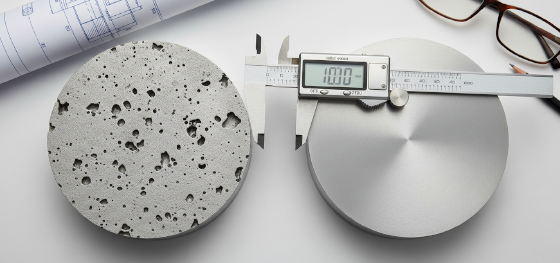
Choosing between standard processing and vacuum assistance dictates the ultimate physical limits of your final product. The engineering matrix below clearly illustrates why load-bearing applications demand strict atmospheric extraction.
| Metallurgical Property | JUCHENG Vacuum Casting | Standard High-Speed HPDC |
|---|---|---|
| Internal Gas Porosity | Virtually Zero (X-ray compliant) | High (Sponge-like core) |
| Heat Treatment Capability | Excellent (T6 tempering possible) | Impossible (Causes severe surface blistering) |
| Weldability | High (No exploding gas pockets) | Extremely Poor (Weld seams blow out) |
| Mechanical Strength | Maximum structural yield limit | Moderate to Low |
Paying the slight premium for evacuation equipment fundamentally upgrades the alloy. By achieving near-perfect density, engineers can successfully apply T6 heat treatments to aluminum parts, massively boosting their yield strength without fear of surface deformation or blistering.
JUCHENG Hub: Shenzhen's Advanced Structural Metal Arsenal
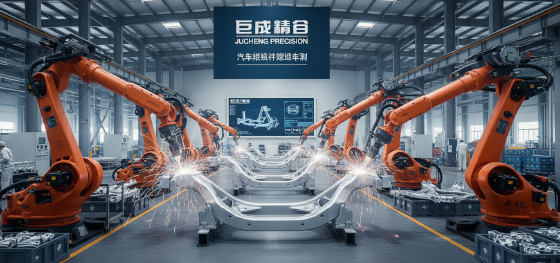
Why do top-tier automotive brands trust Jucheng Precision for structural components?
Because we integrate expensive European-style vacuum valve blocks directly into our massive hydraulic presses, ensuring absolutely dense, crash-ready components that pass stringent global safety audits.
Retrofitting cheap machines with basic air pumps does not achieve true aerospace-grade results. Jucheng Precision operates dedicated, purpose-built machinery inside our Shenzhen precision manufacturing hub. Our engineers synchronize the injection ram, the chill vents, and the extraction pumps to operate flawlessly within milliseconds of each other.
Stop risking your heavy-duty assembly lines on porous, fragile metal parts. Send your load-bearing CAD files to our engineering team today for a comprehensive DFM review. We will map the extraction pathways, eliminate your porosity nightmare, and deliver unyielding structural hardware.
FAQ: Honest Answers About Heat Treatment and Welding
Does vacuum extraction fix shrinkage porosity as well as gas porosity?
Vacuum extraction primarily solves gas porosity caused by trapped air. Shrinkage porosity, caused by metal cooling unevenly, must still be managed with proper thermal water lines in the mold.
Can I weld a vacuum-cast aluminum part to an extruded aluminum tube?
Absolutely. Because there is no trapped gas inside the casting, you can cleanly TIG or MIG weld the component to other structural aluminum frames without the weld seam blowing out.
Is this process significantly more expensive than standard injection?
The tooling requires specialized valves which increases the NRE cost slightly, and cycle times are marginally slower, resulting in a moderate premium that is easily offset by the massive strength gains.
What happens if the mechanical vacuum valve fails to shut in time?
Molten aluminum will violently rush into the expensive vacuum pump, destroying it instantly. This is why we use highly advanced, redundant chill blocks to instantly freeze the metal before it escapes.

