


Precision is a measurement of boundaries. In the traditional cnc machining process, those boundaries are limited by the physical diameter of a spinning tool. But when a design calls for an internal corner so sharp it mimics a razor's edge, or a material so hard it would shatter a carbide mill, the machine shop must turn to the silent power of the spark. This is the domain of wire discharge machining, or Wire EDM. It is the industrial scalpel of the 21st century—a process where a microscopic brass wire, charged with high-frequency electricity, carves through massive sections of metal with the fluidity of a hot wire through wax.
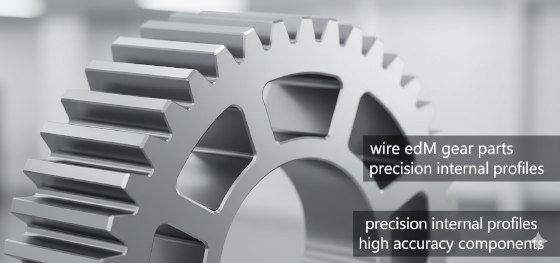
At Jucheng Precision, we view Wire EDM not just as a support process for mold making, but as a primary production tool for high-stakes aerospace and medical components. We understand that wire discharge machining offers a unique combination of zero mechanical force and extreme dimensional stability. Operating a fleet of high-performance Sodick and Makino submerged wire centers, we provide our clients with the ability to slice through 300mm thick hardened blocks with a tolerance repeatablity of +/- 0.002mm. This guide explores the thermodynamic mechanics of the traveling wire, the geometric sovereignty of the thin kerf, and why JUCHENG integrates these spark-erosion protocols to deliver perfection in the most stubborn alloys.
Efficiency in Wire EDM is a balance of tension and pulse. It is a world where the hardness of the metal is irrelevant and only the conductivity matters. Let us examine the technical pillars of wire erosion and how it redefines the integrity of your most complex through-cut designs.
content:
The Traveling Scalpel: Physics of the Wire EDM
Hardness Independence: Slicing Through Quenched Alloys
Tight Kerf Precision: Managing Microns and Corner Radii
Wire EDM vs. Sinker EDM: Strategic Geometric Choices
JUCHENG's High-Accuracy Protocol: Submerged Excellence
The Traveling Scalpel: Physics of the Wire EDM
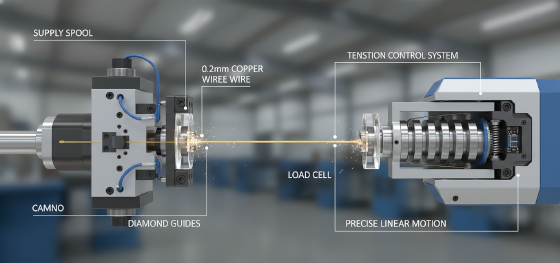
To understand wire discharge machining, one must visualize a tool that is constantly renewing itself. Unlike a milling cutter that stays in the spindle for hours, the tool in Wire EDM is a spool of brass or coated copper wire—typically 0.2mm to 0.3mm in diameter—that travels through the part at a controlled speed. This wire never actually touches the metal. Instead, it is surrounded by deionized water that acts as a dielectric insulator. As the machine applies a precise electrical pulse, the water breaks down, creating a spark that vaporizes a microscopic volume of the workpiece.
The technical brilliance of this system lies in its tension control. At Jucheng Precision, our machines utilize sophisticated servo-motors to pull the wire with constant force, guided by diamond-lined nozzles above and below the part. This ensures the wire remains perfectly straight even under the pressure of the spark explosions. Because the wire is constantly moving from a supply spool to a take-up bin, the "cutting edge" is always brand new. This eliminates the dimensional drift caused by tool wear in a traditional cnc machining process. Whether we are cutting at the beginning of the spool or the end, the spark gap remains consistent. This traveling scalpel allows us to maintain a vertical straightness over a 200mm thick block that a mechanical saw or mill could never achieve, delivering parallel surfaces with sub-micron deviation.
Hardness Independence: Slicing Through Quenched Alloys

Hardness is the natural enemy of the CNC mill. As steel is quenched to HRC 60 or above, it becomes an abrasive fortress that destroys carbide inserts. Wire discharge machining is fundamentally indifferent to this resistance. Because the erosion is thermal rather than mechanical, the "hardness" of the material's crystal lattice does not impact the speed or the precision of the cut. In the EDM tank, a block of hardened D2 tool steel is machined with the same ease as a block of soft 6061 aluminum.
This hardness independence allows Jucheng Precision to employ a "Hard-First" manufacturing strategy. We often suggest that our clients heat-treat their tool steel blanks to their final hardness *before* we perform the Wire EDM pass. This eliminates the primary source of manufacturing failure: heat-treat distortion. In a conventional workflow, you machine a part, then quench it, and then hope it hasn't warped out of spec. With JUCHENG’s Wire EDM protocols, we cut the final precision features into the already-stabilized, hardened metal. This ensures that the intricate internal gears, keyways, and splines we produce are dimensionally locked from the moment the wire finishes its path. It is the definitive solution for high-wear industrial components and precision stamping dies where the margin for error is non-existent.
Tight Kerf Precision: Managing Microns and Corner Radii
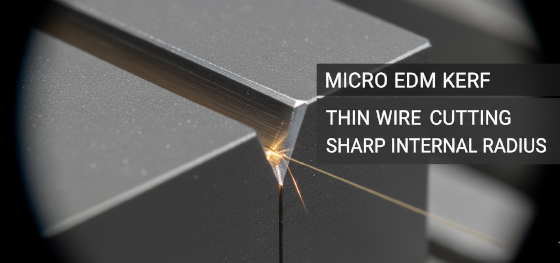
In the geometry of the cnc machining process, the "Radius Constraint" is a constant frustration. A 3mm end mill cannot create a corner sharper than 1.5mm. But many high-performance designs—especially in the electronics and aerospace connectors—require nearly sharp internal corners to house square pins or mate with other components. Wire discharge machining offers a solution through its exceptionally tight "Kerf" (the width of the cut). Since the wire is only 0.2mm thick, the minimum internal radius we can achieve is roughly 0.11mm.
Managing this tight kerf requires a deep understanding of the "Spark Gap." The spark doesn't just vaporize metal in front of the wire; it erodes material in a 360-degree radius around it. At Jucheng Precision, our CAM engineers calculate the exact electrical offset required to compensate for this gap. We perform a "Roughing Cut" to remove the bulk of the material, followed by as many as five "Skim Passes." During a skim pass, the machine uses lower energy pulses to gently "shave" the surface, effectively polishing the metal with electricity. This methodical reduction of energy is how we achieve surface finishes of Ra 0.2 µm and hold tolerances that are measured in the fourth decimal place. For medical surgical tools that require a razor-sharp profile or interlocking aerospace splines, JUCHENG’s kerf management provides a level of geometric freedom that mechanical tools simply cannot reach.
Wire EDM vs. Sinker EDM: Strategic Geometric Choices
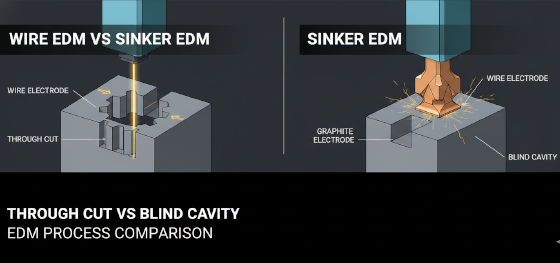
A common point of confusion for designers is when to specify Wire EDM versus Sinker (RAM) EDM. Both utilize spark erosion, but they are geographically different tools. Wire EDM is essentially a "bandsaw of light"—it can only cut all the way through a part. If your feature is a through-hole, a profile on the edge of a plate, or a gear that goes through the entire thickness of a blank, wire discharge machining is the most accurate and cost-effective choice. It requires no custom tooling, as the wire itself is the tool.
Sinker EDM is a "stamp of light." It uses a custom-machined electrode (usually copper or graphite) to sink a 3D shape into the metal. If your design requires a blind cavity—like the pocket for a plastic injection mold or a hex-socket in a high-strength bolt—Wire EDM cannot do it because the wire cannot stop halfway through the part. At Jucheng Precision, we use these technologies in tandem. We might use Wire EDM to cut the high-precision outer perimeter of a mold insert and then move the part to a Sinker EDM to burn the complex internal details. This integrated cnc machining process ensures that every geometric requirement is satisfied using the most efficient technology. We help our clients navigate this choice during our DFM reviews, ensuring that you don't pay for expensive custom electrodes when a simple wire path will suffice.
JUCHENG's High-Accuracy Protocol: Submerged Excellence
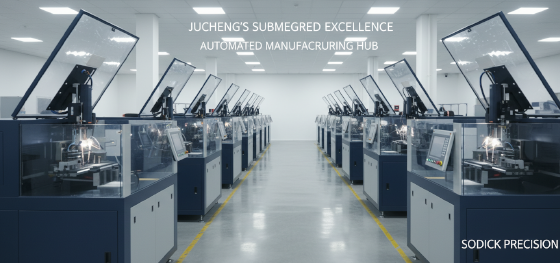
The final hallmark of a professional EDM facility is environmental control. Wire discharge machining is exceptionally sensitive to temperature. Because the process is slow, a shift in shop temperature of only two degrees can cause a large steel plate to expand and contract enough to ruin an aerospace tolerance. Jucheng Precision eliminates this variable through our "Submerged Excellence" protocol. Our Wire EDM centers operate with the entire workpiece fully submerged in a temperature-controlled bath of deionized water.
Submerging the part provides two critical advantages: First, it acts as a massive thermal heat sink, ensuring the material stays at a constant 20°C throughout the hours-long cutting cycle. Second, it allows for high-pressure "flushing" through the nozzles, which is vital for removing the vaporized metal dust from the tight kerf. Without efficient flushing, the sparks will short-circuit on the debris, leading to "wire breaks" and surface scarring. JUCHENG’s investment in advanced Sodick machines with automatic wire re-threading ensures that even if a break occurs, the machine recovers instantly, maintaining 24/7 production consistency. When you receive a component from JUCHENG, you are getting the benefit of a stabilized, high-purity environment. Whether you are building an innovative medical probe or a high-pressure aerospace nozzle, our Wire EDM protocols clarify and elevate your most complex designs. Contact Jucheng Precision today for a technical DFM review and experience the precision that specialized spark erosion can bring to your next project.

