


Watching your profit margins vanish because you have to replace a cracked $40,000 steel mold every few months is a nightmare for hardware startups. High-heat metals ruthlessly attack tooling steel, causing severe thermal fatigue that eventually destroys the cavity surface. Procurement teams scaling up micro-precision parts like optical camera chassis or complex locking mechanisms cannot afford this constant tooling replacement tax. Furthermore, paying a machine shop to drill tiny, delicate threads into thousands of individual metal covers will completely bankrupt your assembly budget. Executing the die casting process with low-melting-point alloys fundamentally changes these financial physics, allowing you to bypass secondary machining entirely.

Deploying specific Zamak alloys unlocks the holy grail of high-volume hardware: true net-shape manufacturing. Because this specific liquid metal flows into the mold with the consistency of water, it captures microscopic details flawlessly. Operating out of our Shenzhen precision manufacturing hub, Jucheng Precision routinely casts parts with internal features so incredibly precise that they drop out of the machine ready to be installed, skipping the CNC bay entirely.
Smart engineering requires looking past the raw material price per pound to calculate the true amortized cost of the entire production run. Utilizing the zinc die casting process might cost slightly more at the ingot level, but it dominates the balance sheet through sheer speed and tooling longevity. Let's explore exactly how this heavy, premium-feeling metal extends your mold life to a million shots, completely eliminates post-machining, and delivers flawless cosmetic finishes.
content:
Tooling Amortization: How to Make a Mold Last Forever?
Net-Shape Magic: Stop Paying for CNC Threading
Cosmetic Plating: Why Does Chrome Adhere So Perfectly?
Technical Data: Benchmarking Aluminum vs. Zamak Costs
JUCHENG Hub: Shenzhen's High-Velocity Hardware Center
FAQ: Honest Answers About Weight, Strength, and Speed
Tooling Amortization: How to Make a Mold Last Forever?
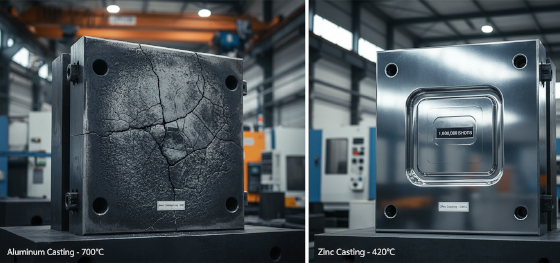
Why do molds designed for Zamak alloys outlast others by a factor of ten?
Because the metal melts at roughly 750 degrees Fahrenheit, subjecting the expensive H13 tool steel to significantly less thermal shock and virtually eliminating heat-checking surface cracks.
Financial planning for mass production usually includes a massive hidden cost for "Tooling Replacement." If you are casting high-heat metals, you must budget to buy a brand new steel die every 100,000 shots. For consumer electronics moving millions of units, this re-tooling tax is brutal.
Switching to a lower melting point alloy completely neutralizes this financial drain. A well-maintained steel die running these alloys will confidently cycle over one million times before showing any signs of dimensional wear. You pay the heavy Non-Recurring Engineering (NRE) tooling fee exactly once, drastically driving down the amortized cost per unit over the life of your product.
Net-Shape Magic: Stop Paying for CNC Threading
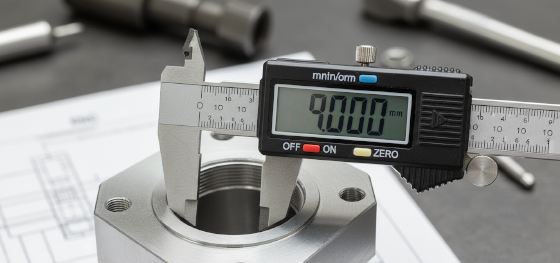
How do you cast functional, microscopic threads without drilling them later?
By leveraging the incredible fluidity of the liquid metal, which fills complex, razor-thin mold cavities and core pins flawlessly before freezing, achieving near-perfect dimensional tolerances straight out of the press.
Adding secondary CNC operations ruins your profit margins. Every time a part has to be clamped into a mill just to drill two tiny mounting holes, you are paying for extra labor, extra machine time, and risking a scrapped part if the drill bit snaps.
These specific alloys possess such low viscosity when melted that they copy the microscopic texture of the steel die perfectly. We routinely design tooling with complex unscrewing mechanisms that cast fully functional internal threads directly into the housing. When the part drops onto the conveyor belt, it is completely finished and ready for assembly.
Cosmetic Plating: Why Does Chrome Adhere So Perfectly?
Why are high-end bathroom fixtures and luxury hardware always made of this material?
Because the surface of the raw casting is incredibly dense and virtually free of external porosity, creating a perfectly smooth canvas that accepts copper, nickel, and chrome electroplating flawlessly.
Trying to electroplate a porous metal is a disaster. The chemicals get trapped inside microscopic surface holes and eventually bleed out, causing the expensive chrome finish to blister and peel away. High-end consumer brands cannot tolerate plating defects on luxury goods.
This alloy cures with a brilliant, tightly packed outer skin. It requires almost zero manual polishing before being dipped into the electroplating baths. Whether you need a deep, mirror-like black chrome for a professional camera lens or a bright gold finish for boutique hardware, this material provides the ultimate defect-free foundation.
Technical Data: Benchmarking Aluminum vs. Zamak Costs
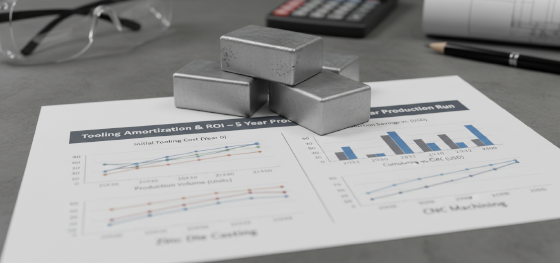
Comparing raw ingot prices is a trap for amateur procurement managers. The following matrix illustrates how the total cost of ownership shifts dramatically when you factor in machine speed and tooling longevity for high-volume orders.
| Manufacturing Cost Factor | JUCHENG High-Speed Zinc Production | Standard Aluminum Production |
|---|---|---|
| Raw Material Cost (Per Lb) | Slightly Higher | Lower |
| Tooling Lifespan (Replacement Cost) | 1,000,000+ Shots (Zero replacement fees) | 100,000 Shots (Requires expensive rebuilds) |
| Machine Cycle Speed | Extremely Fast (Hot chamber setup) | Moderate (Cold chamber setup) |
| Secondary CNC Requirement | None (Net-shape capability) | High (Frequent tapping required) |
Pairing this alloy with the extremely fast hot chamber die casting process allows the factory to pump out parts at double the speed of traditional setups. The massive savings in CNC labor, rapid cycle times, and zero tool-replacement costs make this the undisputed champion for massive commercial contracts.
JUCHENG Hub: Shenzhen's High-Velocity Hardware Center
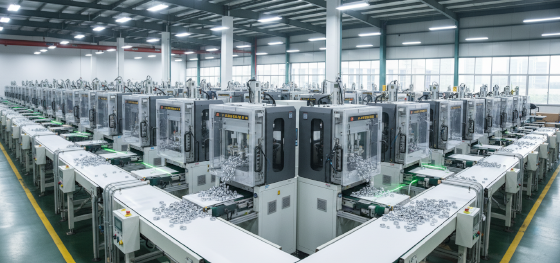
Why trust Jucheng Precision with your highest-volume cosmetic hardware?
Because we run dedicated, automated production cells that continuously cast, trim, and inspect micro-precision parts without human intervention, ensuring absolute aesthetic consistency.
Handing a complex, high-tolerance design to a shop with aging machinery guarantees terrible yield rates. In our Shenzhen precision manufacturing hub, we utilize highly sensitive optical laser scanners to inspect the threads and surface finishes of our parts the moment they drop from the press.
Stop wasting your budget on unnecessary CNC operations and expensive replacement molds. Send your intricate CAD files to our engineering team today for a comprehensive DFM analysis. We will optimize your design for net-shape manufacturing and deliver flawless, premium-feeling hardware at unbeatable commercial speeds.
FAQ: Honest Answers About Weight, Strength, and Speed
Is this material strong enough to replace forged brass or steel components?
Yes. Many specific Zamak alloy grades possess tensile strength and impact resistance that actually rival or exceed standard cast iron and forged brass, making them excellent structural replacements.
Why does the final product feel so heavy in the hand?
It is an incredibly dense metal, weighing roughly 2.5 times more than standard aluminum. This density provides a high-end, solid tactile feel highly desired in luxury consumer electronics.
Can these parts survive in high-temperature operating environments?
No. Because the melting point is very low, the structural integrity of these parts begins to degrade rapidly if subjected to continuous operating environments above 200 degrees Fahrenheit.
Do you need to use hazardous chemicals to clean the parts before plating?
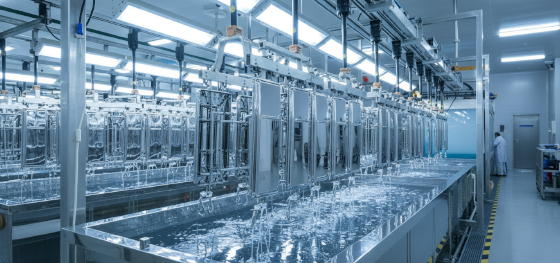
We utilize advanced, eco-friendly ultrasonic degreasing tanks inside our facility to completely remove any residual mold release agents without damaging the microscopic surface texture.

