

Choosing Your Process: RIM vs. Traditional Injection Molding
Views: 1 Author: Allen Xiao Publish Time: 2025-11-26


Your new product is big. A full-size automotive bumper. A large medical device enclosure. An equipment panel that is a meter wide.

You face a difficult choice. Traditional injection molding for a part this size requires a steel tool that costs a fortune and takes months to build. 3D printing is too slow, too expensive at volume, and the surface finish is not good enough for a final product.
This is a classic manufacturing trap. The gap between a one-off prototype and affordable mass production. But there is a powerful technology designed specifically to fill this gap. It is time you learned about reaction injection molding.
content:
RIM Molding: The Core Magic
The Power of Polyurethane (PU)
Adding a Skeleton: Reinforced RIM
Compared to Other Molding Types
Making the Strategic Choice
RIM Molding: The Core Magic
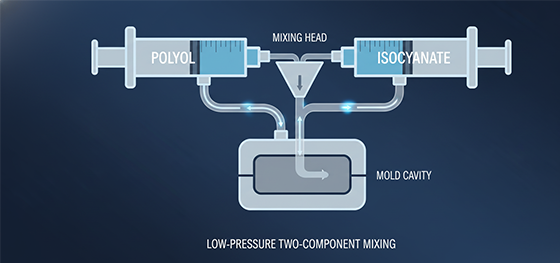
To understand the power of rim molding, you first need to know that it is fundamentally different from traditional molding. Traditional molding is a physical process. It melts solid plastic and forces it into a mold.
RIM is a chemical process. It starts with two separate liquids. These liquids are pumped at high pressure into a mixing head where they collide. This intimate mixing triggers a chemical reaction.
The now-reacting liquid flows gently, at a very low pressure, into the mold. Inside the mold, the chemical reaction generates its own heat. This heat cures the liquid, transforming it into a solid, stable plastic part in just a few minutes. It is this low-pressure, in-mold chemical reaction that gives RIM its unique advantages for large parts.
The Power of Polyurethane (PU)
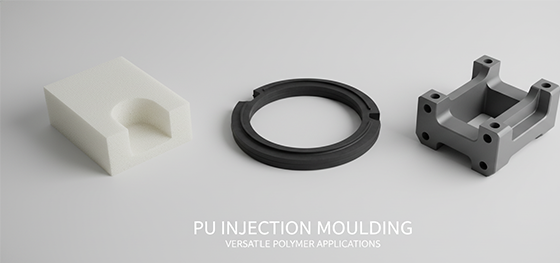
The main family of materials used in this process is polyurethane. This is why you will often hear the term pu injection moulding used to describe RIM.
Polyurethane is not one single material. It is a chameleon. By changing the chemical recipe of the two starting liquids, a huge range of properties can be achieved.
It can be a soft, flexible, rubber-like elastomer, perfect for bumpers and handles. It can be a hard, rigid, solid plastic, ideal for structural housings and panels. Or it can be a lightweight structural foam, with a dense outer skin and a foamed core. This versatility is a key advantage of the reaction injection molding process.
Adding a Skeleton: Reinforced RIM

What if you need a part that is not just big, but also incredibly stiff? You can give the part an internal skeleton. This is the world of reinforced reaction injection moulding, also known as Structural RIM (SRIM).
The process is simple in concept. Before the mold is closed, a pre-formed mat of reinforcing fibers, like glass or carbon fiber, is placed inside the mold cavity.
Then, the liquid polyurethane is injected. It flows around and completely saturates the fiber mat. When it cures, the result is a true composite part. It has the surface quality of a molded part, but the stiffness and strength of a composite. This is perfect for large, load-bearing applications like automotive floor pans or industrial equipment covers.
Compared to Other Molding Types

It is important to understand that RIM is a very specific technology. It should not be confused with other types of molding.
For example, tpu injection molding is a different process. TPU (Thermoplastic Polyurethane) is a solid, rubber-like pellet that is melted and injected under high pressure. It is great for making smaller, highly abrasion-resistant parts like caster wheels or phone cases. It is a high-pressure, thermal process, not a low-pressure chemical one.
Similarly, eva foam injection molding is another distinct technology. It uses a specific process to create the soft, foamed material used in products like shoe soles and sports equipment.
A true manufacturing partner, like JUCHENG, has expertise across all these different technologies. We can help you understand the differences and choose the one that is truly the best fit for your part's size, material, and volume requirements.
Making the Strategic Choice
Reaction injection molding is a powerful and often overlooked technology. It is a strategic choice for the right kind of project.
If your project involves low to mid-volume production of large, lightweight, and cosmetic parts, then RIM is likely the smartest and most cost-effective solution.
It bridges the gap perfectly. It offers the design freedom and surface quality of high-pressure molding, but with a tooling cost and lead time that is much closer to prototyping. Understanding this technology is a key advantage for any product developer.

ㆍPrivacy: We respect your privacy. Here you can find an example of a non-disclosure agreement. By submitting this form, you agree to our terms & conditions and privacy policy.
