


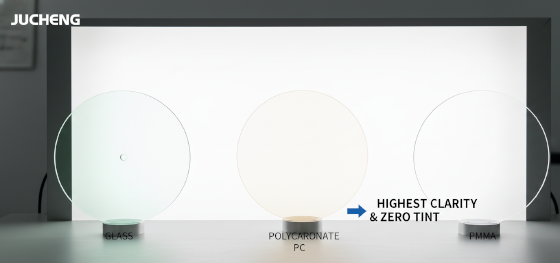
Light propagation remains the ultimate benchmark for material purity in modern hardware development. When an engineer designs a fiber-optic light guide, a luxury cosmetic enclosure, or a medical diagnostic window, the primary adversary is not just structural strength, but the scattering of photons. While Polycarbonate (PC) is known for its ruggedness, it cannot match the spectral clarity and UV stability of the "Optics King." When your project demands a refractive index of 1.49 and 92% light transmission without the risk of yellowing over time, acrylic injection molding is the only strategically viable choice. Polymethyl Methacrylate (PMMA), commonly known as Acrylic, is an amorphous thermoplastic that offers the best clarity of any polymer, even surpassing glass in many high-precision applications. Jucheng Precision operates as a high-fidelity manufacturing partner, navigating the unique brittleness and thermal sensitivity of Injection molding materials to deliver parts that possess the crystalline soul and aesthetic authority your brand requires.
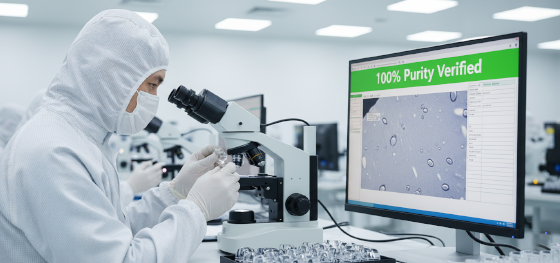
Molecular cleanliness dictates the success of every PMMA production run. Acrylic is notoriously sensitive to "Black Speck" contamination and moisture-induced silvering. A single dust particle inside the barrel or a 0.1% moisture variance in the resin can transform an expensive optical lens into a rejected scrap. Jucheng Precision eliminates these "Purity Disasters" by utilizing dedicated cleanroom injection bays and high-efficiency desiccant dryers that bake PMMA pellets at 80°C for at least four hours. We don't just "melt plastic"; we manage a microscopic environment where heat, pressure, and atmosphere are synchronized to ensure zero inclusions. This guide deconstructs the physical divide between Acrylic and PC, the mechanical challenges of PMMA brittleness, and the mandatory tooling standards required to achieve an SPI A-1 mirror finish.
The Optical Standoff: PMMA vs. Polycarbonate (PC)
Mechanical DNA: Technical Property Matrix for Acrylic
Purity Warfare: Eliminating Black Specks and Haze
Tooling Rigor: Fan Gates and Stress-Relief Radii
JUCHENG Protocol: Achieving Zero-Stress Optical Clarity
The Optical Standoff: PMMA vs. Polycarbonate (PC)

Selecting the correct transparent medium requires a trade-off between "Clarity" and "Ruggedness." While PC is the king of impact strength, it suffers from a lower light transmission rate (approx. 88%) and is prone to yellowing under UV exposure. acrylic injection molding provides an "Atmospheric Armor." PMMA is inherently UV-stable, meaning it will remain water-white and clear after ten years in the sun, whereas PC would require expensive coatings to achieve the same longevity. Furthermore, PMMA has a higher surface hardness (Pencil Hardness 3H), making it significantly more resistant to scratches than PC (HB). To assist engineers in selecting the correct optical polymer, Jucheng Precision provides the following technical comparison:
| Feature | Acrylic (PMMA) | Polycarbonate (PC) |
|---|---|---|
| Light Transmission | 92% (Highest) | 88% - 90% |
| Impact Strength | Low (Brittle) | Extreme (Unbreakable) |
| Refractive Index | 1.49 | 1.58 |
| Scratch Resistance | High (3H) | Low (HB) |
| UV Stability | Excellent (Natural) | Poor (Needs Additives) |
Mechanical DNA: Technical Property Matrix for Acrylic
Engineering confidence in PMMA is built on its high flexural modulus and dimensional stability. Acrylic is a "stiff" material, providing excellent rigidity for thin-walled display panels and structural light guides. Unlike Nylon, it is non-hygroscopic, meaning its dimensions remain static even in high-humidity environments. Jucheng Precision engineers utilize premium PMMA grades from leaders like Evonik (Acyrilite) or Mitsubishi to ensure peak optical performance. Below is the technical property matrix for standard injection-grade PMMA:
| Mechanical Metric | Typical Acrylic (PMMA) Value |
|---|---|
| Tensile Strength at Yield | 65 - 75 MPa |
| Flexural Modulus | 3,100 - 3,300 MPa |
| Molding Shrinkage Rate | 0.2% - 0.6% |
| Heat Deflection (0.45 MPa) | 90°C - 105°C |
Purity Warfare: Eliminating Black Specks and Haze
Contamination management represents the primary battleground of acrylic injection molding. Because PMMA is perfectly clear, the human eye can detect a carbonized black speck as small as 50 microns—half the width of a human hair. These specks occur when resin sits too long in a hot barrel or when dust enters the hopper. Jucheng Precision manages this through a "Closed-Loop Purity" protocol. We utilize down-sized barrels to minimize "Residence Time" and ensure the plastic is constantly moving. Our cleanroom facilities feature HEPA-filtered air to prevent atmospheric dust from contaminating the resin before it enters the mold. We also implement "Surgical Purging" before every run, using specialized cleaning compounds to remove every trace of previous resins. This level of environmental control is why our light pipes and medical diagnostic windows achieve a 99% first-pass yield in optical audits.
Tooling Rigor: Fan Gates and Stress-Relief Radii
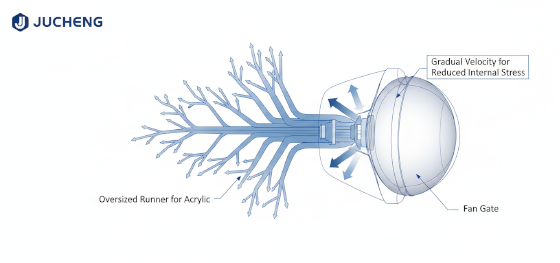
Geometric violence must be avoided when processing brittle polymers. Acrylic is notoriously prone to "Flow Marks" and "Silvering" if it is forced through narrow gates too quickly. Jucheng Precision toolmakers utilize "Fan Gating" and "Wide Runners" to reduce the shear stress on the molten front. By widening the entry point, we allow the plastic to flow into the cavity with laminar smoothness rather than turbulent velocity. Furthermore, we mandate the use of generous internal and external radii. Sharp corners in a PMMA part act as "Stress Concentration" points that will trigger immediate cracking under the slightest mechanical load. We treat every 0.1mm of curvature as a structural insurance policy, ensuring that the internal residual stresses are distributed evenly across the polymer matrix. By respecting the material's fragility during the mold design phase, we deliver parts that are as durable as they are beautiful.
JUCHENG Protocol: Achieving Zero-Stress Optical Clarity
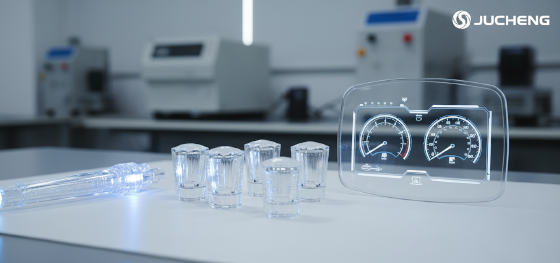
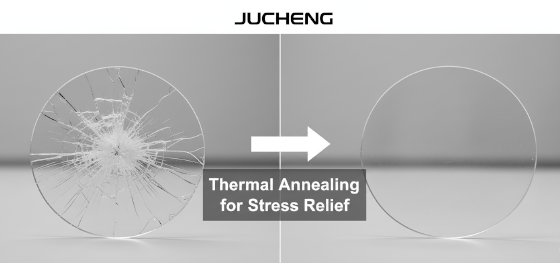
Manufacturing excellence at Jucheng Precision is built on the foundation of post-processing stabilization. We recognize that even a perfectly molded Acrylic part contains "Frozen Stresses" that can lead to "Environmental Stress Cracking" (ESC) if the part is exposed to certain cleaners or alcohols. To combat this, JUCHENG performs "Post-Molding Annealing." We subject critical optical components to a stabilized, 4-hour thermal cycle in our digital ovens, allowing the molecular chains to relax without warping the geometry. This thermal engineering ensures that your prototypes survive the most aggressive lifecycle testing in the consumer electronics and automotive sectors. Stop compromising your hardware vision with cloudy or brittle prints. Leverage our decade of optical replication mastery to validate rapidly and launch profitably. Contact our engineering team today for a free DFM review and see how we can turn your digital intent into a crystalline, high-fidelity physical reality.

