


Staring at a complex 3D CAD model without a structured pricing roadmap leads to massive over-engineering. Procurement teams often scramble to finalize their budgets, completely unaware that minor features will soon double their final production invoices. Deploying a robust die casting cost calculator before cutting steel remains the only reliable way to protect your venture capital.

Unmasking mystery line items keeps your cash flow secure throughout the entire development lifecycle. Every single geometry, from parting lines to sliding core pins, directly drives up your ongoing die casting cost. Managing these expenses determines whether your product succeeds commercially or collapses under heavy tooling debt.
Partnering with a highly collaborative turnkey manufacturer ensures your engineers design for commercial survival. Let's explore why simple online algorithms fail on complex molds, analyze the mathematical differences between tooling and piece prices, and explain how to secure a guaranteed manual quote.
content:
Crucial Input Metrics: Mapping Weights, Alloys, and Surface Areas
Algorithmic Failures: Why Automated Quotes Miss Hidden Sliders
Amortization Math: Balancing Tooling Debts and Piece Prices
Precision Manual Quoting: Bypassing Automated Estimators Entirely
FAQ: Honest Answers About Setup Fees and Material Waste
Crucial Input Metrics: Mapping Weights, Alloys, and Surface Areas
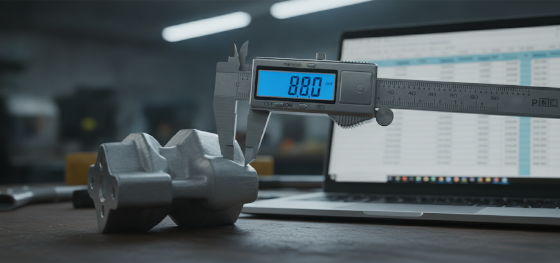
What are the actual mathematical variables required to generate an accurate metallurgy estimate?
You must rigorously calculate the physical part weight, total surface area, draft angles, tolerance classes, and expected annual production volume.
Part weight determines your raw material expense directly. Specifying heavy zinc alloys requires more pounds of metal, which immediately increases the baseline cost compared to lightweight aluminum.
Surface area dictates the required machine tonnage. Running your parameters through a professional die casting cost calculator allows you to see exactly how much clamping force your parts require, directly impacting your machine runtime rates.
Algorithmic Failures: Why Automated Quotes Miss Hidden Sliders
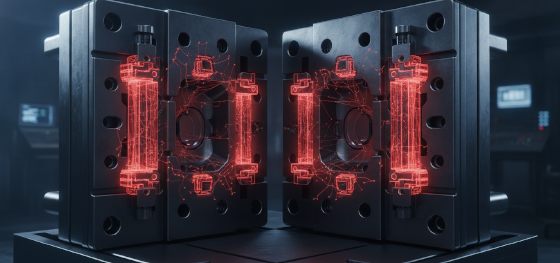
Why do standard online auto-quote systems return highly inaccurate estimates for complex molds?
Because simple algorithms physically cannot analyze the complex mechanical interferences of lateral undercuts and moving hydraulic slider mechanisms.
Designing side-facing holes or internal undercuts requires advanced moving steel cores. These moving parts add thousands of dollars in NRE fees and require constant manual mold maintenance.
Simple online quote systems ignore these complex sub-assembly details entirely. They often return cheap, generic estimates that are mathematically impossible to manufacture, leading to massive financial shocks when the real invoice arrives.
Amortization Math: Balancing Tooling Debts and Piece Prices

How do engineers balance high upfront mold fees against low ongoing unit prices?
By dividing the total non-recurring engineering tooling fee by the expected annual volume to calculate the true amortized unit expense.
Single-cavity molds require the lowest upfront tooling investment but yield higher piece costs. Upgrading to a multi-cavity tool multiplies your initial expenses while driving down your ongoing die casting piece part price significantly.
Running these trade-offs through a customized die casting cost calculator prevents you from making catastrophic scaling mistakes. You easily identify the exact financial tipping point where permanent steel tooling becomes cheaper than low-volume machining.
Precision Manual Quoting: Bypassing Automated Estimators Entirely

Comparing raw numbers from different suppliers requires a highly standardized diagnostic baseline. The comparison table below outlines how a professional manual review compares against generic automated algorithms.
| Evaluation Category | Expert Manual Review | Automated Online Quoter |
|---|---|---|
| Undercut & Slider Analysis | Thoroughly evaluated for tooling cost impact | Completely ignored (Creates hidden costs) |
| Gating & Runner System Design | Optimized to minimize material scrap | Estimated via flat formulas |
| Draft Angle Compliance | Checked for mechanical ejection survival | Completely ignored |
Relying on brokers who use basic automatic quote generators is highly dangerous. Jucheng Precision bypasses these inaccurate automated estimators completely, utilizing our experienced tooling engineers to review your CAD files manually.
Stop paying for mystery surcharges and administrative padding. Send your complex CAD files to our engineering team today. We will run a complete, complimentary DFM flow analysis and deliver an extremely precise, guaranteed manual quote within twenty-four hours of submission.
FAQ: Honest Answers About Setup Fees and Material Waste

Does a custom die casting cost calculator account for raw material waste?
Yes, the calculator factors in the weight of the excess runner system and flash, ensuring your raw material billing is extremely accurate.
Why do factories charge expensive setup and machine calibration fees?
Running a massive hydraulic press requires hours of manual labor to mount the heavy steel mold, pre-heat the cavity, and calibrate the injection parameters, requiring a flat setup fee regardless of batch size.
How fast can Jucheng Precision deliver a guaranteed production quote?
We review all incoming CAD files manually. Our technical team works around the clock to deliver a highly detailed, itemized quote within twenty-four hours of submission.
Can I run zinc and aluminum through the exact same steel mold?
No. Because different metals shrink and contract at completely different rates, pouring aluminum into a mold designed for zinc will result in parts that fail to meet your dimensional tolerances.

