


Managing ongoing unit expenses on a new hardware launch is a brutal, high-stakes balancing act. Procurement teams often celebrate a low initial tooling quote, completely unaware that long cycle times will drive their piece prices into the stratosphere. Calculating your exact die casting piece part price upfront determines whether your commercial product survives or collapses under heavy operational debt.

Rushing blindly into production without analyzing the factory floor variable matrix is a dangerous financial trap. Every single second your part spends cooling inside the steel mold directly inflates your ongoing die casting cost. Controlling these ongoing expenses dictates whether your retail margins remain sustainable over the entire product lifecycle.
Demanding absolute financial transparency separates elite manufacturing partners from low-tier brokers. Let's dissect the core raw material and machinery variables that determine unit pricing, analyze how to amortize mold investments, and compare zinc against aluminum economics.
content:
Cost Drivers: Breaking Down the Piece Part Price Structure
Amortization Math: Spreading Mold Debts Across Volume
Material Competitions: Zinc vs Aluminum Unit Economics
Strategic Partnering: Securing Your Optimal Unit Costs
FAQ: Honest Answers About Scrap Rates and Fast Cycles
Cost Drivers: Breaking Down the Piece Part Price Structure

What physical factors make up your ongoing manufacturing expense per unit?
Your unit price is determined primarily by the raw metal weight, the machine hourly depreciation rate, and the exact cycle time required to freeze the part.
Raw material weight serves as the foundational pricing baseline. Heavier parts consume more pounds of liquid alloy, which immediately increases the raw metal bill regardless of how fast the machine operates.
Machine runtime is the second critical variable. If poor thermal design forces the hydraulic press to stay locked for forty seconds instead of fifteen, your ongoing die casting piece part price will practically double due to extended machine billing.
Amortization Math: Spreading Mold Debts Across Volume

How do engineers balance expensive upfront tooling fees against low ongoing unit prices?
By dividing the total non-recurring engineering tooling fee by your expected annual production volume to calculate the true amortized unit expense.
Single-cavity molds require the lowest upfront tooling investment but yield higher piece costs. Upgrading to a multi-cavity tool multiplies your initial expenses while driving down your ongoing die casting piece part price significantly over time.
Planning for a million-shot production run completely rewrites your financial modeling. You pay the heavy tooling fee exactly once, and that single block of H13 steel will confidently produce flawless components for years, dropping your amortized overhead to pennies.
Material Competitions: Zinc vs Aluminum Unit Economics
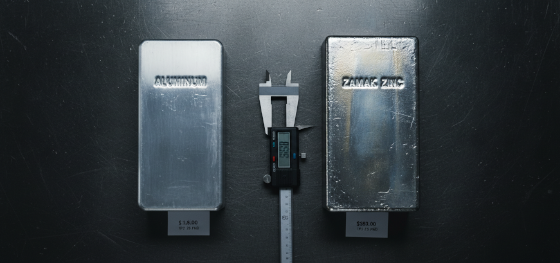
Why does a more expensive raw metal ingot sometimes deliver a cheaper final unit price?
Because low-melting-point alloys process significantly faster and protect the steel mold from thermal shock, completely eliminating expensive mold rebuild and repair bills.
Processing high-heat metals like aluminum severely punishes the steel cavity, increasing your overall aluminum die casting cost due to shorter mold lifespans and frequent secondary CNC finishing requirements.
Shifting to fluid zinc Zamak alloys changes the financial math entirely. The rapid hot chamber cycle speeds drop your machine depreciation costs, while the massive tool life slashes your amortized zinc die casting cost over long production runs.
Strategic Partnering: Securing Your Optimal Unit Costs
Comparing raw numbers from different suppliers requires a highly standardized diagnostic baseline. The comparison table below outlines how production volume aggressively drives down your ongoing unit expenses.
| Production Quantity | Upfront Tooling Amortization | Ongoing Piece Part Price |
|---|---|---|
| 100 Units (Prototype) | High (Tooling dominates the project) | Moderate |
| 5,000 Units (Mid-Volume) | Low (Rapid tooling amortizes quickly) | Extremely Competitive |
| 100,000+ Units (Mass Production) | Negligible (Less than pennies per part) | Lowest Possible |
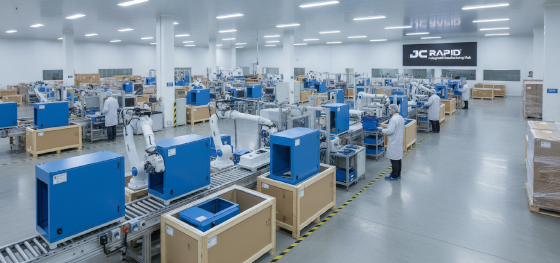
Trusting brokers who hide setup and scrap fees inside vague estimates is highly dangerous. JC Rapid operates with a transparent, fully itemized die casting piece part price format, detailing exactly how much money goes toward raw material, energy, and quality inspection.
Stop paying for mystery surcharges and administrative padding. Send your complex CAD files to our engineering team today for a comprehensive, manual DFM flow analysis and secure a guaranteed, optimized commercial quote.
FAQ: Honest Answers About Scrap Rates and Fast Cycles

Does the complexity of the internal gating system increase my piece part price?
Yes, complex runner channels consume more raw metal per shot. We design highly optimized gating paths to minimize excess scrap metal, keeping your material waste exceptionally low.
Can I run zinc and aluminum through the exact same steel mold?
No. Because different metals shrink and contract at completely different rates, pouring aluminum into a mold designed for zinc will result in parts that fail to meet your dimensional tolerances.
Do you charge extra fees for mandatory Material Test Reports?
Providing complete chemical certifications (CoA) and RoHS compliance certificates with every single delivery is our standard practice, included entirely free of charge.
How fast can your engineers deliver a final manual quote?
We bypass the inaccurate automated estimators completely. Our technical team reviews your CAD files manually and delivers an extremely precise, guaranteed quote within twenty-four hours of submission.

