


Scaling your agricultural or commercial drone fleet past five hundred units requires transitioning away from expensive, slow-speed cutting. Sourcing teams frequently make the mistake of relying on individual machine hours to shape complex components, completely ignoring how those ongoing bills destroy their retail margins. Sourcing custom die casting drone components resolves this high-volume cost barrier completely, providing absolute structural consistency and lightning-fast factory lead times.
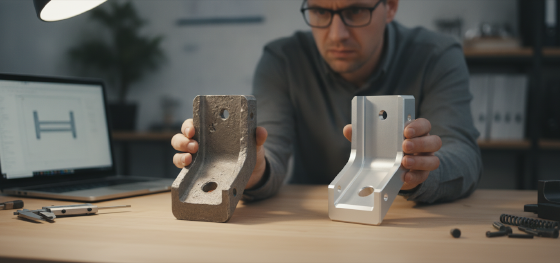
Rushing blindly into permanent high-volume steel tooling before validating your final design is a dangerous financial trap. Every single second your part spends cooling inside the press directly drives up your ongoing expenses. Deciding between different die casting applications wisely ensures your early-stage cash flow remains completely secure while protecting your product lifespans.
Balancing initial launch speeds with uncompromising assembly tolerances defines successful new product introduction (NPI). Let's dissect why liquid injection outruns slow machine hours at scale, explore the most critical cast flight hardware, and analyze when you must upgrade your tooling strategy.
content:
Volume Transitions: Why Molding Outruns Milling at Scale
Critical Flight Hardware: Mounts, Gimbals, and Folding Arms
Manufacturing Crossroads: Choosing Between Mold Injection and Spindle Cutting
Sourcing Agility: Accelerating UAV Development Cycles
FAQ: Honest Answers About Molds, Speeds, and Quality
Volume Transitions: Why Molding Outruns Milling at Scale

Why do high-volume uncrewed vehicle manufacturers fiercely reject manual CNC cutting at scale?
Because standard subtractive milling charges by the hour, meaning your per-part price remains completely flat regardless of whether you order five units or five thousand units.
Traditional foundries typically enforce massive minimum order quantities (MOQs) that block hardware innovation. They refuse to run machines for anything less than five thousand units, leaving aerospace startups stranded with slow subtractive milling.
Sourcing a reliable die casting drone frame is the ultimate secret to dropping your ongoing piece part price. Liquid metal injection delivers incredible, automated speed, driving your ongoing unit expense down to mere pennies.
Critical Flight Hardware: Mounts, Gimbals, and Folding Arms

Which uncrewed vehicle components benefit the most from high-pressure metal injection?
Camera gimbals, motor mounts, and folding arm joints require absolute structural rigidity and maximum weight reduction to ensure stable flight dynamics.
Brushless motors spinning at maximum RPM generate brutal physical forces that will instantly tear weak structural plastics apart during rapid deceleration. We mold highly precise, thin-walled aluminum or magnesium brackets that easily absorb these violent kinetic shocks.
Standard brackets require thick, heavy walls to support industrial loads. Our low-viscosity liquid metals flow perfectly like water, capturing microscopic details and thin 1.0mm walls across massive surface areas.
Manufacturing Crossroads: Choosing Between Mold Injection and Spindle Cutting
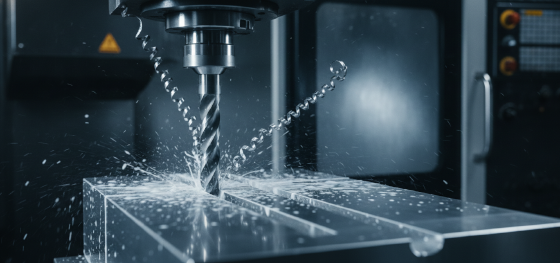
How do engineers determine the exact production volume where steel tooling becomes cheaper?
By calculating the exact crossover point where the accumulated piece-price and material savings of high-pressure injection offset the initial upfront tooling expense completely.
Before committing to high-volume runs, we highly recommend verifying your design with precision Drone chassis CNC machining first. This allows you to test your structural flight dynamics and correct any geometric flaws cheaply before cutting steel molds.
Once your CAD files are locked and your target volume exceeds five hundred pieces, transitioning to a dedicated die casting drone mold is the smartest financial path, completely bypassing the massive hourly machine rates of CNC carving.
Sourcing Agility: Accelerating UAV Development Cycles

Shipping raw castings to separate machine and paint shops increases your shipping costs, lead times, and scrap rates through constant handling. Fragmented supply chains inevitably result in scratched surfaces and compromised watertight seals.
Operating our massive turnkey precision hub completely eliminates this logistical friction. JC Rapid houses the injection presses, CNC bays, and dust-free paint booths under one integrated roof, delivering fully finished, compliant hardware.
Stop risking your heavy-payload uncrewed vehicles on unverified, slow-delivery vendors. Send your complex CAD files to our engineering team today. We will run a complete, manual DFM flow analysis and deliver an extremely precise, guaranteed quote within twenty-four hours.
FAQ: Honest Answers About Amortization and Steel Molds

Does the complexity of the internal gating system increase my die casting drone part cost?
Yes, complex runner channels consume more raw metal per shot. We design highly optimized gating paths to minimize excess scrap metal, keeping your material waste exceptionally low.
Can I run zinc and aluminum through the exact same steel mold?
No. Because different metals shrink and contract at completely different rates, pouring aluminum into a mold designed for zinc will result in parts that fail to meet your dimensional tolerances.
Do you charge extra fees for mandatory Material Test Reports?
Providing complete chemical certifications (CoA) and RoHS compliance certificates with every single delivery is our standard practice, included entirely free of charge.
How long does an expensive steel mold last when running aluminum?
Because aluminum melts at high temperatures, the **H13 tool steel** suffers from thermal fatigue, typically limiting the mold's reliable lifespan to roughly 100,000 shots.

