


Aligning your product blueprints with the physical realities of the shop floor is the dividing line between successful projects and costly restarts. Mastering the nuances of sheet metal fabrication design ensures that your custom brackets, server chassis, and heavy-duty enclosures transition smoothly from 3D CAD models into physical parts without exceeding the raw machinery limits of modern press lines. For hardware developers, designing with these mechanical limitations in mind is the key to achieving tight tolerances while eliminating expensive downstream modifications.
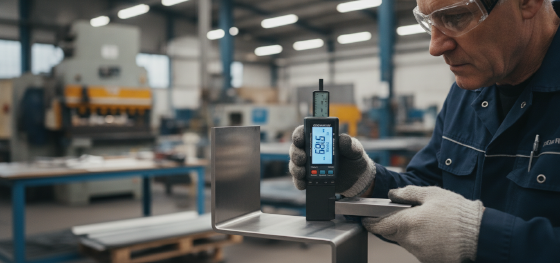
Suffer from custom parts that warp during cutting, collide with press brake dies, or feature joint lines that are physically impossible for a welding torch to reach? When a design is modeled in a digital vacuum without evaluating tool geometries and machine capacities, it leads to high scrap rates and slow, labor-intensive manual corrections. Proactively matching your geometries to physical machine capabilities protects your project budget.
Let's examine how design choices interact with industrial machine constraints, analyze the physical clearances required to prevent press brake tooling collisions, and review the essential access parameters needed for secure welded joints.
content:
The Interaction Between Design and Machine Capabilities
Designing for Press Brake Tooling Constraints
Welding Access: Can the Welder Reach the Joint?
End-to-End Fabrication Expertise at JUCHENG
FAQ: Critical Questions About Sheet Metal Fabrication Design
The Interaction Between Design and Machine Capabilities
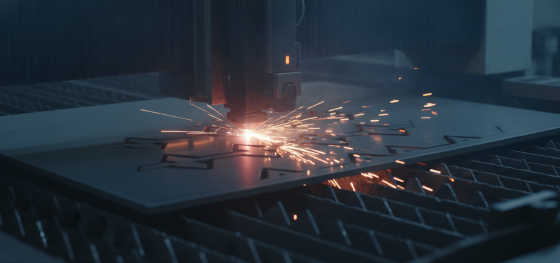
How do mechanical machinery limits directly impact the success of a flat pattern design?
Machine parameters such as laser bed sizes, press brake tonnages, and punch clearances set absolute physical boundaries for sheet thicknesses and part dimensions.
Designing complex components without assessing active machinery limits is a primary cause of geometric failures. For instance, high-speed fiber lasers cut intricate shapes cleanly, but they possess maximum bed dimensions that restrict the raw sheet layout. If your design features an unfolding length exceeding these limits, it cannot be processed as a single panel, requiring expensive welding joints.
Similarly, high-pressure benders rely on physical force to deform metal sheets. Bending thick plates requires high tonnage that can easily overload standard equipment. Proactively designing your flanges to match the specific force limits and tooling clearances of your manufacturing partner ensures that every fold is executed with maximum precision and zero machine downtime.
Designing for Press Brake Tooling Constraints
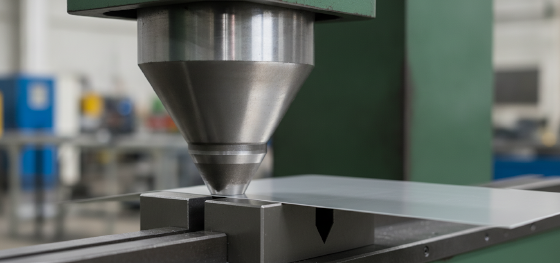
What design rules prevent flat sheets from colliding with press brake dies during bending?
We prevent tool collisions by keeping flanges short enough to clear the punch body, or utilizing specialized gooseneck tooling to bend deep channels.
When executing advanced sheet metal fabrication design layouts, avoiding tool collisions is a critical priority during press brake setups. As the machine bends a flange, the adjacent flat metal swings upward. If a return flange is placed too close to a previous fold, it can physically strike the punch body, warping the metal.
To prevent these collisions, designers must analyze the physical profile of the punch. Standard straight punches are highly cost-effective but offer minimal clearance. For deep U-channels, we utilize specialized gooseneck punches that feature a curved recess to accommodate returning flanges. Designing your fold sequences with these tooling profiles in mind ensures clean bends with zero mechanical interference.
Welding Access: Can the Welder Reach the Joint?
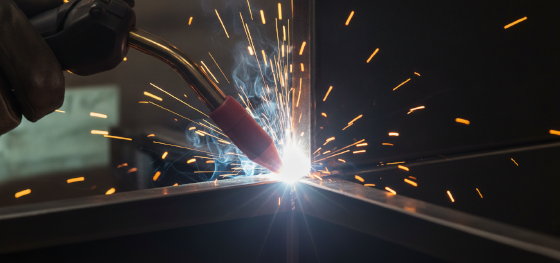
What clearances are required to ensure a welding torch can access internal seams?
We recommend maintaining an unobstructed entry angle of at least 45 degrees and providing a minimum clearance of 50mm around all interior joint lines.
Designing tight, fully enclosed boxes with welded internal seams is a common engineering mistake. While the 3D model looks clean, a physical welding gun requires space to maneuver. If an internal flange block is placed too close to a corner, the welder cannot position the torch at the correct angle, resulting in incomplete penetration and weak joints.
To ensure a reliable metallurgical bond, designers must verify welding gun clearances during the layout phase. Maintaining clear access pathways allows the operator to execute consistent, high-penetration fillet welds. When internal access is extremely restricted, we suggest shifting to plug welds or cold-joining mechanical fasteners to secure the panels cleanly without thermal access issues.
| Fabrication Process | Primary Design Constraint | Standard Safety Margin | Tooling Solution Match |
|---|---|---|---|
| Laser Slicing | Thermal heat-affected zone expansion | Minimum slot width ≥ material thickness | High-purity nitrogen assist gas profiling |
| Press Brake Bending | Return flange tool collision | Flange length ≥ 4.0 x thickness | Gooseneck punches and modular V-die blocks |
| Structural Welding | Torch access and joint visibility | Entry angle ≥ 45 degrees | Localized spot welding or mechanical rivets |
End-to-End Fabrication Expertise at JUCHENG
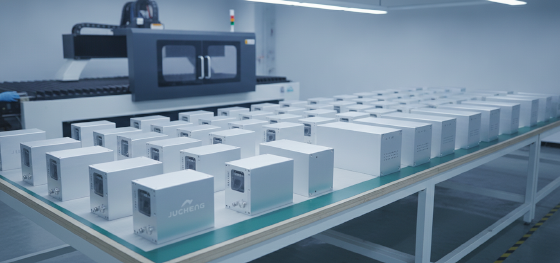
How does JUCHENG align your custom designs with physical machine capabilities?
We operate high-power fiber lasers and CNC benders managed by skilled technicians, utilizing an automated DFM engine to check clearances before cutting.
Integrating these physical machine clearances, tooling parameters, and joint setups into your early sheet metal design cycle is the single most effective way to eliminate production defects. JUCHENG integrates these advanced geometric and material validations into our digital manufacturing network, ensuring that your CAD files translate into fully finished, durable assemblies with extreme dimensional precision.
We process a wide range of raw sheets, including lightweight aluminum, high-yield stainless steel, and easily formable low-carbon steel. Our technical department provides a 24-hour free DFM analysis to check your CAD models, checking tolerances and tool clearances before production. Supported by our no MOQ policy and rapid delivery guarantee, we manage your project from initial flat pattern cutting to final packaging and assembly.
FAQ: Critical Questions About Sheet Metal Fabrication Design

How do you design a return flange to prevent a press brake tool collision?
To prevent collisions, always ensure the height of any return flange is kept below the side-clearance limit of your selected punch. If your design requires a deep return, we recommend utilizing a gooseneck punch or splitting the bracket into multiple interlocking panels to eliminate bending interference.
Why is the K-factor critical for press brake tooling setup?
The K-factor represents the shift of the neutral axis during bending, which directly dictates the flat pattern length. Because different benders and V-dies compress the metal differently, our programmers calibrate our unfolding software using empirical K-factors. This ensures the flat blanks are cut precisely to compensate for angular springback.
How do you design welded seams to prevent heat distortion in thin sheets?
We minimize thermal warping by designing staggered stitch welds instead of continuous seams, or utilizing localized spot welding to secure overlapping flanges. This reduces the total heat input, keeping the surrounding metal flat and preventing the panels from buckling.
How does JUCHENG support custom sheet metal fabrication design steps?
Our technical department reviews your CAD designs during our complimentary DFM stage. If your part features tight bends that are highly prone to tool collisions, or weld joints that are inaccessible to standard torches, we suggest clear modifications like adjusting flange heights or utilizing modular tooling setup parameters, delivering safe and cost-effective parts.

