


Autonomous perception represents the most vulnerable financial asset in next-generation flight technology. In the hyper-agile landscape of 2026, the success of an industrial surveillance drone or a terrain-mapping UAV is decided entirely by the integrity of its optical data. If the protective housing for a ten-thousand-dollar LiDAR unit flexes under vibration, leaks moisture during a rainstorm, or scatters laser pulses through a clouded window, the robot becomes effectively blind, leading to catastrophic mission failure. Navigating this requirement for extreme environmental defense and optical purity requires the strategic deployment of Drone LiDAR enclosure manufacturing. Jucheng Precision operates as a high-fidelity manufacturing sanctuary in the Shenzhen precision manufacturing hub, providing the multi-process depth to transform complex digital intents into hermetically sealed sensory fortresses. Within the broader framework of drone/uav parts machining, we bridge the gap between "exposed electronics" and "certified environmental sovereignty," ensuring your sensing fleet operates with absolute material and dimensional certainty.
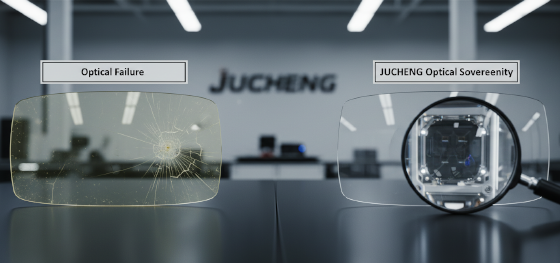
Establishing a resilient sensor supply chain in 2026 demands the absolute rejection of "standard-grade" plastic shells. Amateurs often default to 3D printed housings for initial sensor fitment, unaware that the inherent porosity of additive resins creates a dangerous leak path for atmospheric moisture. Jucheng Precision eliminates these "System Failures" by enforcing a strict "Total Encapsulation" protocol. We utilize a hybrid ecosystem of 5-axis CNC machining, vapor-polished optics, and conductive shielding to armor your sensors against the chaos of the field. Whether you are developing a long-range forest-fire monitoring bot or a maritime search-and-rescue UAV, our facility provides the material science and metrological rigor required for global market entry. This guide deconstructs the necessity of IP67 gland design, the physics of vapor-polished windows, and why JUCHENG’s "Turnkey Protocol" is the mandatory foundation for anyone developing Drone LiDAR enclosure manufacturing projects for high-stakes payloads.
Weatherproofing Logic: Achieving IP67 and IP68 Sealing Sovereignty
Optical Integrity: Why machine and vapor-polish PC/PMMA windows?
Electronic Defense: Integrating Conductive Coatings for EMI Shielding
JUCHENG Protocol: Integrated Machining, Polishing, and Assembly
Frequently Asked Questions: LiDAR Sensor Enclosures
Weatherproofing Logic: Achieving IP67 and IP68 Sealing Sovereignty
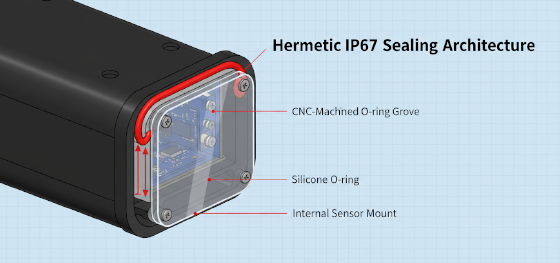
Moisture ingress remains the primary executioner of drone vision systems. For a LiDAR sensor to survive a rain-soaked mission, the Drone LiDAR enclosure manufacturing process must prioritize the integrity of the gland seal. Jucheng Precision utilize 5-axis CNC machining to carve O-ring grooves with +/- 0.01mm depth tolerances into aluminum or high-modulus plastic frames. If the groove is even 0.05mm too shallow, the rubber seal will "over-compress" and fail; if too deep, a leak path is created. We provide metrological proof of gland flatness, ensuring your sensor pods achieve a verifiable IP67 rating. By utilizing integrated mounting bosses and precision-tapped holes, we ensure the assembly maintains its hermetic grip through thousands of high-vibration flight hours. We turn "leaky plastic boxes" into "indestructible atmospheric vaults," documented for survival in extreme weather.
Optical Integrity: Why machine and vapor-polish PC/PMMA windows?
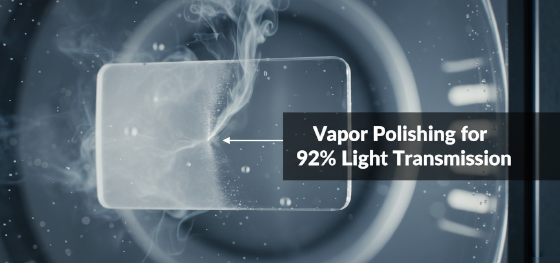
Photon scattering ruins the range and accuracy of autonomous navigation. When we execute Drone LiDAR enclosure manufacturing, the optical window is the most sensitive component on the BOM. Standard CNC machining leaves a frosted, opaque surface that distorts the laser pulse. Jucheng Precision restores crystalline truth by utilizing a "Vapor Polishing" protocol for Polycarbonate (PC) and Acrylic (PMMA). We expose the machined windows to specialized chemical vapors that momentarily melt the top few microns of the plastic, smoothing out every microscopic cutter mark before instantly re-solidifying into an SPI A-1 mirror finish. This process achieves 92% light transmission without altering the geometric dimensions of the window. We provide the material science needed to ensure your LiDAR "sees" exactly what it’s supposed to, effectively eradicating the "Data Noise" that causes autonomous systems to hesitate.
Electronic Defense: Integrating Conductive Coatings for EMI Shielding
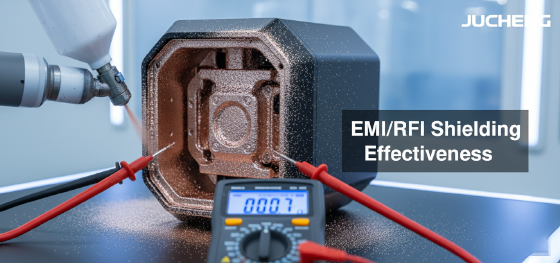
Electromagnetic interference is the invisible saboteur of high-speed sensor data. Drone airframes are packed with high-torque motors and radio transmitters that generate massive electromagnetic fields. If these fields penetrate the sensor housing, they will induce stray currents into the LiDAR’s logic board, causing signal cross-talk or processor resets. Professional Drone LiDAR enclosure manufacturing requires the creation of a conductive "Faraday Cage." Jucheng Precision integrates EMI/RFI shielding directly into our finishing bay. We apply robotic spray-coatings of silver, copper, or nickel paint to the *interior* faces of the plastic housing. We verify the "Surface Resistance" using digital multimeters to ensure the coating provides 60+ dB of attenuation. We turn a standard polymer shell into an active electronic shield, ensuring your sensors operate in a state of "Spectral Purity" regardless of the surrounding electromagnetic chaos.
JUCHENG Protocol: Integrated Machining, Polishing, and Assembly
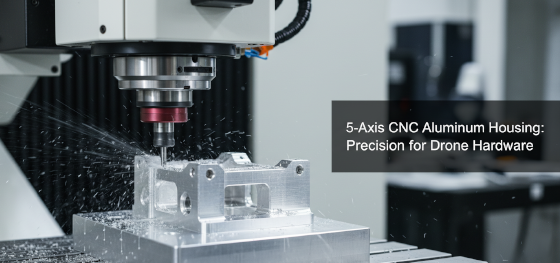
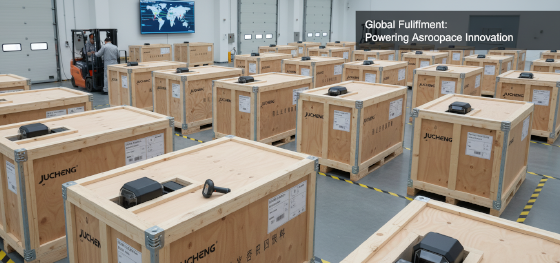
Manufacturing excellence at Jucheng Precision is built on the foundation of single-source accountability for high-stakes aerospace payloads. We don't believe you should manage three different vendors for a single sensor pod. Our facility houses over 150 CNC machines, specialized vapor-polishing bays, and automated finishing lines under one roof. When you partner with JUCHENG for Drone LiDAR enclosure manufacturing, you are securing a supply chain that eliminates the risk of assembly interference or data loss. We machine the aluminum frame, vapor-polish the PC lens, apply the EMI coating, and perform a final hydrostatic pressure test before your hardware ever leaves our dock. We provide the material lot traceability and CMM inspection reports required for 2026 airworthiness certification. Stop gambling your sensor’s life on fragmented vendors who treat enclosures as an afterthought. Leverage our decade of high-performance replication mastery to validate rapidly and scale profitably.
Frequently Asked Questions: LiDAR Sensor Enclosures
Question: Should I use aluminum or plastic for my Drone LiDAR enclosure manufacturing project?
Answer: If weight is the absolute priority, high-modulus plastic with EMI coating is best. If the sensor generates significant heat and requires a rigid mount for high-G vibration, 6061-T6 aluminum provides superior thermal management and structural modulus.
Question: How do you ensure the optical window doesn't scratch during flight?
Answer: After vapor polishing, Jucheng Precision can apply a specialized UV-cured hard coat (2H-3H pencil hardness) to the exterior of the window, providing an industrial-grade barrier against dust abrasion and bird strikes.
Question: Can JUCHENG handle the assembly of cables and connectors into the housing?
Answer: Absolutely. We offer turnkey assembly services, including the installation of IP68 cable glands, threaded inserts, and the final hermetic sealing of your sensor assembly.

