


Visual authority in autonomous reconnaissance and high-end cinematography is won through the elimination of mechanical resonance. In the hyper-agile landscape of 2026, a UAV’s value is dictated entirely by the data it carries; if the gimbal arm vibrates at high speeds or drifts during a rapid banking turn, the 8K footage or thermal telemetry becomes a smeared, unusable liability. Navigating this requirement for absolute kinetic stability requires the strategic deployment of UAV camera gimbal cnc machining. Jucheng Precision operates as a high-fidelity manufacturing sanctuary in the Shenzhen precision manufacturing hub, providing the technical depth to deliver Yaw, Pitch, and Roll arms that possess the mechanical spine needed for zero-backlash movement. Within the broader framework of drone/uav parts machining, we bridge the gap between "shaky prototype mounts" and "stabilized optical sovereignty," ensuring your payload remains perfectly level through the most aggressive flight maneuvers.
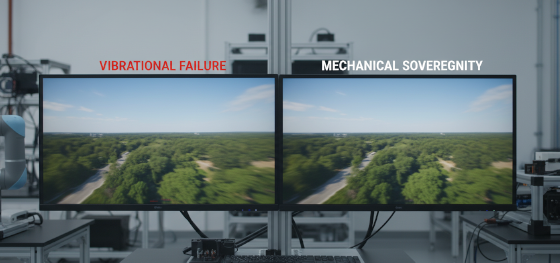
Establishing a resilient payload supply chain in 2026 demands the rejection of "standard-tolerance" job shops. Amateurs often treat a gimbal arm as a simple aesthetic bracket, unaware that the high-frequency harmonics of brushless motors spinning at 10,000 RPM will amplify a 0.02mm alignment error into a visible "Jello Effect." Jucheng Precision eliminates these "Aesthetic Disasters" by enforcing a strict "Orthogonal Setup" protocol. We utilize 5-axis CNC machining to ensure that all rotating axes are perfectly square to one another in a single digital setup. Whether you are developing a micro-gimbal for an FPV racer or a heavy-lift mount for an industrial thermal scanner, our integrated facility provides the material science and finishing rigor required for global market entry. This guide deconstructs the physics of vibrational damping, the necessity of Type III hard-coat anodizing, and why JUCHENG’s metrological audit is the mandatory foundation for anyone developing UAV camera gimbal cnc machining projects.
Vibrational Pathology: Why poor tolerances cause the jello effect?
Orthogonal Sovereignty: Achieving squareness via 5-Axis CNC
Optical Integrity: Why Type III Hard Anodizing is mandatory?
JUCHENG Protocol: Delivering assembly-ready gimbal components
FAQ
Vibrational Pathology: Why poor tolerances cause the jello effect?
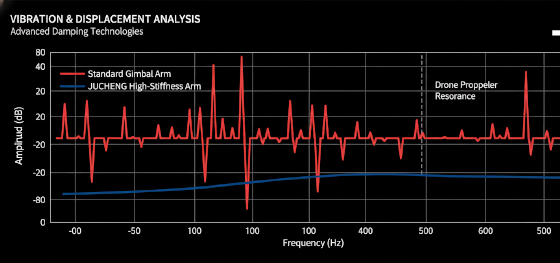
Molecular harmonics represent the primary saboteur of high-resolution aerial imaging. The "Jello Effect" occurs when the high-frequency vibrations from the drone's propellers resonate with the natural frequency of the gimbal arm. If the UAV camera gimbal cnc machining produces a part that is too flexible or features inconsistent wall thicknesses, the arm acts as a tuning fork, magnifying the motor noise. Jucheng Precision engineers utilize Aerospace-Grade 7075-T6 Aluminum for these components because of its exceptionally high modulus-to-weight ratio. By machining integrated stiffening ribs and optimizing the "Moment of Inertia" for each arm linkage, we push the resonant frequency of the assembly well beyond the motor's operating range. This ensures that the only thing the camera feels is the smooth command of the flight controller, effectively neutralizing the kinetic noise that ruins cinematic data. We don't just "cut metal"; we engineer acoustic shields for your optics.
Orthogonal Sovereignty: Achieving squareness via 5-Axis CNC
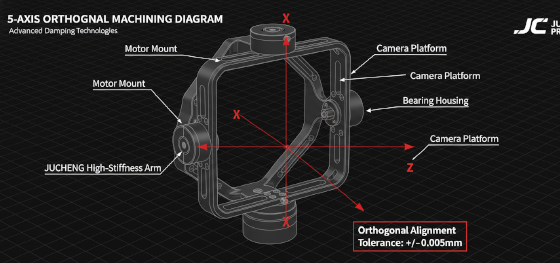
Geometric alignment dictates the success of a 3-axis stabilization loop. A gimbal relies on the perfect 90-degree intersection of its movement planes; if the Pitch axis is not perfectly orthogonal to the Yaw axis, the software must work overtime to compensate for "Geometric Cross-talk." This leads to motor overheating and sluggish response times. UAV camera gimbal cnc machining at Jucheng Precision utilizes elite 5-axis Haas and Mazak centers to machine gimbal frames in a "Single setup." By eliminating the need to unclamp and rotate the part manually, we eradicate the "Fixture Drift" that plagues 3-axis shops. We achieve +/- 0.005mm concentricity on bearing bores, ensuring your motors spin with zero parasitic drag. Below is the technical performance delta our engineers achieve when comparing standard versus high-precision gimbal machining:
| Precision Metric | Standard Machining | JUCHENG 5-Axis CNC |
|---|---|---|
| Axis Orthogonality | +/- 0.1° | +/- 0.01° (Surgical) |
| Bearing Seat Concentricity | +/- 0.05mm | +/- 0.005mm (Zero Play) |
| Surface Roughness (Ra) | 0.8 µm | 0.4 µm (Mirror Smooth) |
Optical Integrity: Why Type III Hard Anodizing is mandatory?
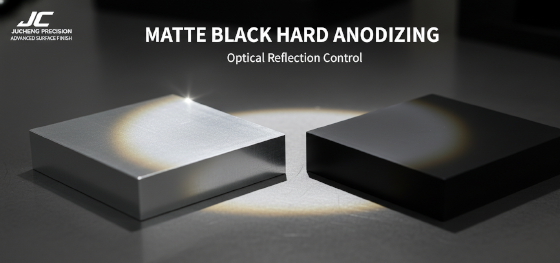
Optical interference can ruin the most expensive sensors if the surrounding hardware is reflective. For UAV camera gimbal cnc machining, surface energy management is just as critical as dimensional accuracy. Jucheng Precision implements a mandatory Matte Black Type III Hard Anodizing protocol for all optical payload components. This electrochemical process creates a sapphire-hard surface layer (60+ HRC) that resists the abrasive dust of off-road landings. More importantly, the matte texture is engineered to absorb 99% of stray photons, preventing "Light Leakage" and internal lens flares that destroy the dynamic range of high-end CMOS sensors. We turn "shiny metal parts" into "optical absorption shields," ensuring your cinematography and inspection data remains crisp and high-contrast, even when flying directly toward the sun.
JUCHENG Protocol: Delivering assembly-ready gimbal components
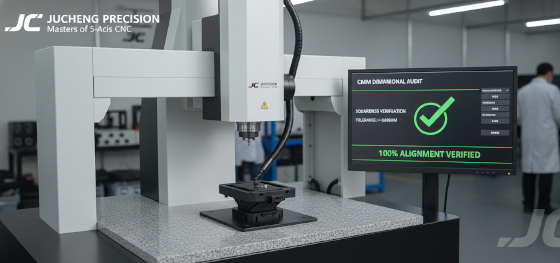
Manufacturing excellence at Jucheng Precision is built on the foundation of the integrated supply chain. We don't just "cut and shoot"; we provide assembly-ready kits. Our facility integrates 5-axis CNC machining with advanced secondary operations—including the creation of hidden internal cable routing paths that eliminate the "Spaghetti" of external wires. We provide full material lot traceability and CMM inspection reports for every UAV camera gimbal cnc machining batch, providing the "Paper Trail of Quality" required for aerospace-tier certification. Stop gambling your cinematic vision on uncertified vendors who treat gimbals like general hardware. Leverage our decade of high-performance replication mastery to validate rapidly and scale profitably. Contact our technical team today for a free DFM review and see how we can turn your digital optical intent into a structurally sovereign physical reality.
FAQ
Question: What is the best material for a high-speed drone gimbal arm?
Answer: Aluminum 7075-T6 is the undisputed champion for 2026. It offers the fatigue strength and flexural modulus required to prevent vibration at 100km/h flight speeds while remaining exceptionally lightweight.
Question: How does JUCHENG ensure the three axes of the gimbal are perfectly square?
Answer: We utilize 5-axis CNC machines that perform a single-setup machining cycle. This ensures that the datum planes for the Pitch, Roll, and Yaw motors are locked in relation to each other with sub-micron accuracy.
Question: Can you help reduce the mass of my current gimbal design?
Answer: Yes. Our engineers utilize FEA-guided "Pocketing" and wall-thinning strategies to remove material from non-load-bearing zones, often reducing arm weight by 30% while maintaining the necessary rigidity for 8K stability.
Question: Do you provide assembly for the slip-rings and motors?
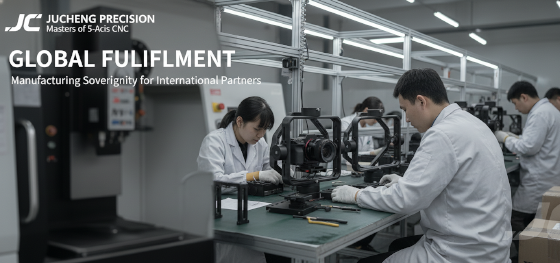
Answer: Absolutely. JUCHENG offers turnkey assembly services, including the precision installation of high-speed bearings, slip-rings, and brushless motors into our machined housings.

