


The manufacturing industry has undergone a transformative shift with the advent of fiber laser technology. Unlike traditional CO₂ lasers, fiber lasers utilize optical fibers doped with rare-earth elements to produce a highly concentrated beam with superior efficiency and precision. This innovation has revolutionized multiple industrial applications, from cutting machine operations to engraving machine processes, offering faster speeds, lower energy consumption, and minimal maintenance requirements.
content:
Fiber Lasers in Cutting and Engraving Applications
Precision Marking and Etching Solutions
Laser Welding and Cleaning Innovations
Integration with CNC and Automation
Future Prospects and Industry Impact
Fiber Lasers in Cutting and Engraving Applications
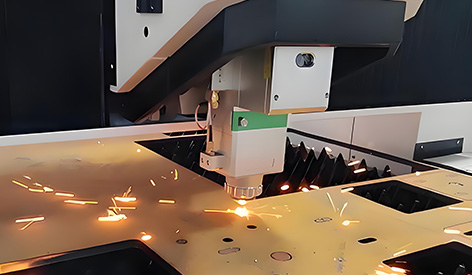
When integrated into a cutting machine, fiber lasers deliver exceptional accuracy, especially for metals like stainless steel, aluminum, and copper. Their ability to maintain a consistent beam quality ensures clean, burr-free edges, making them indispensable in automotive and aerospace manufacturing. Similarly, engraving machine systems benefit from fiber lasers’ fine-tuned control, allowing intricate designs on materials ranging from plastics to precious metals. The non-contact nature of laser engraving minimizes material waste while achieving high-resolution finishes.
Precision Marking and Etching Solutions
For permanent identification and branding, marking machine setups equipped with fiber lasers provide durable, high-contrast engravings on surfaces like ceramics, glass, and hardened steel. The technology’s versatility extends to etching machine applications, where microscopic material removal creates detailed patterns without compromising structural integrity. Industries such as electronics and medical devices rely on these systems for traceability and aesthetic enhancements.
Laser Welding and Cleaning Innovations
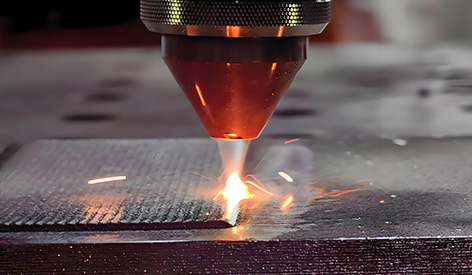
Fiber lasers have also redefined welder capabilities by enabling deep-penetration welding with minimal heat distortion. This is particularly valuable in high-precision sectors like semiconductor manufacturing, where joint strength and seam quality are critical. Additionally, cleaning machine solutions utilizing pulsed fiber lasers offer an eco-friendly alternative to chemical or abrasive methods. By selectively removing contaminants like rust or oxides, laser cleaning preserves substrate integrity while eliminating hazardous waste.
Integration with CNC and Automation
The synergy between fiber lasers and CNC (Computer Numerical Control) systems has unlocked new levels of automation. Machine setups with CNC compatibility ensure repeatability across large production runs, reducing human error and increasing throughput. Whether deployed in a standalone marking machine or a multi-functional industrial cutting machine, CNC-driven fiber lasers enhance scalability for Industry 4.0 environments.
Future Prospects and Industry Impact
As fiber laser technology continues to evolve, its applications in etching machine, welder, and cleaning machine systems will expand further. Advances in beam shaping and adaptive optics promise even finer control, while AI-driven optimizations could redefine real-time processing in CNC-integrated workflows. Manufacturers investing in these innovations will gain a competitive edge through heightened efficiency, sustainability, and precision.

In conclusion, fiber lasers represent a cornerstone of modern industrial advancement, seamlessly integrating with machine tools across cutting, engraving, marking, welding, and cleaning applications. Their adaptability and performance underscore their pivotal role in shaping the future of smart manufacturing.

