


Hunting for microns is a fool's errand if you don't respect the physics of the shop floor. In the pristine logic of a CAD model, a tolerance of +/- 0.01mm is just a text callout. But in the physical world, that same dimension is a moving target, shifting with the warmth of the sun through a window or the slight vibration of a neighboring machine. Learning How to Achieve Tight Tolerances in CNC is not about buying the most expensive machine; it is about building a fortress of stability around the cutting tool. It is an obsession with the invisible variables that standard job shops ignore.
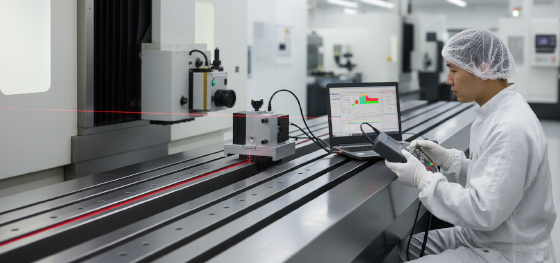
At Jucheng Precision, we live in the fourth decimal place. We understand that CNC machining tolerances are not static outcomes—they are the result of a coordinated symphony between machine rigidity, thermal discipline, and advanced metrology. When an aerospace client demands a five-micron flatness over a 300mm plate, they are trusting our ability to manage the molecular stress of the material. This guide moves beyond the marketing gloss to reveal the actual, unvarnished manufacturing protocols JUCHENG utilizes to deliver "impossible" accuracy in the world's toughest alloys and plastics.
Precision is a lifestyle, not an accident. If your supply chain is failing because of dimensional drift, you need a partner who understands the thermodynamic reality of the spindle. Let us break down the mechanical pillars that define true precision and see how JUCHENG locks your designs into reality.
Thermal Sovereignty: Fighting the 20-Degree Shift
Tooling Dynamics: The War Against Runout and Deflection
Staged Machining: The Art of Stress Relaxation
Machine Kinematics: The Role of Cast Iron and Scales
Metrology Lockdown: Proving the Micron in the Lab
Thermal Sovereignty: Fighting the 20-Degree Shift
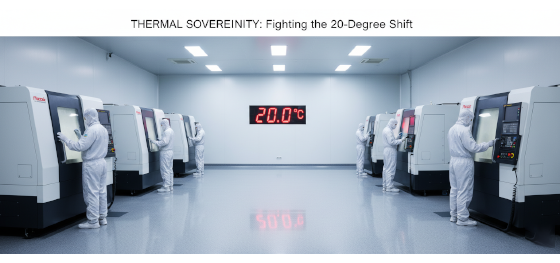
Heat is the primary enemy of How to Achieve Tight Tolerances in CNC. Most materials expand significantly as they warm up. Aluminum, for instance, has a high coefficient of thermal expansion; a temperature rise of just five degrees can move a 100mm dimension by twelve microns—instantly pushing an H7 bore out of spec. If your machine shop isn't climate-controlled, the parts they cut at 8:00 AM will be different from the parts they cut at 2:00 PM. This is an environmental failure that no amount of machine compensation can fully fix.
Jucheng Precision operates under a "Thermal Sovereignty" mandate. Our production floor and metrology labs are stabilized at exactly 20 degrees Celsius (+/- 1 degree). We treat the air as a manufacturing parameter. But the heat doesn't just come from the room—it comes from the cut. High-speed machining generates intense friction at the tool tip. We manage this through high-pressure flood cooling and through-spindle systems that maintain a constant part temperature. More importantly, we utilize "Thermal Mapping" on our Mazak and Haas machines. The machines use internal sensors to monitor spindle growth and compensate for the few microns of expansion that occur as the bearings warm up. By stabilizing the atmosphere and the machine’s internal heat-map, we eliminate the primary source of dimensional drift, ensuring that your CNC machining tolerances remain consistent across a batch of ten thousand parts.
Tooling Dynamics: The War Against Runout and Deflection

You cannot hit a target if your tool is "wobbling." In the pursuit of How to Achieve Tight Tolerances in CNC, tool runout is a critical, often neglected bottleneck. Runout is the measure of how much the tool’s axis deviates from the machine’s axis of rotation. A runout of just 0.005mm can double the effective cutting load on one flute, leading to vibration (chatter) and poor surface finishes. On a standard machine with basic collets, runout is a fact of life. At JUCHENG, we consider it a defect to be engineered out.
We utilize high-precision hydraulic tool holders and shrink-fit systems that provide a symmetrical, high-force grip on the cutter. This reduces runout to nearly zero. We also pay obsessive attention to tool deflection. When a tool pushes against metal, it bends. If the tool is too long or the feed rate is too aggressive, that bend ruins the accuracy of the feature. Our engineers utilize the "Short-Tool Rule"—using the largest diameter and shortest length possible for every finishing pass. We use variable-pitch carbide mills to break up harmonic vibrations, ensuring the cutter "slices" through the metal rather than "hammering" it. By controlling the micro-mechanics of the tool-to-workpiece encounter, Jucheng Precision delivers surface finishes (Ra 0.4 or better) and tolerances that allow for perfect mechanical fits in the most demanding medical and robotics assemblies.
Staged Machining: The Art of Stress Relaxation
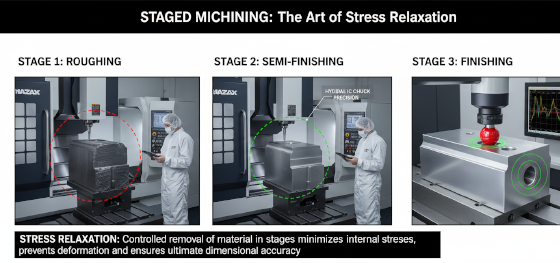
Metals have a memory. During the rolling or casting process, internal stresses are trapped within the grain structure. When we perform heavy roughing passes in a cnc machining process, we are effectively releasing those "frozen" forces. If you machine a part to its final dimensions in a single setup, those released stresses will cause the part to warp or bow hours after it leaves the machine. This is why many parts fail assembly even though they "measured right" on the table. Understanding How to Achieve Tight Tolerances in CNC requires a patient, staged approach to material removal.
JUCHENG employs a three-tier machining cycle for all high-precision parts: Roughing, Semi-Finishing, and Finishing. After the roughing pass removes 90% of the material, we allow the part to "rest." For high-value aerospace components, we may even perform a mid-process stress-relief annealing cycle. This allows the metal grains to relax and find a new equilibrium. Only then do we perform the final finish cuts, removing just 0.1mm to 0.2mm of material. This "light-touch" approach ensures that no new stresses are introduced, locking the dimensions in place permanently. We treat the material like a living thing—giving it time to breathe and settle before we demand perfection. This technical patience is what separates a world-class shop from a high-speed production mill.
Machine Kinematics: The Role of Cast Iron and Scales
The foundation of any CNC machining tolerances achievement is the machine itself. You cannot hold ten microns on a machine built from lightweight sheet metal. True precision starts with mass. At Jucheng Precision, we invest in heavy-duty Mazak and Haas 5-axis centers that utilize massive cast-iron bases. These bases provide the vibration damping necessary to keep the tool still when it encounters the resistance of tough alloys like 17-4 PH stainless or Titanium Grade 5. A heavier machine is a more accurate machine because it resists the kinetic energy of the cut.
We also look at the feedback systems. Standard machines rely on the motor's encoder to "guess" where the table is based on the rotation of the ball screw. But ball screws can wear or expand with heat. For our ultra-precision lines, we utilize high-resolution linear scales. These scales act like an independent ruler that tells the machine exactly where the table is in 3D space, regardless of the ball screw's condition. This "Closed-Loop" feedback is the only way to guarantee repeatability in How to Achieve Tight Tolerances in CNC across thousands of cycles. When combined with our precision-ground ball screws and high-torque spindles, these kinematics provide the rock-solid platform required for the world's most sensitive engineering designs.
Metrology Lockdown: Proving the Micron in the Lab
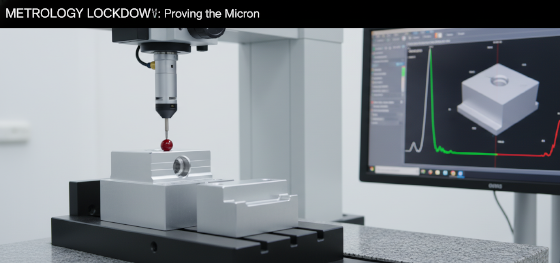
The final hall-mark of precision is verification. CNC machining tolerances are only as real as the metrology that measures them. You cannot verify a +/- 0.01mm tolerance with a hand caliper; the heat of your hand and the pressure of your thumb will skew the data. At Jucheng Precision, we implement a "Metrology Lockdown" protocol. Once a part is finished, it moves to our stabilized quality lab. It must sit for several hours to reach the ambient 20°C temperature before a single measurement is taken.
We utilize multi-sensor Coordinate Measuring Machines (CMM) and high-resolution video measurement systems that take hundreds of data points without physical contact or human error. We provide our clients with detailed inspection reports that include 3D heat-maps of their parts, proving that every hole, every plane, and every radius is within the specified boundary. This transparency is the cornerstone of our service to the medical and aerospace industries. When you receive a package from JUCHENG, you aren't just getting metal; you are getting the engineered certainty that your parts are dimensionally perfect and structurally stable. We bridge the gap between a challenging CAD file and a functional masterpiece. Contact Jucheng Precision today for a technical DFM review and see how our precision protocols can stabilize and elevate your next high-tolerance project.

