


Authorizing a hundred-thousand-dollar purchase order for a heavy metal die terrifies inexperienced hardware procurement executives. Ordering massive blocks of hardened steel represents the absolute point of no return for ambitious global hardware launches. Discovering a fatal geometric flaw after the raw block has been violently carved paralyzes corporate cash flow and destroys tight consumer electronics launch schedules instantly.
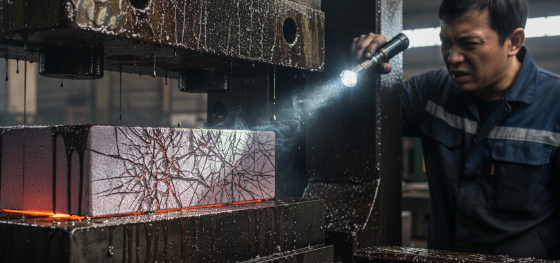
Executing high-volume production dictates confronting brutal thermodynamic physics head-on. Blasting molten Aluminum into a freezing steel cavity at terrifying speeds generates violent kinetic shockwaves that actively seek to rip the tool apart. Engineers must ruthlessly select premium industrial alloys capable of surviving millions of punishing mechanical cycles without surrendering a single micron of dimensional accuracy.
Mastering exactly how solid steel reacts to immense hydraulic pressure separates amateur prototype shops from elite global manufacturing partners. Running heavy Die Casting or automated Sheet Metal Fabrication lines requires absolute mastery over friction, heat dissipation, and internal molecular tension. Bypassing these fundamental metallurgical realities mathematically guarantees catastrophic tooling failure on the busy factory floor.
Operating deep inside the Shenzhen precision manufacturing hub equips our veteran tooling directors to heavily protect your capital investment. We force mechanical designers to execute uncompromising mechanical audits before any heavy CNC Machining begins on the raw steel block. Eradicating impossible undercuts and calculating exact thermodynamic cooling lines ensures your expensive asset churns out flawless retail components for decades.
content:
Defeating Violent Thermal Fatigue Cracking
Mastering Profitable Tool Steel Amortization
Surviving Progressive Stamping Friction
JUCHENG Hub: Dominating Heavy Tooling
Frequently Asked Questions: Metallurgy
Defeating Violent Thermal Fatigue Cracking

Will repeatedly injecting boiling liquid metal into a cold steel cavity eventually destroy the hardened tool?
Absolutely. The violent, continuous cycle of extreme heating and rapid cooling forces the steel surface to violently expand and contract, eventually tearing the molecular structure apart and creating deep spiderweb cracks.
Surviving terrifying thermal fatigue cracking dictates your ultimate manufacturing lifespan. Factory operators commonly refer to this destructive phenomenon as heat checking. Once these microscopic fissures develop across the polished cavity wall, the highly pressurized molten liquid immediately floods into the cracks, freezing solid and creating ugly, raised jagged ridges on every subsequent manufactured component.
Mitigating this thermodynamic disaster requires engineering highly advanced conformal cooling channels directly inside the heavy steel block. Instead of drilling simple straight water lines, elite machinists utilize complex internal geometry that perfectly wraps around the contours of the hot plastic or metal part. Pumping chilled industrial fluids through these complex veins violently sucks the heat out of the cavity, preventing the steel surface from ever reaching its critical failure temperature.
Applying premium surface treatments heavily extends the survival rate of the delicate cavity face. Blasting the machined steel with physical shot peening deliberately induces a layer of compressive residual stress, actively fighting the expansive tearing forces generated by the molten metal. Adding specialized ceramic or titanium-nitride coatings acts as a supreme thermal barrier, shielding the raw steel from catastrophic heat shock.
Mastering Profitable Tool Steel Amortization

Should hardware startups order cheap, unhardened steel molds to save money on their initial production run?
Never. Cheap base metals will violently warp under pressure, requiring constant, expensive factory repairs that completely obliterate any upfront financial savings you thought you secured.
Calculating honest tool steel amortization protects your venture capital funding from evaporating instantly. Procurement managers frequently panic when quoted massive prices for premium H13 or hardened H22 tooling steel. However, dividing that massive upfront premium across a guaranteed lifespan of one million flawless injection cycles drives the actual tooling cost per part down to practically zero pennies.
Purchasing cheap P20 steel for aggressive aluminum casting guarantees an absolute factory floor nightmare. Molten aluminum possesses a terrifying chemical affinity for cheap iron. The liquid metal literally solders itself directly onto the raw cavity walls, forcing exhausted technicians to aggressively bash the stuck parts out with heavy hammers, permanently ruining the fragile internal geometry.
Executing rapid Injection Molding pilot runs frequently utilizes soft aluminum tooling as a temporary bridge. Milling aluminum cavities costs incredibly little and cuts incredibly fast compared to hardened steel. This agile strategy delivers ten thousand perfectly authentic plastic components for critical field testing while keeping the massive mass-production budget safely locked in the corporate treasury.
| Base Tooling Material | Machinability Rating | Expected Cycle Lifespan | Optimal Factory Application |
|---|---|---|---|
| Soft Aerospace Aluminum | Extremely Fast | 1,000 to 10,000 Shots | Rapid pilot runs and beta testing plastics |
| P20 Pre-Hardened Steel | Moderate | 50,000 to 100,000 Shots | Mid-volume consumer electronic enclosures |
| H13 Premium Hardened Steel | Slow (Requires slow EDM burning) | 500,000 to 1,000,000+ Shots | High-volume aggressive aluminum casting |
| Stainless Steel (420 Grade) | Difficult | Extreme (Highly corrosive resistant) | Corrosive PVC and medical grade molding |
Surviving Progressive Stamping Friction

Why do freshly punched sheet metal parts suddenly emerge from the heavy press covered in deep, ugly gouges?
Extreme kinetic friction causes microscopic particles of the raw sheet metal to literally cold-weld themselves onto the hardened steel punch, violently scratching every subsequent part that passes through the machine.
Defeating severe progressive stamping friction strictly demands highly specialized industrial lubrication protocols. Forcing heavy steel plates to violently crush flat copper coils into deep cylindrical shapes generates massive localized thermal heat. Flooding the immediate pressing zone with heavy synthetic stamping fluids actively prevents the soft metal from violently fusing to the hardened steel punch matrix.
Designing complex progressive operations requires absolute mechanical synchronization. The raw metal coil physically moves through multiple independent cutting and bending stations within the exact same steel block. If the pilot holes fail to align the coil by a fraction of a millimeter, the massive hydraulic press will brutally smash the delicate internal punches, immediately destroying months of meticulous engineering work.
Replacing shattered internal punches instantly remains a mandatory requirement for high-volume automotive suppliers. Elite tooling engineers design heavy progressive presses with easily removable, modular inserts. When a specific bending station eventually succumbs to severe abrasive wear, technicians rapidly unbolt that specific small block and slide a fresh one in, preventing the entire factory line from shutting down.
JUCHENG Hub: Dominating Heavy Tooling
Why do aggressive hardware brands refuse to utilize third-party brokers for massive tooling projects?
Because splitting the manufacturing liability completely destroys engineering accountability. When a heavy steel tool fails prematurely, the broker blames the steel supplier, and the supplier blames the injection facility.
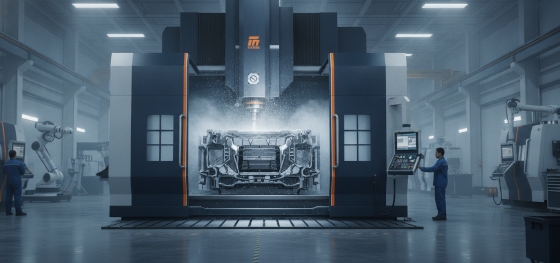
Partnering directly with Jucheng Precision resolves this toxic supply chain friction instantly. Operating a massive 8,000 square-meter Shenzhen facility ensures we violently carve, assemble, and test your massive steel assets under one unified roof. We execute uncompromising Design for Manufacturability (DFM) audits instantly to prevent impossible geometries from reaching the cutting floor.
Protecting your physical metal die investment remains our absolute highest priority. We rigorously maintain, clean, and store your massive steel tools inside our climate-controlled warehouse between production runs. Eliminating terrifying overseas shipping logistics ensures your heavy assets remain perfectly calibrated and instantly ready to strike whenever your inventory drops low.
Frequently Asked Questions: Metallurgy
Does designing incredibly sharp internal corners inside a plastic mold cause physical problems?
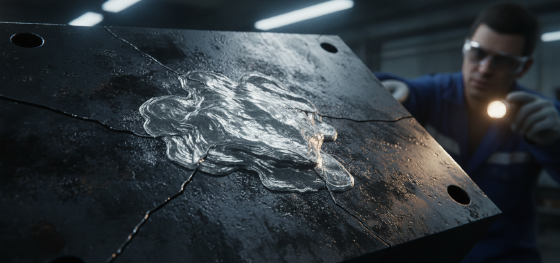
Yes, heavily. Sharp internal corners act as terrifying stress concentrators during the high-pressure injection phase, practically guaranteeing the hardened steel will physically crack and fracture at that exact sharp vertex over time.
Can technicians safely weld fresh steel onto a heavily damaged mold cavity to repair it?
Yes, utilizing advanced precision laser welding allows technicians to seamlessly add microscopic layers of fresh metal to damaged parting lines. The repaired zone is then aggressively re-machined flat, saving the entire heavy tool from the scrap yard.
Why does the factory charge massive fees to add internal side-actions or lifters?
Side-actions involve highly complex moving mechanical gears that physically slide out of the way before the part ejects, allowing for complex external undercuts. Engineering and machining these synchronized moving components drastically increases the raw labor and geometric complexity of the build.

