


Balancing strict mechanical strength with aggressive budget targets is a core challenge in commercial hardware development. Choosing mild steel sheet metal fabrication represents the most cost-effective path to manufacture robust, structural panels without paying the high material premiums associated with stainless steel or aluminum. This highly machinable alloy, containing under 0.25% carbon, provides outstanding structural stiffness, excellent magnetic permeability, and superior weldability for heavy-duty enclosures, electronic chassis, and automation brackets.

Utilizing specialized alloys can quickly inflate your project's bill of materials (BOM), while running laser cutters on exotic metals drags down your production speed. Mild carbon alloys completely bypass these cost bottlenecks, while utilizing advanced powder coating finishes protects the raw iron from atmospheric humidity, delivering a durable hardware housing at a fraction of the cost.
Balancing the material's surface state against finishing requirements separates value-engineered components from failed, rusted assemblies. Let's examine the core mechanical benefits of low-carbon alloys, analyze the necessity of advanced chemical pre-treatments, and explore the dimensional differences between hot rolled and cold rolled stock.
content:
What is Mild Steel and Why is it So Popular?
The Necessity of Surface Treatment for Mild Steel
Hot Rolled vs. Cold Rolled Mild Steel
High-Volume and Low-Volume Mild Steel Production at JUCHENG
FAQ: Critical Questions About Mild Steel Sheet Metal Fabrication
What is Mild Steel and Why is it So Popular?
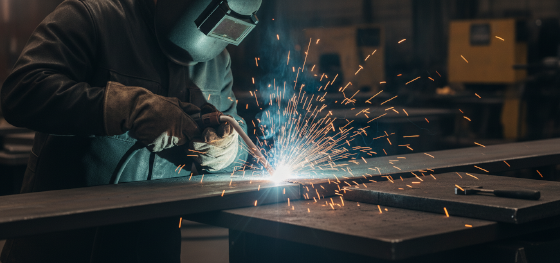
What makes low-carbon mild steel the industry workhorse for structural enclosures?
Mild carbon steel provides outstanding physical toughness and stiffness at a highly economical price point, while offering superior weldability and formability compared to stainless steel.
When a project requires structural rigidity to support heavy internal transformers or power supplies, mild steel is the ideal engineering selection. Because of its low carbon content, the material possesses high ductility, allowing us to execute deep bends and intricate forming steps without cracking. It also exhibits low electrical resistance and high magnetic permeability, providing built-in EMI shielding for sensitive electronics.
Additionally, low-carbon alloys are incredibly easy to weld. The steel fuses cleanly under standard TIG or MIG setups with zero risk of the thermal cracking or sensitization commonly associated with stainless grades, ensuring structurally solid, rigid frames that can withstand severe industrial handling.
The Necessity of Surface Treatment for Mild Steel
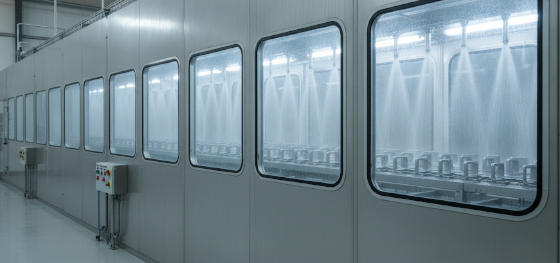
How do you protect raw low-carbon steel components from rapid corrosion?
We execute multi-stage chemical pretreatment to degrease and phosphate the metal surface, followed by electrostatic powder coating to build a durable, moisture-resistant barrier.
While raw carbon steel provides outstanding physical performance, executing mild steel sheet metal fabrication without robust surface sealing is a recipe for disaster. Because low-carbon steel contains no chromium, exposure to simple atmospheric humidity will rapidly initiate localized oxidation, forming rust that destroys both aesthetics and structural integrity.
To prevent oxidation, we run our assemblies through a thorough chemical conversion wash line. This process degreases the bare steel and applies a micro-crystalline iron phosphate coating, which chemically alters the surface to maximize paint adhesion. We operate an advanced powder coating line that applies electrostatic paint powders, curing them in high-temperature ovens to build a continuous, scratch-resistant barrier. For severe outdoor applications, we apply zinc-rich primers or liquid spray painting to maximize salt-spray survival.
Hot Rolled vs. Cold Rolled Mild Steel
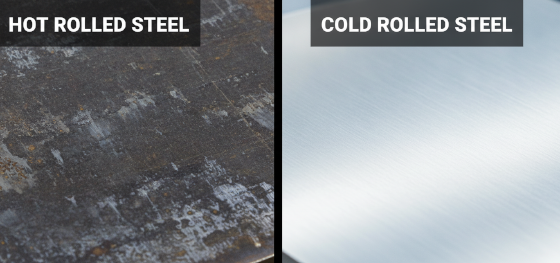
When should a product designer specify cold rolled steel over hot rolled steel?
Specify cold rolled steel for precision electronic enclosures requiring smooth surfaces and tight tolerances; choose hot rolled steel for heavy structural brackets where cost and thick gauges are the primary drivers.
To optimize manufacturing costs, understanding the material mill condition is crucial. Bypassing the raw cost differences between SPHC and SPCC can lead to out-of-tolerance dimensions or poor cosmetic finishes on your finished assemblies. We help you choose the correct grade based on your application's physical requirements.
Evaluating the difference of hot rolled vs cold rolled steel sheet metal reveals distinct cosmetic and mechanical properties. Hot rolled steel is processed at extremely high temperatures, resulting in a rough surface covered in dark oxide scale, which requires extensive cleaning but is highly economical for thick gauges. In contrast, cold rolled steel is cold-worked at room temperature, delivering an exceptionally smooth surface, precise thickness tolerances, and superior yield strength, making it the perfect choice for high-precision brackets.
High-Volume and Low-Volume Mild Steel Production at JUCHENG
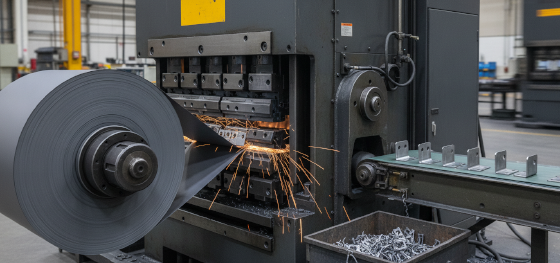
How does JUCHENG deliver competitive low-carbon steel fabrication across varying volumes?
We operate high-power fiber laser cutters for prototype runs and automated progressive stamping presses for high-volume orders, integrating full surface finishing under one roof.
When volume demand shifts from prototype units to mass production, choosing this versatile sheet metal material maximizes your cost-performance ratio. JUCHENG integrates these powerful cutting, folding, and stamping systems into our full-service production lines. This allows us to transition your designs from initial CAD layouts to high-volume formed brackets with extreme dimensional precision.
We operate an IATF 16949 and ISO 13485 certified facility, utilizing over 150 high-performance manufacturing machines to execute complex stamping and forming runs. Our engineering team provides a 24-hour free DFM analysis to evaluate your CAD models, checking bend allowances and punch limits before production. Supported by our no MOQ policy and rapid delivery guarantee, we manage your project from initial flat pattern cutting to final cosmetic powder coating and assembly.
FAQ: Critical Questions About Mild Steel Sheet Metal Fabrication
Why must mill scale be removed from hot rolled steel before painting or welding?
Mill scale is a brittle, flaky oxide layer that forms on hot rolled steel during cooling. If you paint or weld directly over mill scale, the coating will peel off as the scale breaks away, exposing the bare metal underneath to rapid rust. We utilize mechanical sandblasting or chemical pickling washes to remove mill scale completely, ensuring a clean metallurgical surface.
Can mild steel parts be utilized in high-temperature outdoor environments?
Yes, low-carbon steel can handle high structural temperatures. However, high-temperature outdoor environments accelerate humidity oxidation. To survive these conditions, we recommend applying specialized high-temperature silicone coatings or hot-dip galvanizing to provide complete atmospheric barrier protection.
Does spot welding galvanized steel differ from welding standard mild steel?
Yes, heavily. Galvanized steel is coated in zinc, which has a much lower melting point than steel. Welding galvanized plates requires higher currents and longer weld times to vaporize the zinc coating at the contact point first before the steel can fuse, and requires advanced exhaust ventilation to protect operators from toxic zinc fumes.
How does JUCHENG guarantee tight tolerances during mild steel sheet metal fabrication?
We continuously calibrate our fiber lasers and CNC press brake back gauges to compensate for minor thickness variations in raw steel sheets. Our team utilizes advanced 3D unfolding software to calculate exact material elongation parameters, and conducts full coordinate measuring machine (CMM) dimensional checks on completed assemblies before final packaging.

