


Visual authority in premium hardware development is often dictated by the final micron of surface chemistry. While Injection molding surface finishes like VDI textures or SPI polishes provide the structural foundation, achieving the exact color depth and protective resilience of a consumer-ready device often necessitates painting injection molded parts. In the hyper-competitive sectors of automotive interiors and medical diagnostic tools, painting is not merely a method of aesthetic masking; it is a functional armor that provides UV resistance, chemical defense, and high-fidelity haptics. Jucheng Precision operates as a high-velocity cosmetic sanctuary, utilizing automated dust-free spray lines and scientific adhesion audits to ensure your enclosures possess the exact chromatic soul and tactile "handshake" required for market dominance. Mastering the interface between polymer substrates and advanced coatings is the primary defense against the catastrophic "Peeling and Delamination" failures that plague inferior hardware launches.

Adhesion sovereignty is earned through the management of "Surface Energy." Amateurs often view painting as a simple topical application, unaware that the molecular tension of the plastic (measured in Dyne levels) dictates whether a coating will chemically bond or physically fail. Jucheng Precision eliminates manufacturing doubt by enforcing a strict "Surface Prep" protocol—utilizing plasma treatment and anti-static ionization to ensure the substrate is chemically receptive to the primer. Whether you are seeking a "Soft-Touch" rubberized feel for a medical handle or a high-gloss "Metallic Frost" for an automotive bezel, our technical advisory ensures your hardware retains its "Day One" aesthetic through years of field abuse. This guide deconstructs the physics of Dyne levels, the necessity of dust-free environments, and the strategic advantages of UV-cured topcoats to secure your brand’s visual integrity.
Surface Energy Forensics: Mastering the Dyne Level Barrier
Atmospheric Integrity: The War on Dust and Inclusions
Coating Sovereignty: Choosing UV, 2K, and Soft-Touch Systems
Chromatic Accuracy: Pantone Matching and Spectrophotometer Calibration
Durability Audits: Cross-Hatch Testing and Environmental Aging
JUCHENG Protocol: Integrated Automated Painting and QC
Surface Energy Forensics: Mastering the Dyne Level Barrier

Permanent bonding in painting injection molded parts is a byproduct of high surface energy. Most plastics, particularly Polypropylene (PP) and HDPE, are chemically non-polar and exhibit low surface tension. If you attempt to spray these materials directly, the paint will "bead up" like water on a waxed car, leading to instant delamination. To overcome this, Jucheng Precision technicians perform a "Dyne Audit." We target a minimum surface energy of 38-42 dynes/cm. If the material is too inert, we utilize flame treatment or chemical etching to "open" the molecular surface, creating active bonding sites for the primer. We also monitor for "Mold Release Contamination"—silicone-based sprays used in cheaper molding operations that permanently poison the surface energy of a part. By managing the chemistry of the interface, we ensure that the paint layer is not just a coating, but a molecular extension of the plastic substrate, capable of surviving thousands of cycles in our cross-hatch adhesion tests.
Atmospheric Integrity: The War on Dust and Inclusions
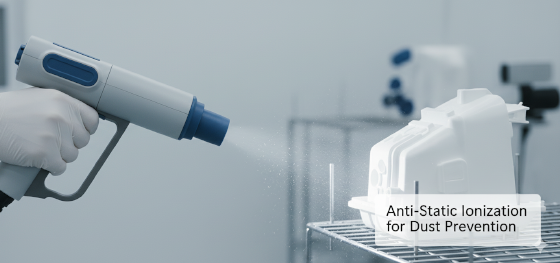
Manufacturing "Inclusion" is the primary architect of cosmetic rejection. On a high-gloss painted surface, a single speck of dust as small as 50 microns acts as a macroscopic crater, visible to the naked eye under retail lighting. painting injection molded parts at Jucheng Precision is conducted within Class 100,000 dust-free automated lines. Before entering the spray zone, parts undergo a rigorous "Anti-Static Ritual." We utilize ionizing air bars and high-pressure blow-off systems to neutralize the static charge that naturally attracts atmospheric dust to plastic. Our facility uses multi-stage HEPA filtration to ensure the air inside the booth is purer than the air in a typical office. This environmental sovereignty ensures your parts arrive without "Nibs," "Pits," or "Fish-Eyes," delivering a mirror-like finish that defines premium hardware. We don't just "paint"; we manage the atmosphere to protect your brand's cosmetic authority.
Coating Sovereignty: Choosing UV, 2K, and Soft-Touch Systems
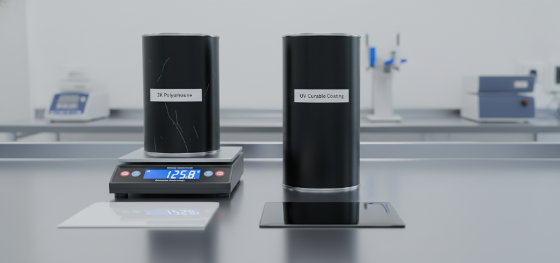
Performance requirements dictate the choice of coating chemistry. Not all paints are created equal when it comes to durability. For consumer electronics requiring extreme scratch resistance and a "Piano Black" luster, Jucheng Precision utilizes UV-cured topcoats. These coatings are exposed to intense ultraviolet radiation, triggering an instant cross-linking reaction that creates a glass-like shell. For automotive and industrial applications requiring chemical resistance to oils and cleaners, we deploy 2K (Two-Component) Polyurethane systems. The chemical reaction between the resin and the hardener ensures the part maintains its color and finish in the harshest environments. We also specialize in "Soft-Touch" or "Silk" coatings—rubberized paints that provide an ergonomic warmth and grip to handheld instruments. By mapping your product's "Service Environment" to our coating library, we provide the manufacturing insurance needed to ensure your finish doesn't just look good at launch, but survives the entire product lifecycle.
Chromatic Accuracy: Pantone Matching and Spectrophotometer Calibration
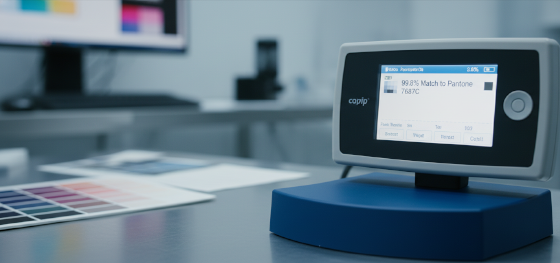
Branding lives and dies by chromatic consistency. A "slightly off" shade of blue between a painted bezel and an in-mold-colored housing suggests a lack of manufacturing maturity. painting injection molded parts at Jucheng Precision is a metrological exercise. Our color lab utilizes digital spectrophotometers to "fingerprint" your target Pantone or RAL swatch. We don't rely on the subjective human eye; we measure the Lab values of the wet paint and the final cured surface to ensure a Delta-E variance of less than 1.0. This precision allows us to achieve perfect "Color Harmony" across multi-material assemblies where different components may have different plastic substrates. We calibrate our lighting booths to simulate D65 (Daylight) and TL84 (Store Light) conditions, ensuring your product looks exactly as intended whether it’s in a surgeon’s hand or on a retail shelf. We turn "vague colors" into "exact spectral signatures."
Durability Audits: Cross-Hatch Testing and Environmental Aging
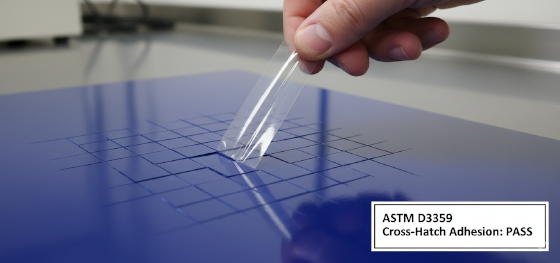
Engineering confidence is built on the foundation of the destructive audit. A beautiful paint job is worthless if it fails a simple "Tape Test" in the field. Jucheng Precision subjects every painted batch to rigorous ASTM D3359 Cross-Hatch testing. We use a precision multi-blade cutter to score the paint into a grid of 100 squares, then apply high-strength tape and pull it at a 180-degree angle. If a single square of paint detaches, the entire batch is rejected. We also conduct "Chemical Wipe" tests using 70% IPA (Isopropyl Alcohol) to simulate medical sterilization cycles. For automotive exterior components, we perform "Thermal Cycling" to ensure the different expansion rates of the plastic and the paint don't lead to micro-cracking. We don't just ship parts; we provide the documented proof of survival required for ISO 13485 and IATF 16949 certification. We ensure your finish is an industrial asset, not an aesthetic liability.
JUCHENG Protocol: Integrated Automated Painting and QC

Manufacturing excellence at Jucheng Precision is built on the foundation of vertical integration. We eliminate the friction of vendor-hopping by housing our elite CNC mold shop, scientific injection bays, and automated painting lines under a single roof. This "Single-Source" accountability ensures that if a painting issue arises, our process engineers can adjust the molding parameters (such as mold temp or packing pressure) to resolve the root cause instantly. We provide full material lot traceability and dimensional inspection reports for every batch of painting injection molded parts, ensuring your hardware journey is lean, predictable, and retail-ready. Stop gambling your cosmetic success with fragmented suppliers who treat painting as an afterthought. Not sure if your part geometry supports an even UV coating? Upload your 3D CAD file to JUCHENG today for a Free DFM Review. Our experts will identify Injection molding surface finishes bottlenecks before they cost you money, ensuring your transition to mass production is seamless, beautiful, and profitable.

