


Light is the most unforgiving critic of the manufacturing floor. In the digital vacuum of a CAD environment, "transparency" is a simple material property, but in the physical landscape of vacuum casting materials, achieving true glass-like clarity is a brutal struggle against the laws of thermodynamics. Most engineers are disappointed by their first encounter with transparent simulants; what arrived as a crystal model often emerges as a yellowed, hazy object that scatters light and hides internal details. This failure is usually a result of poor atmospheric control during the pour. PC like Urethane Casting represents the pinnacle of technical replication, offering a pathway to components that possess the refractive index and impact toughness of Polycarbonate (PC) without the six-week lead time of a steel tool.
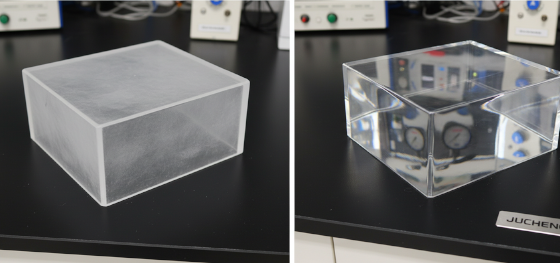
JUCHENG operates as a high-fidelity hub for the world’s leading automotive and medical brands. We recognize that for a light pipe or a microfluidic manifold, "mostly clear" is a total system failure. By integrating advanced vacuum-degassing protocols with premium resins like Axson PX 5212, we eliminate the air gaps and microscopic striations that plague standard service bureaus. We don't just "pour liquid"; we manage a controlled chemical event where the heat of reaction is balanced against the rigidity of the silicone mold. This guide moves past the basic brochures to explore the micro-physics of refractive integrity, the labor-intensive reality of multi-stage polishing, and why JUCHENG’s integrated approach to clear polymers ensures your designs are seen through, not just seen.
Efficiency in clear manufacturing is found in the removal of visual noise. You aren't just building a part; you are coordinating light at the molecular level. Whether you are building an innovative medical valve or a high-performance LED lens, the logic of the vacuum is your primary manufacturing governor. Let us break down the technical pillars of transparent additive replication and see how technical foresight can lock the integrity of your next design into reality.
Refractive Integrity: Simulating the Soul of Polycarbonate
Thermal Discipline: Managing the Exothermic Yellowing Trap
Sanding the Invisible: Multi-Stage Aesthetic Refinement
Strategic Applications: From Light Pipes to Fluid Manifolds
JUCHENG’s Photometric Standard: Validating the Transmission
Refractive Integrity: Simulating the Soul of Polycarbonate
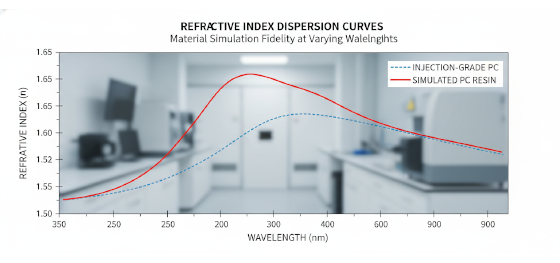
To engineer a successful PC like Urethane Casting, one must look past the transparency and into the refractive index. Production Polycarbonate is prized for its high refractive index (~1.584), which allows light to bend and travel with minimal distortion. Replicating this behavior in a two-part polyurethane resin requires a sophisticated chemical balance. If the resin has too much "optical noise"—microscopic inconsistencies in density—the light will scatter, creating a cloudy appearance even if the surface is polished.
At Jucheng Precision, we source high-purity clear resins specifically designed for "Optical Mimicry." These materials possess a molecular structure that allows light transmission values up to 90%, nearly identical to real PC. But the chemistry is only half of the story. During the vacuum phase, any residual air molecules will act as tiny prisms inside the part. We utilize dual-chamber degassing systems that pull a deep vacuum (less than 10 mbar) to ensure the liquid resin is perfectly homogeneous before it enters the mold. This level of technical oversight ensures that your clear prototypes don't just look "transparent"; they possess the refractive integrity needed for high-stakes sensor testing and fluid flow visualization. We don't just pour clear resin; we manage the physics of the photon path to deliver functional certainty.
Thermal Discipline: Managing the Exothermic Yellowing Trap
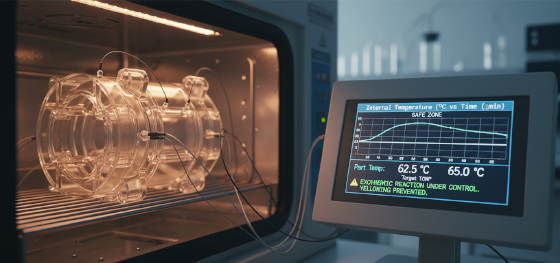
Transparency is vulnerable to heat. Polyurethane reactions are inherently exothermic—they generate their own internal thermal energy as they cure. In a thick-walled part, this heat can build up rapidly, causing the material to "scorch" at the molecular level, leading to the dreaded yellow tint. For engineers building large automotive lenses or thick-section optical blocks, this yellowing is a terminal quality failure. Success in PC like Urethane Casting requires a mastery of thermal discipline.
JUCHENG eliminates the yellowing trap through "Staged Curing." We utilize programmable industrial ovens that slowly ramp the temperature up and down over a multi-hour cycle. This prevents the "thermal peak" from reaching a temperature that would degrade the resin’s optical clarity. We also utilize silicone molds with higher thermal conductivity or integrated cooling vents to dissipate the exothermic heat away from the part’s core. This meticulous cooling strategy ensures that even a 50mm thick block of simulated PC remains perfectly water-white. By managing the thermodynamics of the cure, we provide our clients with parts that maintain their clarity across every batch, ensuring your brand's nocturnal light signature is never compromised by manufacturing-induced discoloration.
Sanding the Invisible: Multi-Stage Aesthetic Refinement
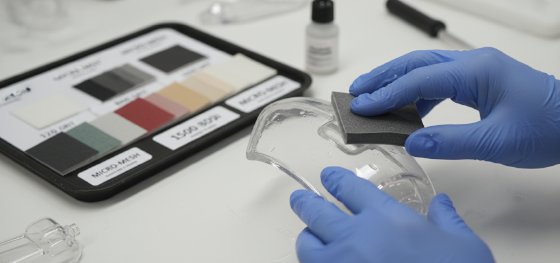
A raw part straight out of a silicone mold is rarely ready for an optical bench. While the silicone captures the master pattern with incredible fidelity, the very surface of the resin often has a slight "skin" or matte texture that interferes with light. True transparency is achieved on the finishing bench, not just in the vacuum tank. At Jucheng Precision, the refinement of PC like Urethane Casting components is a labor-intensive technical ritual.
Our technicians move through a disciplined ladder of wet-sanding stages, starting at 400 grit and progressing to 2000 grit. Each step must completely erase the signature of the previous abrasive. Following the sanding, we perform professional mechanical buffing with specialized compounds designed specifically for clear polymers. For parts with intricate internal channels, we utilize "Vapor Polishing"—exposing the part to a controlled chemical vapor that melts the microscopic peaks of the surface to achieve mirror-like clarity. Finally, we apply a high-solids, UV-resistant clear coat. This coat doesn't just add gloss; it acts as a "UV Shield," preventing the simulated PC from yellowing when exposed to sunlight in the field. This integrated finishing protocol ensures your clear parts arrive with the visual depth of a production component, ready for immediate installation into high-end prototypes.
Strategic Applications: From Light Pipes to Fluid Manifolds
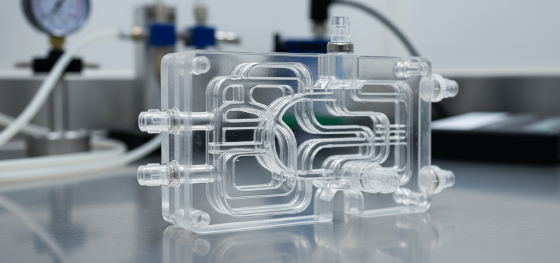
Where does the theory of optical mimicry meet the reality of the industry? PC like Urethane Casting earns its keep in sectors where "functional visibility" is paramount. In the automotive lighting sector, we produce high-fidelity light pipes and thick-walled lenses. These prototypes allow designers to verify their LED beam patterns on a photometric bench, identifying light-leaks and dark spots before committing to a million-dollar production mold.
In the medical diagnostics industry, clear urethanes are utilized for fluid manifolds and blood analysis chambers. The clarity of the resin allows clinicians to visually confirm that no air bubbles are trapped in the fluid path—a life-saving technical requirement. JUCHENG also serves the high-end consumer electronics market, creating transparent bezels and windows for premium appliances. These parts must survive drop-testing and chemical exposure to common cleaning agents. Our simulated PC resins offer the impact resistance and chemical immunity needed for these "high-touch" environments. By providing a production-grade visual experience in the R&D phase, we accelerate your path to market, ensuring your hardware is as beautiful as it is technically sound.
JUCHENG’s Photometric Standard: Validating the Transmission
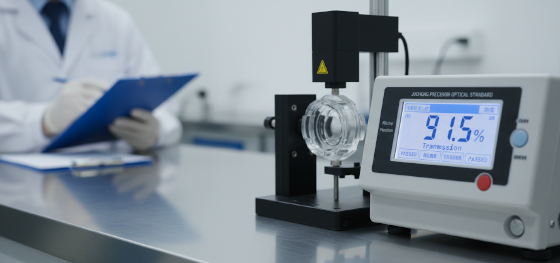
The final hallmark of a professional manufacturing partner is the refusal to accept visual clarity as a proxy for technical data. A part can look clear to the eye but fail a light transmission test. At Jucheng Precision, we have integrated our casting floor with a dedicated metrology sanctuary. We don't just ship your clear parts; we prove their optical performance. Every batch of PC like Urethane Casting destined for optical use undergoes a stabilized transmission audit.
We utilize digital light meters and spectrometers to verify that the part meets your specific transparency goals—typically between 88% and 92% transmission. We also utilize video measuring systems (VMS) to check the dimensional integrity of internal channels and mounting features, ensuring that the "expansion compensation" applied during the master-pattern phase has resulted in a perfect fit. This technical transparency is why JUCHENG is the preferred partner for global innovators in the lighting and medical sectors. We bridge the gap between "concept" and "compliance," providing you with documented copies that are ready for the test lab. Contact our team today for a technical DFM review and see how our clear casting protocols can clarify and armor your next manufacturing breakthrough.
| Performance Metric | Injection Molded PC | Simulation PC (Axson PX 5212) |
|---|---|---|
| Light Transmission | ~88% - 90% | ~89% - 91% |
| Tensile Strength | 60 - 70 MPa | ~65 MPa |
| Refractive Index | 1.584 | ~1.51 - 1.55 |
| Hardness (Shore D) | ~80D | ~82D |

