


Engineering limits are redefined when polymer physics begins to mirror the structural integrity of metal. In the uncompromising environments of deep-sea oil extraction, aerospace propulsion, and orthopedic surgery, standard engineering plastics fail within seconds. When your project demands a material that survives 250°C continuous service, rejects aggressive chemical solvents, and provides the flexural modulus to replace titanium, peek injection molding is the only strategically viable choice. Polyetheretherketone (PEEK) is the undisputed pinnacle of high-performance semi-crystalline thermoplastics. Jucheng Precision operates as a specialized high-temperature manufacturing sanctuary, navigating the extreme thermodynamics required to process Injection molding materials that melt at nearly 400°C. Mastering PEEK is not merely a manufacturing task; it is a battle against thermal shock and molecular crystallinity to ensure your hardware remains dimensionally sovereign in the most hostile conditions on Earth.
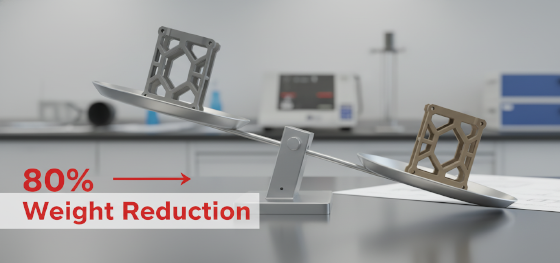
Molecular resilience dictates the survival of critical-path hardware. PEEK offers a unique combination of fatigue resistance and biocompatibility, allowing it to serve as everything from a jet engine bushing to a permanent spinal implant. However, the barrier to entry for processing PEEK is immense. Most standard injection shops lack the specialized heating arrays and oil-tempered molds required to prevent the material from "freezing" into an amorphous, brittle state. Jucheng Precision eliminates these "Mechanical Failures" by utilizing dedicated high-temp machine bays and enforcing a rigorous 200°C mold-stabilization protocol. This guide deconstructs the physical divide between PEEK and traditional metals, the challenges of 400°C melt management, and the mandatory ISO 13485 standards required for medical-grade execution.
Thermodynamic Sovereignty: The 250°C Continuous Service Barrier
Metal-Replacement Matrix: PEEK vs. Titanium and Steel
Processing Warfare: Mastering the 400°C Melt Frontier
Vertical Compliance: ISO 13485 and Aerospace Rigor
JUCHENG Protocol: Specialized Equipment for High-Performance Resins
Thermodynamic Sovereignty: The 250°C Continuous Service Barrier
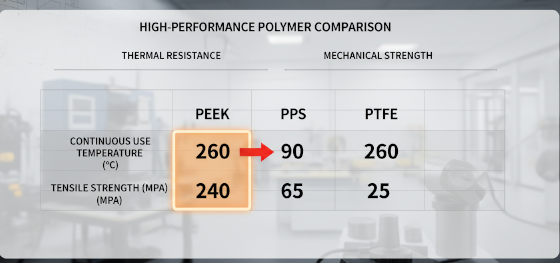
Thermal survival in high-end engineering is defined by the material's ability to maintain its flexural modulus under duress. PEEK stands alone because its Heat Deflection Temperature (HDT) can reach 315°C when reinforced with glass or carbon fiber. Even in its unfilled state, it offers a continuous use temperature of 240°C. Unlike standard Injection molding materials like Nylon or ABS, which lose their structural spine at 100°C, PEEK remains rigid and dimensionally stable. This thermal sovereignty allows PEEK parts to survive autoclaving in medical environments or the intense friction-heat of high-speed bushings. At Jucheng Precision, we calibrate our process to maximize the material's crystallinity. If PEEK is cooled too rapidly, it remains in an amorphous state, losing its chemical resistance and thermal endurance. We utilize high-precision oil heaters to keep the tool at 180°C to 200°C, ensuring the polymer chains fold into the dense crystalline structures required for peak performance.
Metal-Replacement Matrix: PEEK vs. Titanium and Steel
Deciding to replace a traditional metal component with a polymer requires a dispassionate look at the "Strength-to-Weight" ratio. PEEK offers a density of 1.32 g/cm³, making it nearly 70% lighter than aluminum and 80% lighter than stainless steel. For aerospace and portable medical hardware, this mass reduction translates directly into fuel efficiency and user ergonomics. To assist engineers in the conversion process, Jucheng Precision provides the following comparative matrix:
| Metric | PEEK (30% CF) | Titanium (Grade 5) | Stainless Steel (316) |
|---|---|---|---|
| Density (g/cm³) | 1.44 | 4.43 | 8.00 |
| Tensile Strength (MPa) | 220 - 250 | 900 - 1000 | 500 - 600 |
| Chemical Resistance | Extreme (Non-Corrosive) | High | Moderate (Pitting Risk) |
| Processing Method | Injection (Fast/Complex) | CNC (Slow/Expensive) | CNC / Casting |
While titanium boasts higher absolute tensile strength, peek injection molding enables the manufacture of complex, thin-walled geometries that are prohibitively expensive to machine from solid metal. Furthermore, PEEK is inherently radiolucent, meaning it does not interfere with X-ray or MRI scans—a critical advantage for medical implants where bone-growth monitoring is required. We don't just "mold plastic"; we provide the mechanical surrogate that allows you to shed weight without sacrificing safety.
Processing Warfare: Mastering the 400°C Melt Frontier
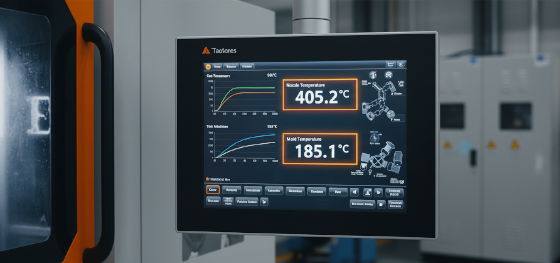
Navigating the melt-front of PEEK requires a specialized industrial infrastructure. PEEK does not begin to flow until the barrel reaches 360°C, and optimal results are typically achieved at 380°C to 400°C. Standard injection machines suffer from heater-band failure and seal degradation at these temperatures. Jucheng Precision operates a dedicated "High-Heat Bay" equipped with ceramic-insulated barrels and bimetallic screws designed for corrosive and extreme thermal duty. Beyond the barrel, the "Thermal Gradient" must be managed with surgical precision. If the molten PEEK hits a mold that is too cold, the part will suffer from "Surface Freezing," resulting in delamination and poor weld-line strength. Our facility utilizes high-wattage mold heaters to maintain tool temperatures at 180°C, allowing for a slow, controlled crystallization. This atmospheric sovereignty is what ensures our PEEK parts exhibit the characteristic tan/brown color and the rock-solid mechanical integrity required for aerospace fuel-line connectors and deep-sea valve seats.
Vertical Compliance: ISO 13485 and Aerospace Rigor
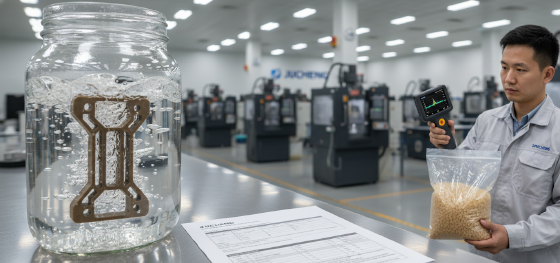
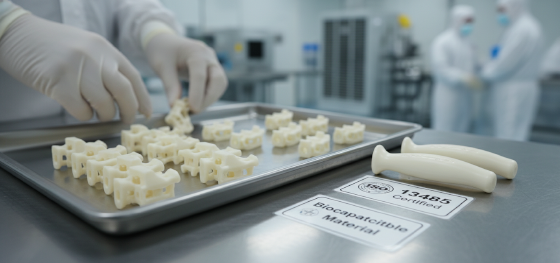
Manufacturing sovereignty in the medical and aerospace sectors is built on the foundation of the audit trail. Jucheng Precision recognizes that a PEEK component is more than just a model—it is a mission-critical safety asset. We operate under strict ISO 13485 and IATF 16949 quality management systems, providing the material lot traceability and dimensional inspection reports required for regulatory submission. Our medical-grade PEEK resins are processed in HEPA-filtered environments to prevent cross-contamination, ensuring that biocompatible implants meet the absolute purity requirements of the FDA and CE. Whether we are producing carbon-filled PEEK for lightweight drone skeletons or unfilled PEEK for surgical reamers, our facility provides the documented certainty that your hardware is chemically correct and mechanically armored for the field.
JUCHENG Protocol: Specialized Equipment for High-Performance Resins
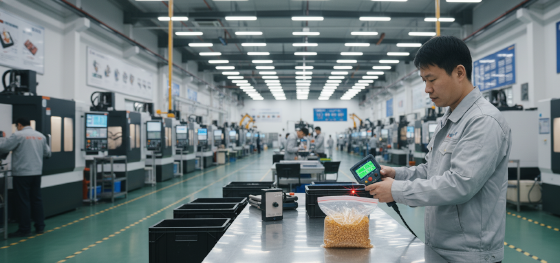
Engineering excellence at Jucheng Precision is built on the foundation of vertical integration. We don't just "mold" PEEK; we engineer the entire thermodynamic cycle. Our facility, housing over 150 CNC machines and 25 high-precision 5-axis Haas centers, is optimized for the aggressive machining of hardened H13 tool steel—the only material capable of surviving the thermal cycling of peek injection molding. When you upload a CAD file to our facility, our veteran engineers perform a comprehensive "High-Heat DFM Audit." We suggest gate modifications to manage shear-thinning and wall-thickness optimizations to prevent internal voids in high-mass sections. We don't settle for "plastic mockups"; we deliver industrial-grade solutions. Stop gambling your high-performance project with vendors who lack the specialized heat. Leverage our decade of PEEK mastery to validate rapidly and launch profitably. Contact our engineering team today for a free DFM review and see how we can turn your digital intent into a tan, indestructible reality.

