


I recently visited a brilliant hardware startup that nearly bankrupted themselves trying to bring manufacturing in-house. Walking into their cramped warehouse, the acrid, choking smell of scorched ABS plastic immediately hit my lungs. They had purchased a massive, leaking, second-hand plastic injection molding machine to "save money" on mass production. Instead, they spent three months fighting hydraulic pressure drops, cooling failures, and catastrophic flash on every single part. The machine sat idle, bleeding capital, while their product launch was delayed indefinitely. Industrial manufacturing is not a plug-and-play desktop hobby; it is a brutal war of thermodynamics.
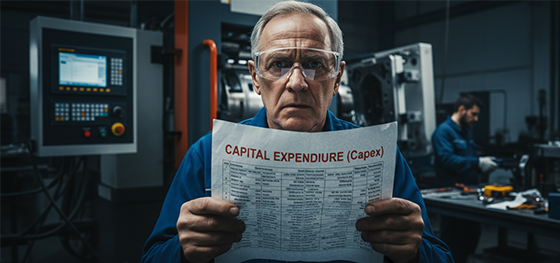
Hardware engineers frequently assume that buying raw equipment is the only pathway to scaling hardware. Evaluating whether to purchase your own injection press versus partnering with an established precision manufacturing hub dictates the financial survival of your entire company. Owning the steel means owning the catastrophic maintenance, the massive electrical infrastructure upgrades, and the agonizing learning curve of polymer rheology.
Mastering this specific supply chain decision prevents crippling capital expenditure (CapEx) blowouts. Procurement managers must brutally audit a potential vendor's machine fleet. Understanding why clamping tonnage limits, hydraulic vs electric kinematics, and equipment age matter ensures you are outsourcing your headaches, not inheriting someone else's exhausted machinery.
content:
Why In-House Injection Molding Destroys R&D Budgets?
How Does a Supplier's Machine Fleet Dictate Your Tolerances?
What Clamping Tonnage Specs Must Your Partner Have?
Why Electric vs Hydraulic Matters When Auditing Vendors?
What Are the True Financial Costs of Buying vs Outsourcing?
How Does Jucheng Deploy Elite Equipment in Shenzhen?
What Are the Most Critical Supplier Equipment FAQs?
Why In-House Injection Molding Destroys R&D Budgets?
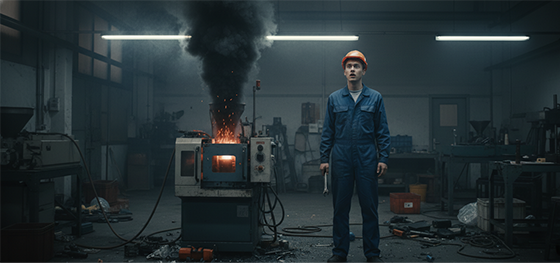
Does buying a cheap injection press instantly lower your per-unit part cost? Absolutely not. The sticker price of the machine represents less than thirty percent of the actual capital required to produce a single viable plastic enclosure.
Operating a single injection press demands a terrifying amount of secondary infrastructure. You cannot simply plug it into a wall outlet. It requires dedicated industrial high-voltage power lines, massive industrial water chillers to prevent the mold from melting, complex desiccant dryers to remove moisture from raw plastic pellets, and an overhead crane system just to physically lift the heavy steel mold into the clamping unit.
Beyond capital equipment, the human element destroys internal budgets. Dialing in the perfect injection velocity, pack pressure, and cooling time (the "process window") requires years of hardcore metallurgical and polymer experience. When a startup tries to figure this out internally, they burn through thousands of dollars of raw material creating short shots, sink marks, and warped plastic scrap. You are paying for a steep, unforgiving education.
How Does a Supplier's Machine Fleet Dictate Your Tolerances?
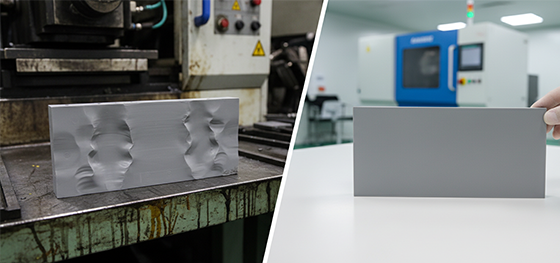
Will an old machine produce the exact same part as a new machine? Never. Machine age and kinetic wear directly impact the equipment's ability to hold micron-level repeatability during supersonic plastic injection.
When auditing a manufacturing partner, you must evaluate the age and maintenance records of their fleet. An exhausted ten-year-old hydraulic press suffers from worn check rings on the injection screw. As the machine tries to push plastic forward, the molten material physically leaks backward over the worn screw threads. This creates massive pressure drops, resulting in unpredictable shot weights where one part is perfect, and the next part is completely hollow and undersized.
Elite manufacturing hubs continuously invest in state-of-the-art, closed-loop machinery. These advanced presses utilize real-time pressure transducers mounted directly behind the nozzle. If the machine detects a fractional drop in injection pressure, the computer compensates instantly within milliseconds, guaranteeing that part number one million is mathematically identical to part number one.
What Clamping Tonnage Specs Must Your Partner Have?
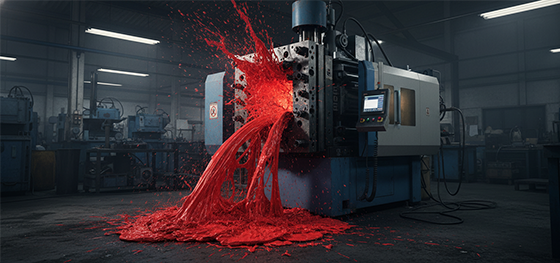
Can a supplier shoot a large part on a small machine to save you money? If they try, they will destroy your product. Insufficient clamping tonnage guarantees catastrophic plastic flash and dimensional failure.
Clamping force is the mechanical muscle that holds the two massive steel halves of the mold shut against the explosive pressure of the incoming plastic. If a vendor attempts to save money by mounting a large automotive dashboard mold into an undersized 150-ton machine, the internal plastic pressure acts like a hydraulic wedge. It physically overpowers the machine, forces the steel plates apart by a millimeter, and shoots molten plastic out of the seams.
Conversely, an unethical vendor might mount your tiny, delicate mold into a gigantic 1,000-ton press because it was the only machine available. This massive overkill violently crushes the microscopic venting slots on your mold, trapping air inside the cavity and literally causing the plastic to ignite and burn (the diesel effect). Procurement must verify that the partner possesses a diverse fleet capable of perfectly matching the tonnage to your specific CAD geometry.
| Vendor Equipment Match | In-House CapEx Cost | Outsourced Risk Level | Business Outcome |
|---|---|---|---|
| Buying a Used Machine | $30k - $80k (Machine Only) | Extreme (Maintenance nightmares) | Bankrupts R&D via hidden setup costs |
| Supplier uses Exhausted Fleet | Zero | High (Inconsistent tolerances) | Massive assembly line rejections |
| Supplier Mismatches Tonnage | Zero | Severe (Mold damage / Flash) | Vendor destroys your steel tooling |
| Outsourcing to Elite Fleet | Zero (Pay per part only) | Minimal | Guarantees scalable, flawless hardware |
Why Electric vs Hydraulic Matters When Auditing Vendors?
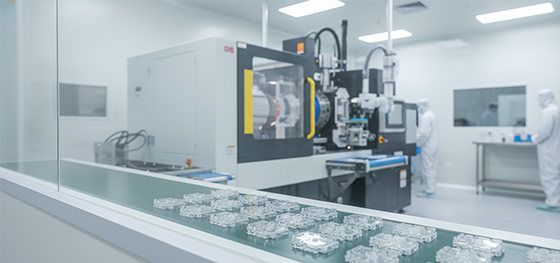
Should you care whether the factory uses electric or hydraulic presses? Yes, especially if you are manufacturing tight-tolerance medical devices, optical lenses, or biocompatible wearables.
Hydraulic machines push the injection screw using pressurized oil that inherently fluctuates in viscosity as it heats up during the day. This forces the operator to constantly chase the process window. Furthermore, hydraulic systems leak. If a microscopic drop of aerosolized machine oil enters the mold cavity while shooting a clear polycarbonate lens, the part is instantly ruined with cloudy contamination.
All-electric machines entirely eradicate this fluid volatility. Every single axis is driven by independent, highly responsive digital servo motors containing absolutely zero hydraulic fluid. This digital rigidity guarantees absolute dimensional repeatability and pristine cleanroom compliance. High-end manufacturing partners invest heavily in all-electric fleets to guarantee the highest tier of optical and medical precision.
What Are the True Financial Costs of Buying vs Outsourcing?
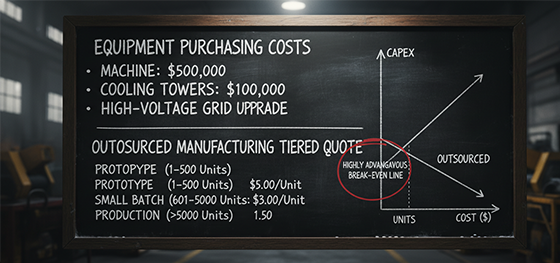
Does the break-even point ever justify building your own factory? Only if your singular product commands millions of continuous units per year, justifying the multi-million dollar facility build-out.
Startups severely underestimate utilization rates. If you buy a machine, it must run three shifts, 24/7, to pay for its floor space and energy consumption. If your product only requires 10,000 units a month, the machine will finish the job in two days and sit idle for the rest of the month, actively bleeding cash while the plastic inside the barrel degrades.
Partnering with a dedicated facility transforms these crippling fixed costs into highly manageable variable costs. You pay precisely for the machine time you consume, nothing more. You leverage their multi-million dollar equipment, their highly trained processing engineers, and their robust quality control labs without assuming any of the devastating capital risk.
How Does Jucheng Deploy Elite Equipment in Shenzhen?
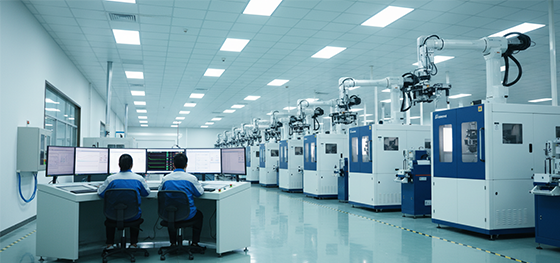
Can a partner guarantee state-of-the-art machine availability? Yes. Operating within the [2026] Shenzhen precision manufacturing hub, Jucheng deploys a massive, diverse fleet of highly calibrated injection presses to eliminate production bottlenecks.
Navigating global hardware procurement requires an absolute rejection of outdated, failing machinery. We do not risk your expensive H13 steel molds on leaking, thirty-year-old hydraulic presses. Our 8000-square-meter facility utilizes modern all-electric and advanced servo-hydraulic fleets, supported by automated robotic material handlers to guarantee absolute consistency.
Our process engineers intervene heavily during the setup phase. Backed by strict ISO9001:2015 and IATF16949 automotive protocols, we mathematically calculate the exact clamping tonnage your specific geometry requires. Supported by our strict No MOQ policy, we provide Fortune-500 level equipment access to agile hardware innovators.
What Are the Most Critical Supplier Equipment FAQs?

Resolving hardcore equipment variables prevents devastating batch rejections when transitioning from prototype development to aggressive mass production.
What does the "shot size" of a machine mean for my parts?
The shot size dictates the maximum volume of plastic the machine's barrel can melt and inject in a single stroke. If your part weighs 500 grams, but the vendor puts it on a machine with a 200-gram shot size, the mold will never fill completely, resulting in disastrous "short shots."
Why is the supplier's material drying equipment important?
Most engineering plastics (like Nylon, ABS, and PC) are highly hygroscopic; they absorb moisture from the air. If the supplier lacks advanced desiccant dryers, that moisture boils instantly when the plastic hits the heated barrel. The resulting steam blows microscopic craters into your parts, destroying structural integrity and causing silver streaking on the surface.
Does the machine determine how fast my parts can be produced?
Partially. The machine's injection speed and the efficiency of its cooling water pumps play a major role in the cycle time. However, the cooling channels designed internally within your steel mold are usually the ultimate bottleneck. A great machine cannot compensate for a poorly engineered mold lacking proper thermal extraction.

