


Hydrostatic pressure is the most unforgiving judge of manufacturing accuracy. In the hyper-hostile environment of the deep ocean, the transition from a digital CAD file to a physical underwater robot hull is a race against catastrophic mechanical collapse. For subsea engineers in 2026, the primary adversary is not the propulsion logic—it is the physical "Buckling Point" of the pressure vessel. If a cylindrical hull exhibits even ten microns of eccentricity or if the wall thickness varies by 0.1mm, the resulting asymmetrical load distribution will cause the vessel to implode at depth, instantly incinerating hundreds of thousands of dollars in logic boards and optical sensors. Navigating this requirement for absolute geometric perfection requires the strategic deployment of ROV pressure vessel machining. Jucheng Precision operates as a high-fidelity metallurgical sanctuary in the Shenzhen precision manufacturing hub, providing the large-format CNC depth needed to deliver hulls that possess the mechanical spine to survive where standard hardware fails. We don't just "cut cylinders"; we engineer life-support systems for electronics, ensuring your autonomous underwater fleet maintains its structural sovereignty through thousands of high-pressure sorties.
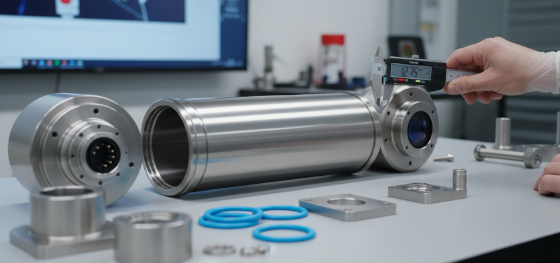
Establishing a resilient subsea supply chain in 2026 demands the absolute rejection of "general-purpose" machine shops. Amateurs often treat an ROV hull like a standard industrial pipe, unaware that the internal residual stresses generated during heavy roughing passes will cause the cylinder to warp into an oval shape over time. Jucheng Precision eliminates these "Dimensional Nightmares" by enforcing a strict "Thermal Disarmament" protocol. We utilize 5-axis CNC machining and precision deep-hole boring to ensure your pressure vessels are perfectly concentric and structurally stable before they ever touch the water. Whether you are developing a micro-AUV for reef monitoring or a work-class ROV for deep-water oil maintenance, our integrated facility provides the material science and metrological rigor required for global market entry. This guide deconstructs the necessity of ROV pressure vessel machining, focusing on the physics of wall uniformity, the standoff between Titanium and Aluminum, and why our stress-relief protocol is the mandatory foundation for anyone developing deep-sea hardware.
How does hydrostatic pressure dictate wall thickness and material choice?
Why do concentricity and roundness prevent catastrophic buckling?
How to manage internal stress to maintain perfect geometry?
The Material Standoff: Selecting Alloys for 6,000-Meter Depths
JUCHENG Protocol: Zero-Defect Metrology for Subsea Sovereignty
FAQ
How does hydrostatic pressure dictate wall thickness and material choice?
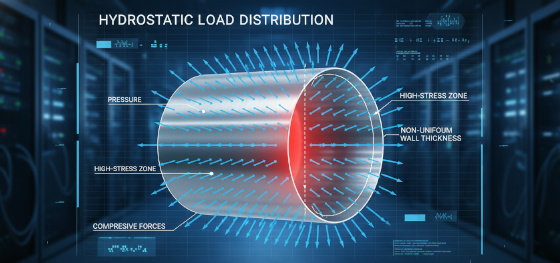
Hydrostatic force increases linearly by approximately one atmosphere for every ten meters of depth. In ROV pressure vessel machining, this constant crushing force is the primary driver of wall-thickness calculations. Jucheng Precision engineers utilize Finite Element Analysis (FEA) to determine the "Collapse Pressure" of your specific hull geometry. If the wall is too thin, the material reaches its yield point and deforms permanently. If the wall is unnecessarily thick, the robot becomes a "Heavy Anchor," requiring expensive buoyancy foam that reduces mission agility. We navigate this tradeoff by selecting high-modulus alloys like Aluminum 7075-T6 or Titanium Grade 5. Below is a material performance matrix our engineers use to select the optimal hull substrate for different depth ratings:
| Material | Depth Rating (m) | Yield Strength (MPa) | Corrosion Defense |
|---|---|---|---|
| Aluminum 6061-T6 | 0 - 500m | 275 MPa | Moderate (Hardcoat) |
| Aluminum 7075-T6 | 500 - 2,000m | 500 MPa (Excellent) | Good (Anodized) |
| Titanium Grade 5 | 2,000 - 6,000m+ | 880 MPa (Superior) | Absolute Immunity |
Why do concentricity and roundness prevent catastrophic buckling?
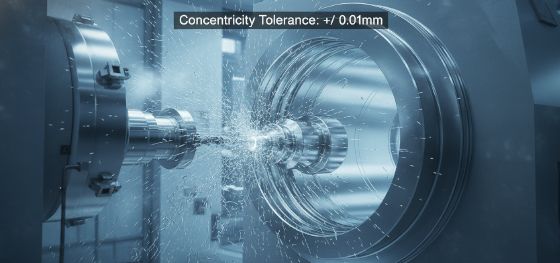
Mechanical failure in underwater robot hulls is almost always triggered by geometric asymmetry. A perfectly round cylinder distributes external pressure as uniform compressive stress through the material's cross-section. However, if the ROV pressure vessel machining produces a hull that is slightly oval-shaped (out-of-roundness) or if the internal bore is eccentric relative to the outer diameter, the pressure is no longer uniform. This creates localized bending moments. The "weak side" of the cylinder will buckle inward, initiating a chain reaction that leads to an implosion faster than the speed of sound. Jucheng Precision eliminates this "Asymmetrical Death" by utilizing elite CNC turning centers with active vibration damping. We achieve cylindricity and concentricity tolerances within +/- 0.01mm across the entire length of the hull, ensuring your pressure vessel is a mathematically perfect arch that can survive the crushing weight of the water column with absolute certainty.
How to manage internal stress to maintain perfect geometry?
Molecular stability is won through thermodynamic disarmament. Machining a large-format pressure vessel involves removing hundreds of kilograms of metal from a solid billet to create a hollow tube. This aggressive subtraction releases the "frozen" internal residual stresses of the raw metal. If left unmanaged, the part will slowly warp and drift out of roundness days after it has left the CNC machine—a defect known as "Post-Machining Distortion." Jucheng Precision eliminates this "Dimensional Rebellion" by implementing a mandatory, multi-stage stress-relief protocol. Between the roughing and finishing passes, we move your hulls to our digital convection ovens for a stabilized thermal cycle. This process allows the metallic grain structure to relax and reorganize. When we return the part to our 5-axis machines for the final sub-micron cut of the O-ring seats and bearing bores, the material is perfectly inert. We turn "vulnerable tubes" into "stable structural assets," ensuring your IP68+ seals stay hermetic for years of deployment.
The Material Standoff: Selecting Alloys for 6,000-Meter Depths
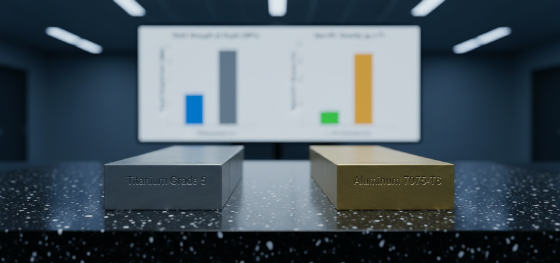
Weight management dictates the real-world payload capacity of an autonomous underwater robot. While titanium offers absolute strength and corrosion immunity, its density is nearly double that of aluminum. ROV pressure vessel machining at Jucheng Precision involves a strategic material audit for every project. For shallow-water inspection bots, we utilize Aluminum 6061-T6 for its low cost and high thermal conductivity (ideal for cooling internal electronics). For mid-depth surveillance (up to 2,000m), we pivot to Aluminum 7075-T6 for its steel-like yield strength. However, for the "Abyssal Frontier" exceeding 4,000 meters, Titanium Grade 5 is the only mandatory choice. JUCHENG’s integrated facility houses the high-pressure through-spindle coolant systems and specialized carbide tooling needed to machine these "gummy" titanium alloys without work-hardening the surface. We don't just "cut parts"; we provide the structural armor needed to ensure your robot survives where standard hardware collapses.
JUCHENG Protocol: Zero-Defect Metrology for Subsea Sovereignty
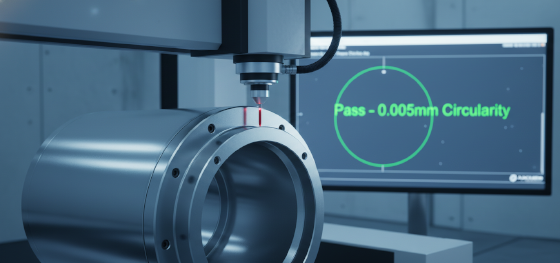
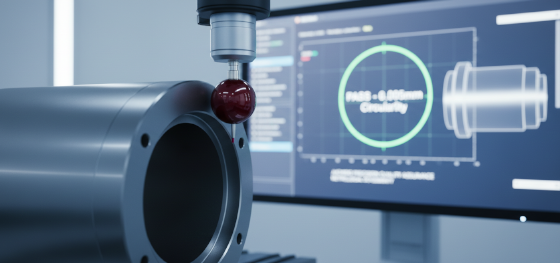
Manufacturing excellence at Jucheng Precision is built on the foundation of predictive metrology. We don't just "hope" your pressure vessel is round; we prove it with scientific data. Our facility, certified to ISO 9001 and IATF 16949, houses a dedicated metrology lab equipped with ruby-tipped Coordinate Measuring Machines (CMM) and non-contact laser scanners. For every ROV pressure vessel machining batch, we provide a full dimensional report verifying the "True Position" of mounting holes and the "Surface Roughness" of O-ring glands. We recognize that for our clients in the marine research and naval sectors, a 0.05mm deviation is a failure that ends a mission. Stop gambling your subsea launch on uncertified vendors who treat hulls like general hardware. Leverage our decade of high-performance replication mastery to validate rapidly and scale profitably. Contact our technical team today for a free DFM review and see how we can turn your digital underwater intent into a structurally sovereign physical reality.
FAQ
Q: What is the maximum size of a pressure vessel JUCHENG can CNC machine?
A: Our Shenzhen facility features large-bed CNC lathes capable of machining cylindrical hulls up to 2.5 meters in length and 600mm in diameter from single billets of aluminum or titanium.
Q: How do you ensure the O-ring grooves are watertight at high pressure?
A: We utilize 5-axis machining to achieve Ra 0.4µm surface finishes on all gland faces. This mirror-like finish is vital for preventing "Leak Highways"—microscopic tool marks that allow water molecules to bypass the rubber seal under extreme depth pressure.
Q: Can JUCHENG handle the assembly of end-caps and bulkheads?
A: Yes. We offer turnkey assembly services, including the installation of high-pressure bulkheads, optical windows, and the final hydrostatic pressure testing of your underwater robot assembly to verify zero-leak performance.

